Quick Answer
Before you invest in mining equipment at QME 2026, compare these nine factors — not just the purchase price:
- Total cost of ownership (TCO) over 5 & 10 years
- Parts availability and lead times
- Site support response times (in hours, in writing)
- Fuel burn and emissions under real loading
- Attachments and fleet standardisation
- Safety features and site acceptance at your Tier-1 miner
- Operator experience and training
- Resale value and rebuild pathway
- Financing structure and flexibility
Why sticker price is the wrong headline
Mining equipment is one of the biggest capital decisions a contractor makes. Get it wrong and you carry the cost for a decade — bad utilisation, bad availability, bad resale. Get it right and it quietly compounds into better margins on every contract you win.
The trap at events like QME is that OEMs and dealers put their best foot forward on price and shiny paint. The numbers that actually matter — parts lead times in the Bowen Basin, real-world fuel burn, service response at 2am in Moranbah, rebuild interval — are the ones you have to force into the conversation.
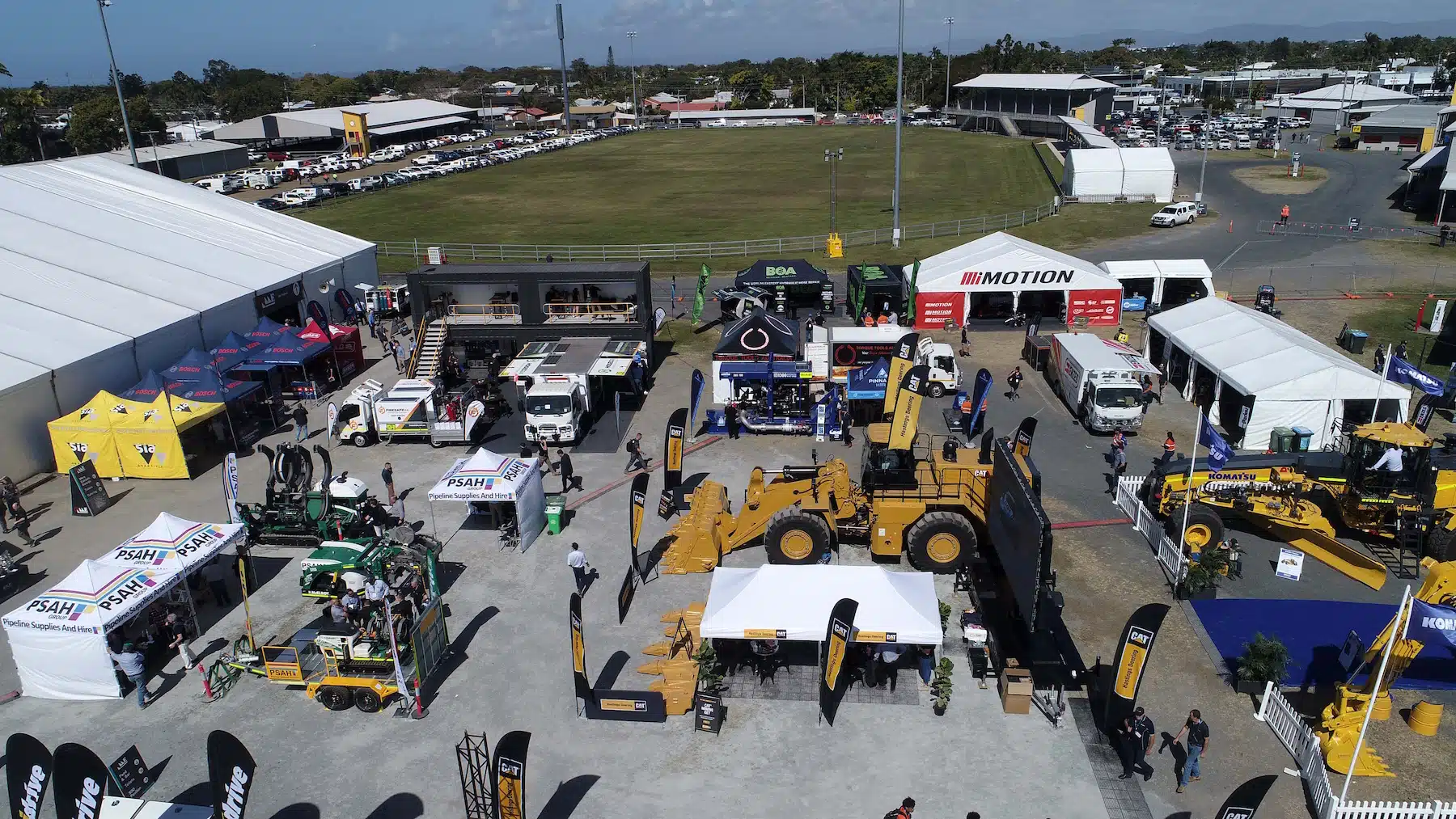
9 factors to compare when buying mining equipment at QME 2026
Total cost of ownership (TCO), not sticker price
Purchase price is maybe 20% of what a piece of mining equipment will cost you over its life. Ask every OEM at QME 2026 for a written TCO estimate over 5 and 10 years — fuel, servicing, parts, tyres, undercarriage, rebuild and disposal.
Parts availability & lead times
A cheaper machine that sits waiting on a $400 sensor for three weeks is a disaster. Compare parts inventories, regional depots (Hastings Deering, WesTrac, Komatsu Mackay) and worst-case lead times for critical components.
Support response times
Ask specifically: 'If this machine goes down in Moranbah at 2am, how long until a tech is on-site?' Get the answer in hours, in writing, with a service level. Vague answers are red flags.
Fuel burn & emissions
L/hr under realistic loading — not brochure figures. As diesel prices bounce around and Tier-1 miners publish scope-3 targets, fuel-efficient and low-emission options increasingly win contracts, not just tenders.
Attachments & standardisation
Buckets, GET, hitches, hose fittings — standardising across your fleet cuts spare-part SKUs, workshop training and change-over time. Ask how easily new equipment slots into what you already run.
Safety features & site acceptance
Proximity detection, camera systems, ROPS/FOPS, isolation and lock-out — plus the miner's site standards. Confirm the machine is site-accepted at your target operations before you sign.
Operator experience & training
Even the best machine loses money in the wrong hands. Ask about operator training, simulator time and how long it typically takes a competent operator to reach target productivity.
Resale value & rebuild pathway
Big-brand kit holds value and has a rebuild pathway. Cheaper Tier-2 machines can be great value new but brutal on the second-hand market. Factor resale into your 5-year plan.
Financing & flexibility
Buy, lease, rent-to-own, wet hire — the right structure depends on contract length and cash flow. Compare not just interest rates but flexibility if your contract with a Tier-1 miner shifts.
Buy, lease or wet hire? A quick reality check
Lowest long-term cost per hour if utilisation is high. Best fit for core plant on multi-year contracts. Highest capital and TCO risk if utilisation slips.
Preserves cash and can align repayments to contract length. Compare not just interest rate but end-of-term flexibility and residual assumptions.
Transfers maintenance and operator risk. Most expensive per hour, but ideal for shutdowns, surge work and testing a new class of machine before committing.
Red flags on the QME floor
- Refuses to put support response times in writing.
- Can't share worst-case lead times on critical wear parts.
- Won't name a comparable Tier-1 mining customer running the machine.
- Quotes fuel burn from a brochure, not from a customer's telemetry.
- Only talks price and rebate, never TCO or rebuild interval.
You can't compare TCO if you don't track it
The best negotiating position at the next QME is real numbers on your existing fleet. Contractors who can walk up to a Hastings Deering or Komatsu rep and say "here's what we spent on labour, parts, fuel and downtime per hour on our current 785 last year" get very different quotes to contractors who can't.
That's where a mining contractor management platform earns its keep. SprintSuite tracks jobs, workshop hours, parts consumption, safety and timesheets against every asset — so planned versus actual TCO stops being a guess.
Related reading: What is QME 2026? · QME 2026 dates · Where is QME 2026 held? · QME 2026 exhibitor list · What to look for at QME if you're a contractor.