Quick Answer
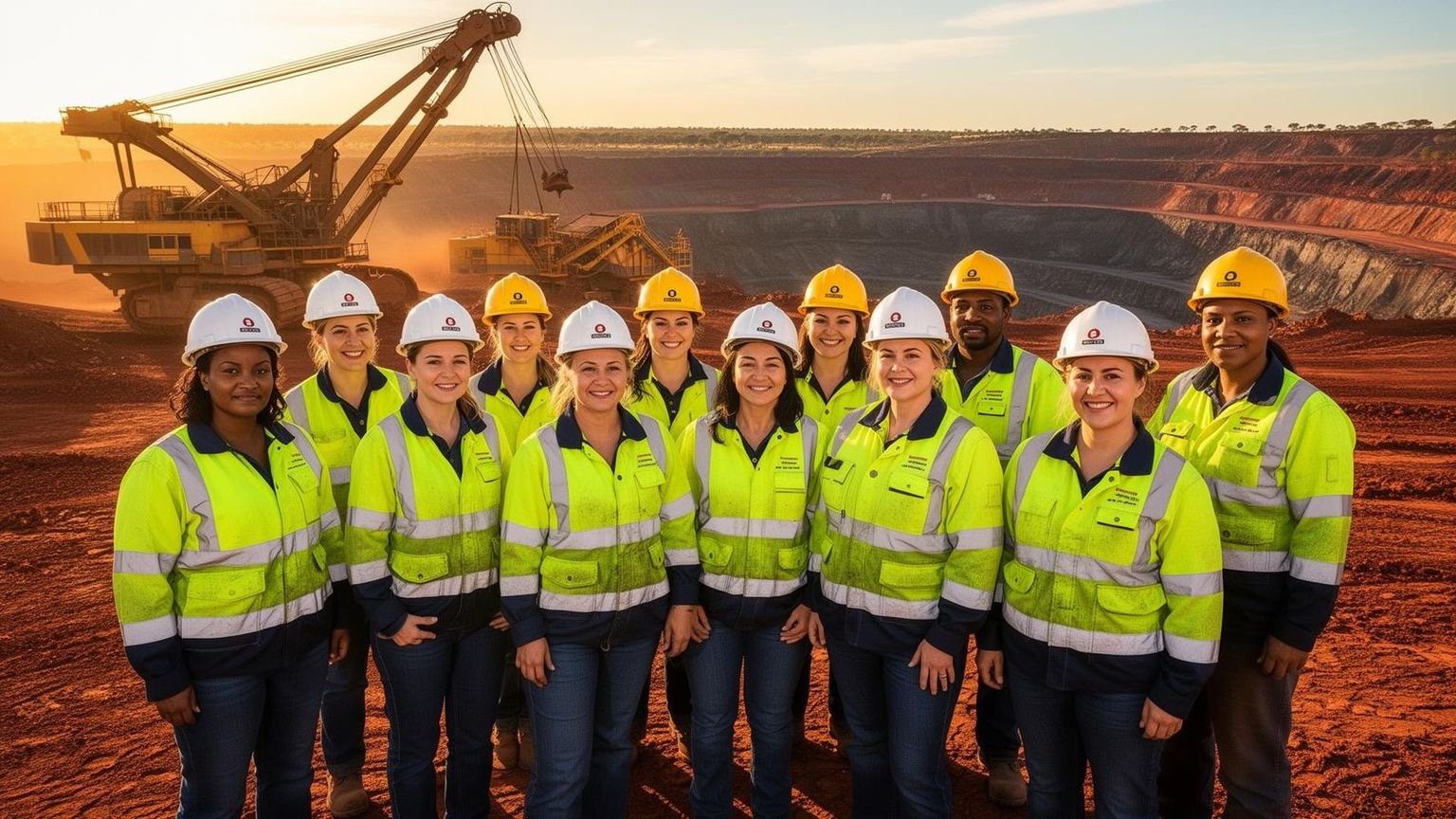
Women are reshaping Australian mining through:
- Trades pathways — apprentices like Ruby Livingstone (Komatsu) and Teagan are leading a new generation of female diesel fitters
- WesTrac's female apprentice intake — record numbers of women entering heavy mobile equipment trades
- BHP's 50:50 gender balance target and Rio Tinto's Everyday Respect program
- Leadership representation across operations, safety and engineering
International Women's Day is a moment to recognise the progress being made toward gender equality — and in industries like mining, engineering, and heavy industry, that progress is particularly significant.
For decades, the resources sector has been one of the most male-dominated industries in Australia. But today, many companies across mining, engineering, and industrial services are actively investing in initiatives that support women, improve workplace culture, and open new pathways into the sector.
While there is still work to be done, the data shows the industry is moving forward — driven by deliberate action from businesses committed to building safer, more inclusive worksites.
The Reality: Women Remain Under-represented in Mining
Despite improvements in recent years, women still make up a relatively small proportion of the mining workforce.
According to the Workplace Gender Equality Agency, women represent around 22% of employees in Australia's mining sector, making it one of the least gender-diverse industries in the country.
Historically the numbers have been even lower. Just over a decade ago, women accounted for around 16% of mining employees, highlighting how gradual progress has been.
"Nationally, women earn around 79 cents for every dollar earned by men, demonstrating why workplace initiatives remain important."
However, the resources industry is beginning to change — and some of the world's largest mining companies are leading that shift.
BHP: Leading the Industry in Female Workforce Representation
BHP has made one of the most ambitious gender diversity pushes in the global mining industry.
In 2016, the company set a target to reach gender balance in its workforce. Since then, BHP has more than doubled female participation — growing from 17.6% women in 2016 to around 37% in 2024, with approximately 40% of the global workforce now female.
Safety Impact
Research within BHP operations found that diverse teams recorded a 67% lower injury rate than non-diverse crews, highlighting how inclusive workplaces can also improve safety performance.
To support these goals, BHP has implemented initiatives including:
- • Targeted recruitment programs for women in technical roles
- • Flexible rosters for parents and carers
- • Leadership development programs for women
- • Policies aimed at preventing harassment and improving workplace culture
Rio Tinto: Building Inclusive Recruitment Pipelines
Rio Tinto has also invested heavily in programs designed to increase gender representation across its workforce.
Women now represent around one quarter of the company's global workforce, with growing representation in frontline and leadership roles.
Rio Tinto has introduced initiatives such as:
- • Project Balance Boost, designed to improve gender and Indigenous representation in frontline roles
- • Recruitment campaigns specifically aimed at attracting women who have never previously worked in mining
- • Leadership training programs focused on respectful and inclusive workplaces
The company has also linked improvements in diversity to leadership accountability, tying progress on gender balance to executive performance metrics.
WesTrac: Building Inclusive Pathways for Women
WesTrac, one of Australia's leading heavy equipment and training providers, is actively creating pathways for women into technical careers across mining, construction and resources.
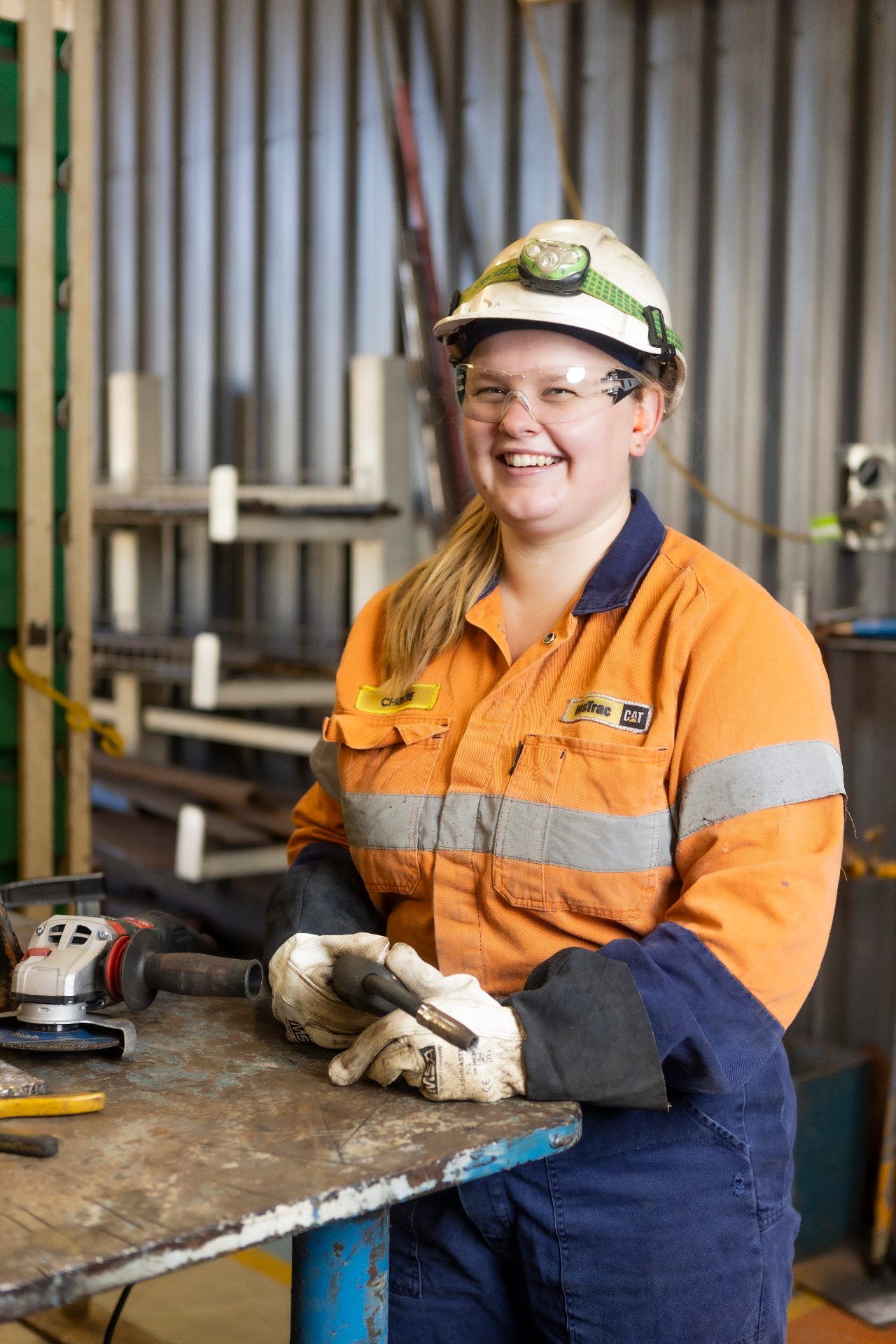
A WesTrac apprentice in the workshop — building skills and confidence in heavy industry. Image credit: WesTrac
WesTrac Apprenticeship Numbers
WesTrac currently sits at 23% female participation in WA, with a total of 41 female apprentices. In NSW/ACT, 20 female apprentices make up 23.8% of the cohort. Their School Based Trainee program in metro Perth is 100% female.
WesTrac is also recognised externally for its commitment to gender inclusion — endorsed as an employer that meets benchmarks for supporting women in the workplace, signifying strong policies, support structures, and proactive efforts to attract and retain diverse talent.
Real Stories: Women Apprentices at Komatsu
During National Apprenticeship Week, SprintSuite partnered with Komatsu to hear directly from their apprentices. Here are the stories of two women making their mark in heavy industry.
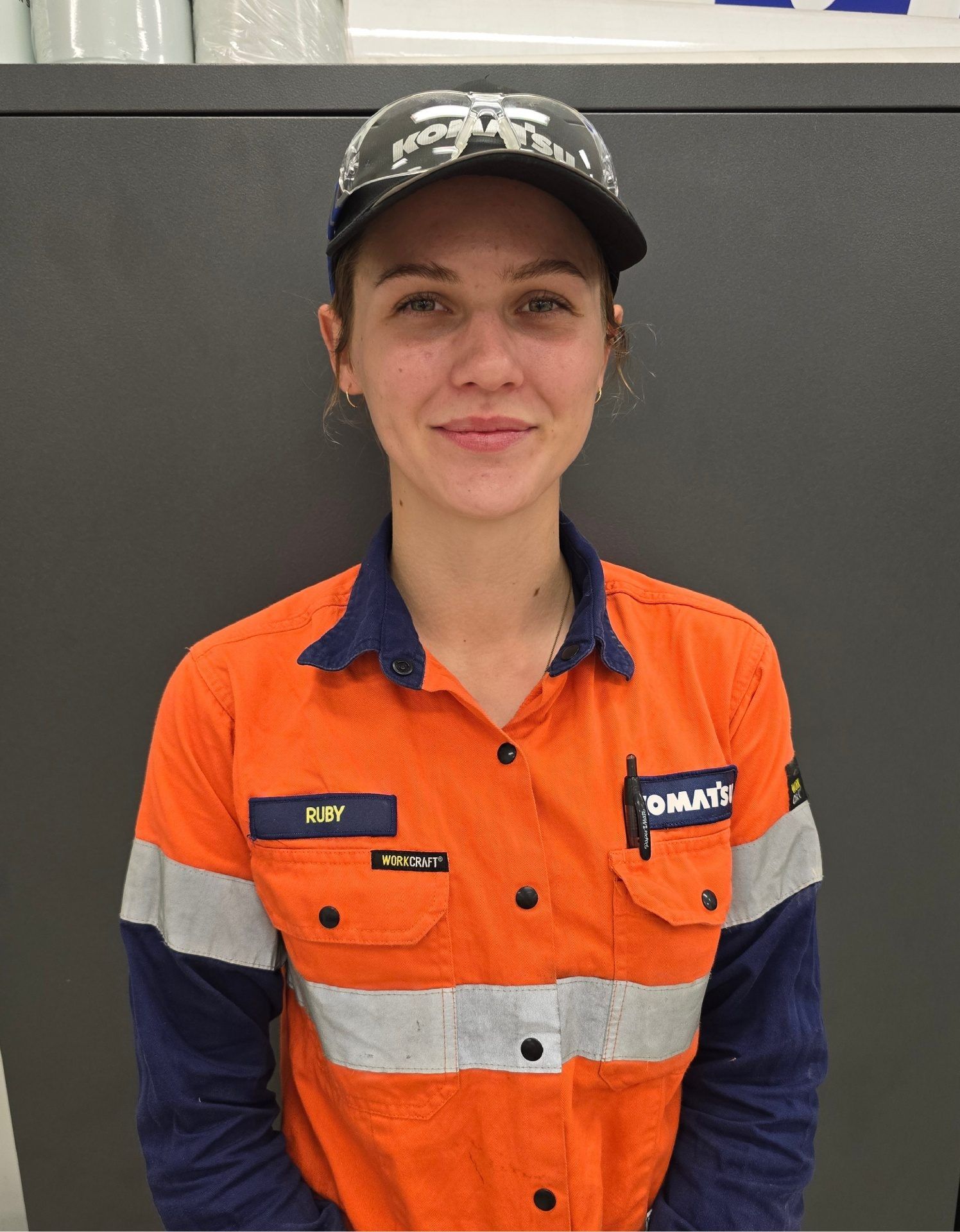
Ruby Livingstone
Ruby chose an apprenticeship for the real-world exposure and hands-on learning it provides. Now in her fourth year as a Mobile Plant Mechanic with Komatsu, she's become a testament to what dedication and the right support system can achieve.
"My particular trade requires me to understand a variety of complex, interrelated systems, and have the practical capacity to diagnose and repair them. I work in an environment of high safety risks, and high-value operations, where mistakes can have very tangible, dangerous and costly consequences."
— Ruby on bridging theory and practice

Ruby sees apprentices as more than just learners — they're active contributors who bring fresh perspectives and enthusiasm to the team.

Teagan
Teagan represents the growing number of women making their mark in heavy industry. Working at Komatsu, she's proving that the trade welcomes anyone with the drive and commitment to succeed.

"Don't ever think you aren't capable of doing something. Give everything a go, give everything 110%, have faith in yourself and you will succeed — and enjoy yourself, it goes so quickly."
— Teagan's message for International Women's Day
"Ask as many questions as you can — there is no such thing as a stupid question. Get in and give it 110%. Put your hand up for anything, show initiative and interest, and you will learn so much."
— Teagan's advice to new apprentices
Read the full interviews with Ruby, Teagan, and their fellow Komatsu apprentices in our Komatsu Apprentice Stories article.
Industry-Wide Programs Supporting Women
Beyond individual companies, the broader resources industry has introduced initiatives aimed at supporting women throughout their careers.
Programs across Australia include:
- • Women in Mining networks that provide mentorship, training and industry connections
- • Industry-wide workplace culture programs addressing harassment and discrimination
- • Scholarships, apprenticeships and graduate pathways designed to attract more women into technical careers
These initiatives aim to address some of the challenges women have historically faced on mine sites, including workplace culture and limited access to leadership pathways.
Why Gender Diversity Matters in Mining
Increasing the participation of women in mining is not just about fairness — it also strengthens the industry.
Studies consistently show that diverse teams improve organisational performance, safety outcomes and innovation. In high-risk environments like mining and heavy industry, diverse perspectives can also contribute to better decision-making and risk management.
For an industry facing skills shortages and workforce challenges, expanding the talent pool is critical. Women represent a significant opportunity to help address those shortages while bringing new skills, perspectives and leadership to the sector.
The Future of Women in Resources
The progress seen over the past decade demonstrates that change is possible when companies take meaningful action.
While women still represent a minority of the mining workforce, the industry is evolving — driven by stronger workplace policies, leadership commitments and industry-wide collaboration.
On International Women's Day, it's worth recognising the women working across mine sites, workshops, engineering offices and field service teams who are helping reshape the future of the resources sector.
Their work is not only changing the industry today — it is helping ensure the next generation sees mining and heavy industry as a place where everyone can build a career.
Related Articles
Explore the Knowledge Hub
Browse more articles on workforce management, compliance, and industry insights.
Browse Articles