What Are Fatigue Management Rules in Australia?
Everything employers in mining and heavy industry need to know about Australian WHS fatigue laws, penalties, and best practices.
Quick Answer
Fatigue management rules in Australia are workplace health and safety (WHS) regulations that require employers to identify, assess, and control fatigue-related risks. Under Australian WHS laws, fatigue is treated as a workplace hazard and must be actively managed like any other safety risk.
Fatigue can significantly impact safety and performance. In fact, being awake for 17 hours can impair performance to the same level as having a blood alcohol concentration (BAC) of 0.05% — the legal driving limit in Australia.
Key Stat
Being awake for 17 hours = performance impaired to the same level as a BAC of 0.05%.
Source: SafeWork SA →Are Fatigue Management Rules Mandatory?
Yes — fatigue management is legally required under the Work Health and Safety Act in most Australian states and territories.
Employers (or Persons Conducting a Business or Undertaking — PCBUs) must:
- Identify fatigue risks in the workplace
- Implement controls to reduce those risks
- Monitor workers' health and safety
- Provide safe systems of work
Failure to manage fatigue can result in penalties, fines, or prosecution if it contributes to workplace incidents.
Which Industries Have the Strictest Rules?
Fatigue management rules apply across all industries, but they are especially strict in high-risk sectors:
In mining and heavy industry, fatigue is a major safety concern due to long shifts, remote locations, and physically demanding work.
Key Fatigue Management Requirements
1. Risk Assessment
Employers must identify fatigue-related hazards such as:
- Long shifts or overtime
- Night work or rotating rosters
- Physically demanding tasks
- Remote or isolated work
2. Safe Rostering and Work Hours
There are no universal maximum hours across all industries, but businesses must design rosters that minimise fatigue, including:
- Adequate rest breaks between shifts
- Limits on consecutive shifts
- Managing night shift impacts
3. Monitoring Worker Fatigue
Businesses should implement processes to monitor fatigue, such as:
- Pre-start fitness-for-work checks
- Fatigue reporting systems
- Supervisor observation and intervention
4. Training and Awareness
Workers must be trained to:
- Recognise signs of fatigue
- Understand risks and consequences
- Follow reporting procedures
5. Control Measures
Control strategies may include:
- Adjusting shift lengths
- Providing rest facilities
- Managing workload and staffing levels
- Encouraging adequate sleep and recovery
Heavy Vehicle Fatigue Laws
For transport operators, fatigue management is regulated under the Heavy Vehicle National Law (HVNL). Drivers must comply with work and rest hour limits, including:
- Standard hours (maximum driving limits)
- Basic Fatigue Management (BFM) accreditation
- Advanced Fatigue Management (AFM) for customised systems
These laws are enforced by the National Heavy Vehicle Regulator (NHVR).
Penalties for Poor Fatigue Management
If a business fails to manage fatigue risks, consequences can include:
- Significant fines for WHS breaches
- Legal liability for incidents or fatalities
- Loss of contracts (especially with Tier 1 mining companies)
- Reputational damage
In serious cases, directors and managers can be held personally liable.
Why Is Fatigue Management Critical in Mining?
Fatigue is one of the leading contributors to workplace incidents in high-risk environments. According to Safe Work Australia, fatigue can impair performance similarly to alcohol.
In mining, where workers operate heavy machinery, drive long distances, and work extended shifts, fatigue can significantly increase the risk of:
How Can Businesses Improve Fatigue Management?
To effectively manage fatigue, businesses should move beyond basic compliance and adopt proactive systems, including:
- Digital fatigue management tools
- Automated rostering and scheduling
- Real-time reporting and alerts
- Integrated safety and compliance systems
This ensures fatigue risks are identified early and managed consistently across sites.
The Bottom Line
Fatigue management rules in Australia are not optional — they are a legal requirement under WHS laws. For mining and heavy industry businesses, managing fatigue effectively is critical to keeping workers safe, maintaining compliance, and protecting operations.
Manage Fatigue Risk with SprintSuite
Track hours, manage rosters, and monitor fatigue risks across your workforce — all in one platform.
Frequently Asked Questions
Related Articles
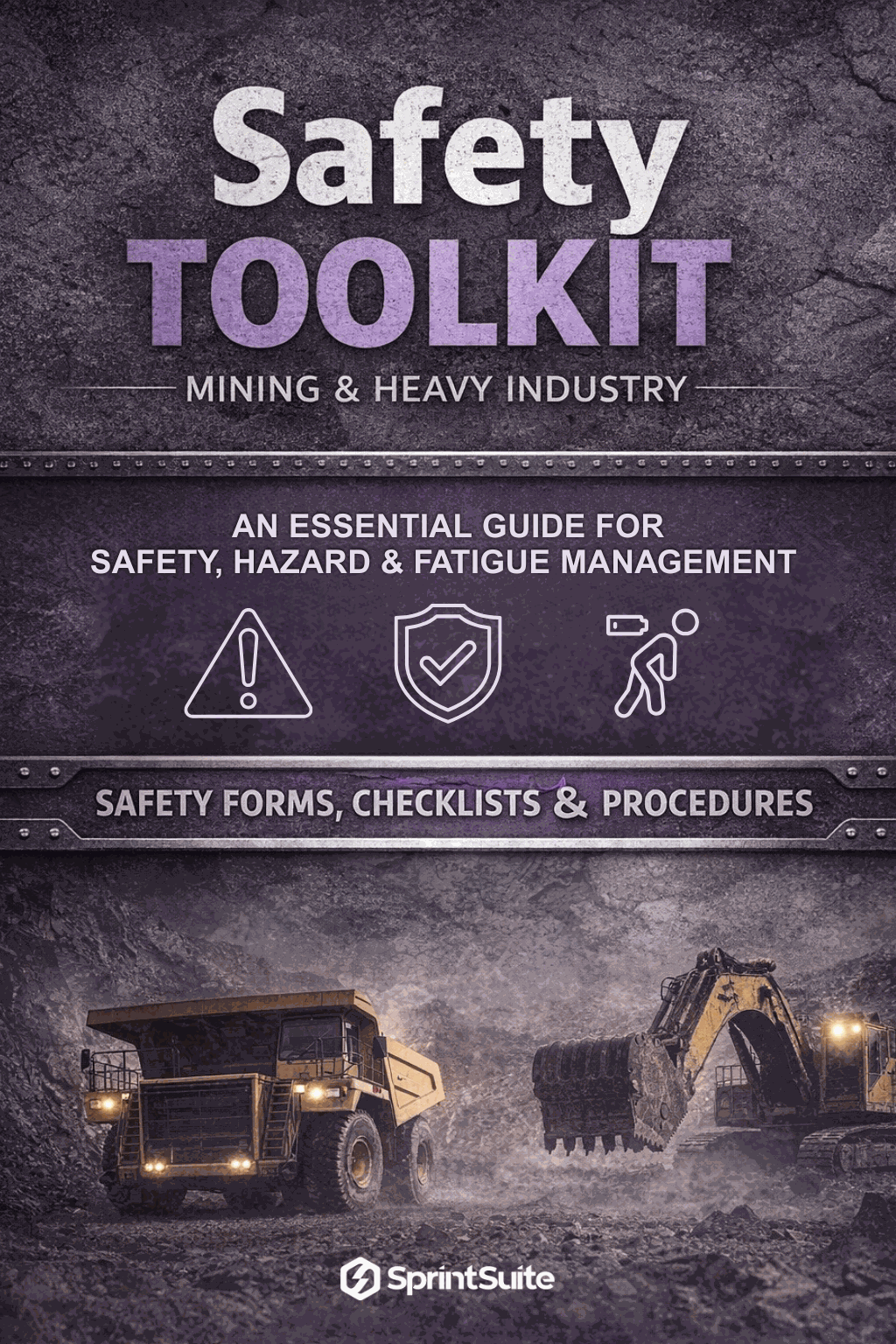
Try the paper version of mining safety — then upgrade to something better.
A free, ready-to-use toolkit of hazard reports, pre-start checklists, fatigue templates and toolbox guides — built for Australian mining and heavy industry crews. Perfect for getting compliant fast, but you'll quickly see why teams move to SprintSuite to ditch the paperwork for good.
SprintSuite digitises every form in this toolkit — pre-starts, hazards, fatigue checks and toolbox sign-ons — with photo evidence, GPS, and instant supervisor alerts. No scanning. No lost forms. See the digital version →