Quick Answer
To find aftermarket mining parts in Australia, start with the OEM part number from the machine's parts catalogue (Parts.Cat.Com, MyKomatsu, Hitachi Parts.it, LIDOS), then cross-reference it in premium aftermarket catalogues — Bradken, ESCO (Weir Minerals), CR Mining and Hensley for GET; Berco for undercarriage; Donaldson, Baldwin and Fleetguard for filters; Parker, Gates and RYCO for hoses. Verify the spec matches or exceeds OEM, raise a PO against the machine and the active job, and record hours/tonnes so you can benchmark cost-per-hour over time.
- Best for: Out-of-warranty machines, high-wear consumables
- Top brands: Bradken, ESCO, CR Mining, Hensley, Berco, Donaldson, Parker
- Typical saving: 20–50% vs OEM on consumables, 10–30% on majors
- Avoid on: Brakes, steering, ROPS, fire suppression, high-pressure safety circuits
Aftermarket mining parts are the biggest lever Australian mining contractors have on parts spend — but only when they're chosen with the same rigour as OEM. Get the cross-reference right, match the spec, and tie every order to the machine and the job, and aftermarket can cut cost-per-tonne meaningfully across the fleet.
This guide covers what aftermarket mining parts are, the premium brands worth buying in Australia, when to choose aftermarket vs OEM, how to cross-reference part numbers, and how to track aftermarket performance against assets and jobs.
What are aftermarket mining parts?
Aftermarket mining parts are replacement components made by a manufacturer other than the OEM, designed to fit and function the same as the OEM part on Caterpillar, Komatsu, Hitachi, Liebherr and Volvo mining machines. They split into three tiers: premium aftermarket (Bradken, ESCO, CR Mining, Donaldson) that often outperforms OEM in Australian conditions; quality aftermarket (mid-tier brands with traceable testing data); and generic copies — which should be avoided on anything safety-critical or high-pressure.
Premium aftermarket mining parts brands in Australia
| Category | Top aftermarket brands | Australian hubs |
|---|---|---|
| GET (teeth, adapters, shrouds) | Bradken, ESCO (Weir Minerals), CR Mining, Hensley | Bassendean, Bibra Lake, Mackay, Newcastle |
| Undercarriage | Berco, ITM, Bradken, ITR | Perth, Brisbane, Mackay, Melbourne |
| Filters | Donaldson, Baldwin, Fleetguard, AFS | National distribution |
| Hydraulic hoses & fittings | Parker, Gates, RYCO, Pirtek, Enzed | National, 24/7 mobile service |
| Cylinders & seals | Parker, Hydraulink, Hyspecs, Berendsen | Perth, Brisbane, Mackay |
| Bearings & power transmission | SKF, Timken, NSK, NTN (via Inenco, CBC) | National distribution |
| Wear plate | Bisalloy, Hardox (SSAB), Dillidur | Unanderra, national distributors |
| Crusher & mill liners | Bradken, ESCO, Metso aftermarket, Sandvik | Perth, Mackay, Newcastle |
When to choose aftermarket vs OEM
| Scenario | Recommended |
|---|---|
| Machine in active OEM warranty | OEM (protects warranty on related failures) |
| Out-of-warranty consumables (filters, hoses, GET) | Premium aftermarket |
| High-wear GET in iron ore / hard rock | Premium aftermarket (often outperforms OEM) |
| Brakes, steering, ROPS, fire suppression | OEM only |
| High-pressure hydraulics on safety-critical circuits | OEM or premium aftermarket (Parker, RYCO) |
| Undercarriage on out-of-warranty dozers/excavators | Premium aftermarket (Berco, ITM) |
| Major component (engine, pump, transmission) under MARC | OEM via dealer |
How to find aftermarket mining parts: step by step
1. Identify the machine and OEM part number
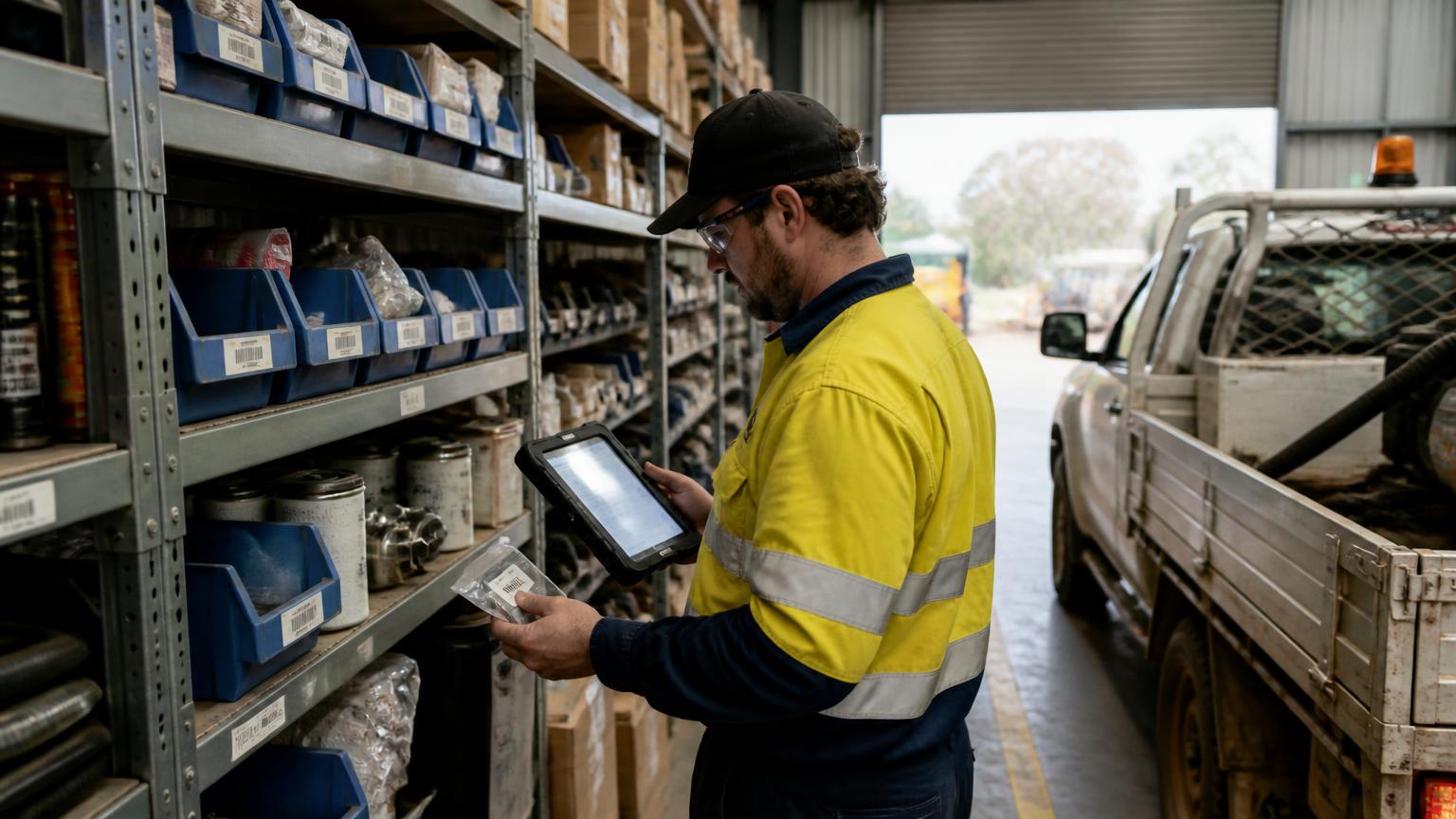
Capture the make, model and serial number, then look up the OEM part number in Parts.Cat.Com, MyKomatsu, Hitachi Parts.it or Liebherr LIDOS. The OEM number is the universal reference that every aftermarket supplier cross-references against.
2. Cross-reference into aftermarket catalogues
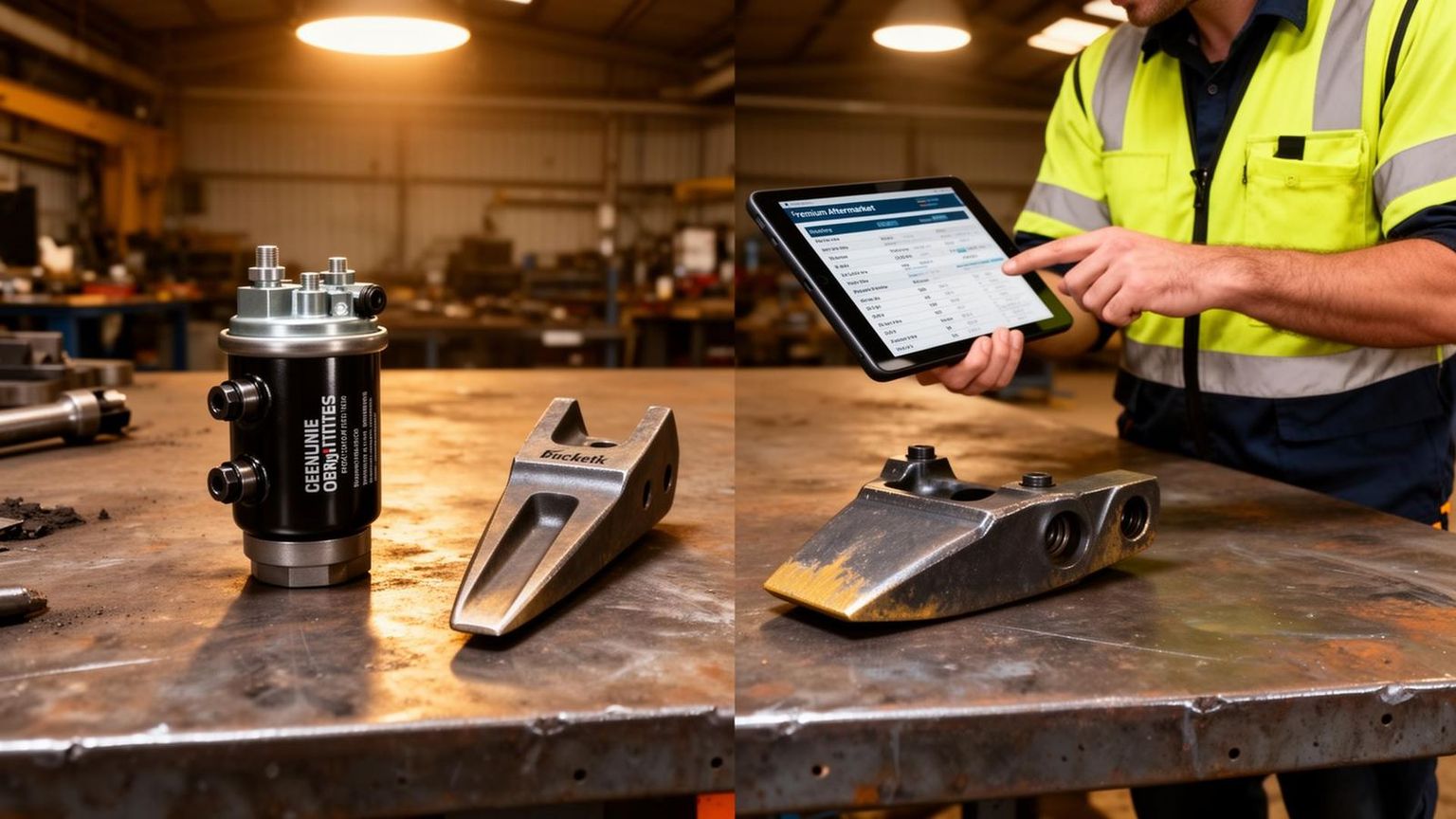
Run the OEM number through aftermarket cross-reference catalogues — Bradken, ESCO, CR Mining and Hensley for GET; Berco for undercarriage; Donaldson, Baldwin and Fleetguard for filters; Parker, Gates and RYCO for hoses and seals. Confirm the cross is for your exact serial range, not just the model.
3. Verify the spec, not just the fit
Check that the aftermarket part matches or exceeds the OEM spec — alloy grade for GET, beta-ratio and micron for filters, SAE/EN rating for hoses, ISO/DIN class for bearings, NAS cleanliness for hydraulics. A part that fits but is under-spec'd will fail faster and cost more per hour.
4. Pick a supplier close to site
For aftermarket mining parts in WA, Bradken Bassendean, ESCO Bibra Lake, CR Mining Bibra Lake, Hensley via Komatsu Welshpool and Berco distributors all run freight to the Pilbara. In QLD, Bradken Mackay, ESCO Mackay and Hastings Deering aftermarket lines cover the Bowen Basin. In NSW/VIC, Newcastle and Melbourne hubs serve Hunter Valley and SA mines.
5. Raise a PO against the machine and job
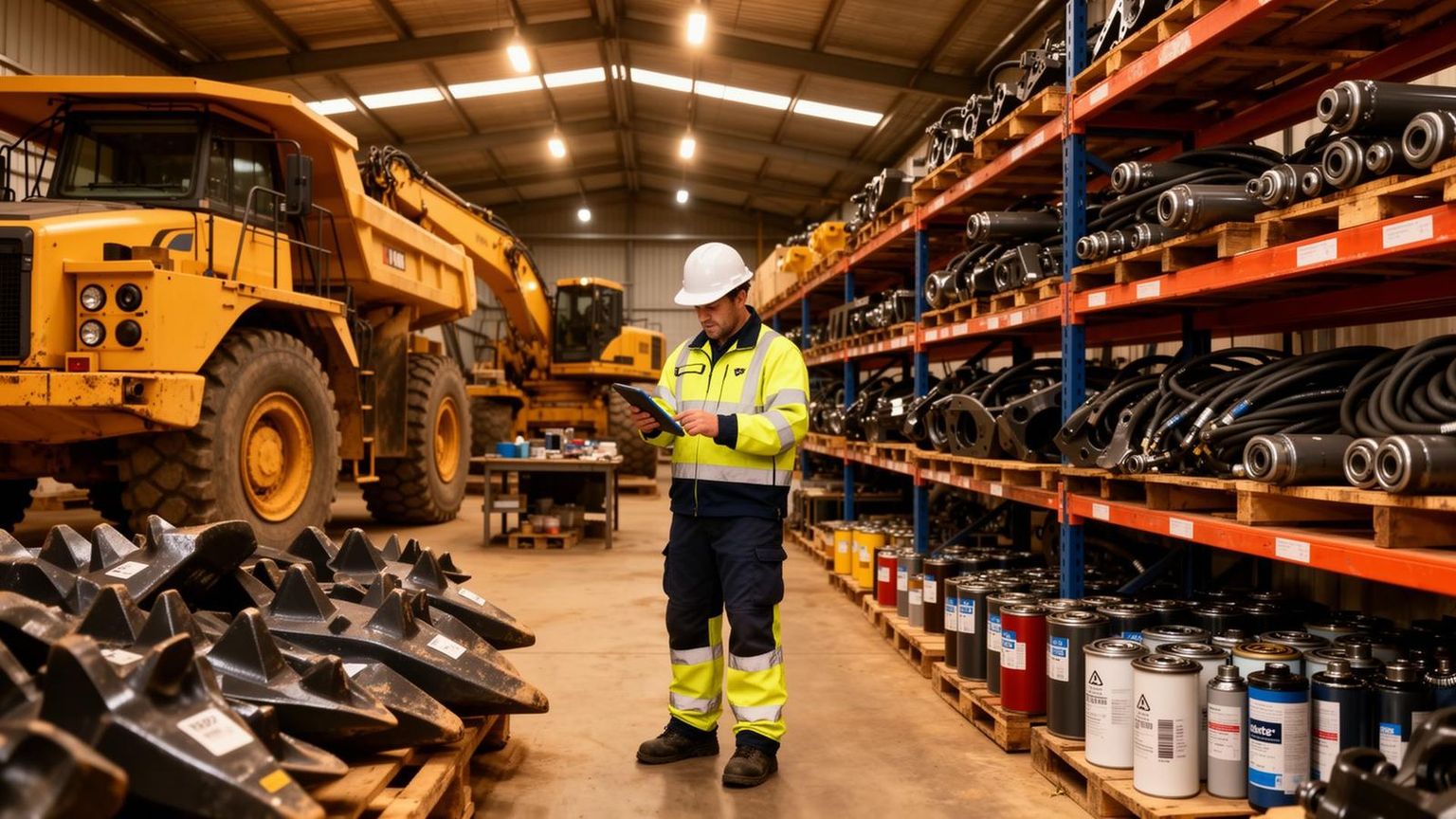
Raise the purchase order in your job and asset management software against the specific machine and the active job. Attach the OEM number, the aftermarket cross-reference, the supplier quote and the hours/tonnes from the part being replaced. This is what makes invoices match cleanly and what builds the cost-per-hour history.
6. Fit, record and benchmark
When the new part is fitted, log the date, machine hours and tonnes since last change. On the next swap, log the same data — that gives you cost-per-hour and tonnes-per-part for each supplier. Over a few cycles, the data tells you which aftermarket mining parts are actually winning on cost-per-tonne, not just sticker price.
Common mistakes when buying aftermarket mining parts
- Buying on price alone — a cheaper part with shorter life is more expensive per hour.
- Skipping the OEM cross-reference — the same machine model can take different parts depending on serial range.
- Mixing GET lock systems across brands — never run ESCO Ultralok teeth on Cat K-Series adapters.
- Using unbranded filters without a verifiable micron and beta rating — particle ingress is the #1 hydraulic killer.
- Fitting aftermarket parts on safety-critical systems (brakes, steering, ROPS) — stick to OEM.
- Not tracking hours/tonnes against the asset — without it, you can't prove whether aftermarket is winning.
Tying aftermarket parts back to jobs and assets
In SprintSuite Procurement, supervisors raise a purchase order against the machine and the active job in seconds, attach the OEM-to-aftermarket cross-reference and quote, and record the hours and tonnes on the part being replaced. The PO matches the supplier invoice when it arrives, and the parts cost flows into job management and the parts history of the machine in asset management.
Over a few change-out cycles, cost-per-hour and tonnes-per-part for each supplier become visible across the fleet — that's the data that drives smarter aftermarket vs OEM decisions at the next supplier review.
Frequently asked questions
Track aftermarket mining parts against every asset
SprintSuite gives Australian mining contractors a single place to raise aftermarket parts POs, attach OEM cross-references, match supplier invoices and benchmark cost-per-hour and tonnes-per-part across the fleet.
Book a demo