What is the best inventory management software for contractors?
If your stock exists to get jobs done, choose a job management platform with inventory built in — not a standalone warehouse tool. Contractors need parts and consumables tied to jobs, assets, purchase orders and invoices, plus truck and site stock locations that crews can issue from on a phone.
- SprintSuite — mining, engineering and heavy-industry contractors wanting stock inside jobs, assets, POs and invoicing
- Simpro — trade and service businesses with a store or warehouse
- Unleashed or Cin7 Core — deep inventory bolted onto Xero or MYOB
- Katana — fabrication and light manufacturing workshops
- MYOB Acumatica — larger contractors needing ERP-level inventory
Why contractor inventory is different
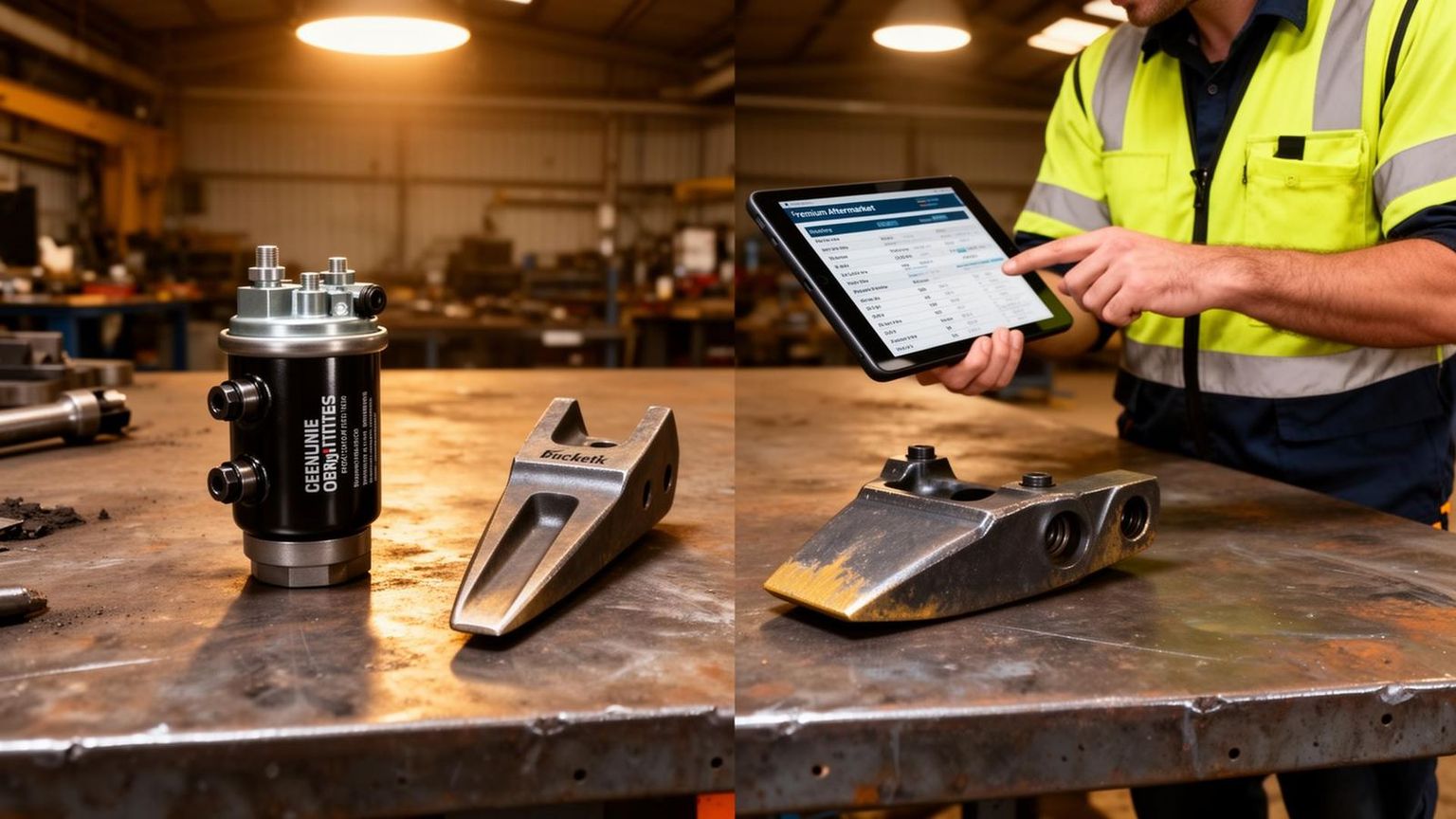
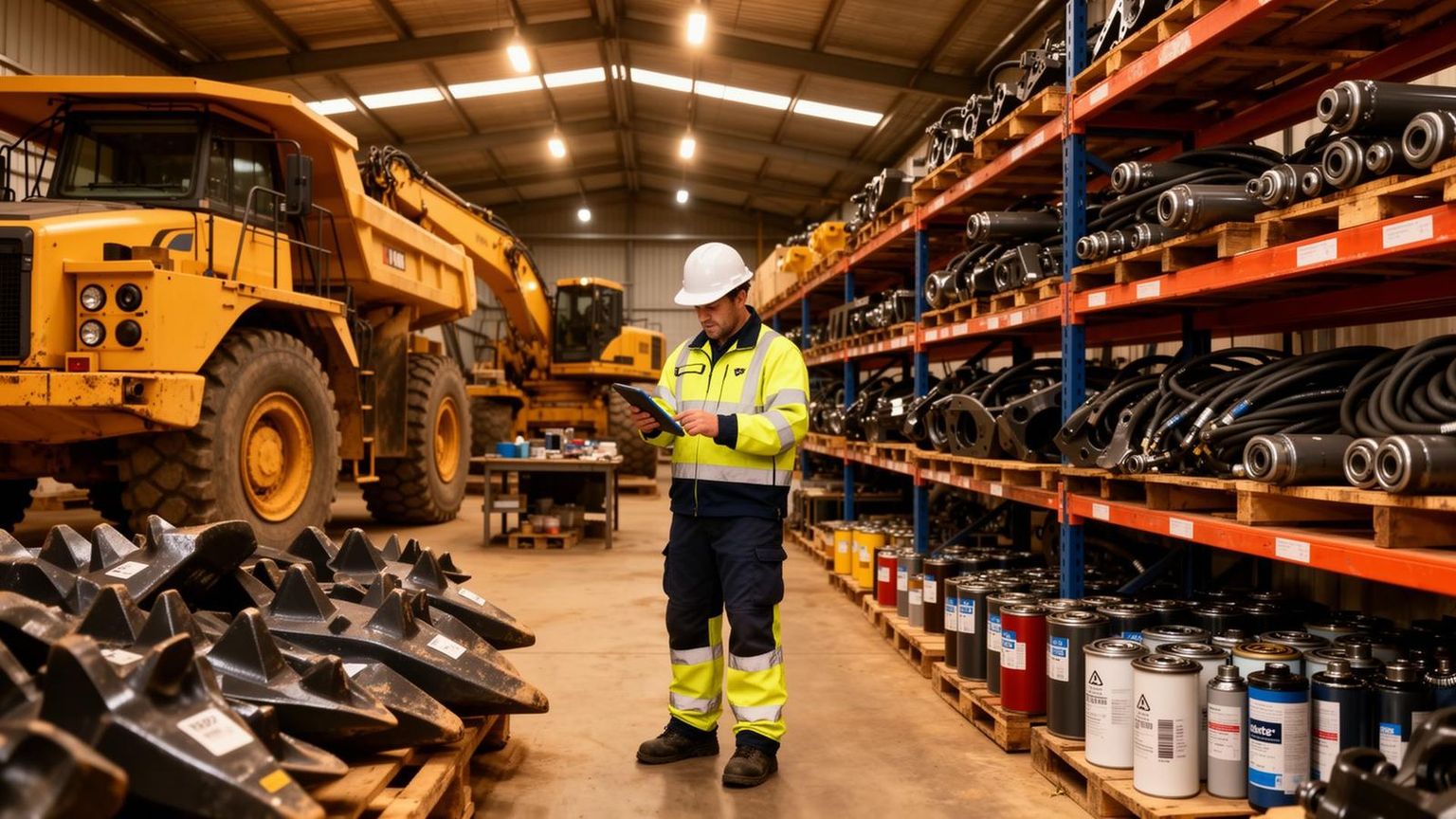
A retailer's stock leaves through a checkout. A contractor's stock leaves on a ute at 4am, gets fitted to a client's machine 300 kilometres away, and either lands on the job cost or quietly disappears. That is why generic inventory tools frustrate contractors: they count units beautifully but cannot tell you what a shutdown consumed, which asset a component went into, or whether the part was billed.
Judge any option on three questions. Can crews issue stock to a job from a phone? Does the cost appear on the job while the job is still open? And can you see stock across the store, the yard and every vehicle?
What to look for
Materials tied to jobs
Issuing a filter, hose or consumable should hit the job cost, not just reduce a stock count.
Truck and site stock
Service vehicles and site containers are stock locations too. You need visibility of what is on each one.
Barcode or scan-based issue
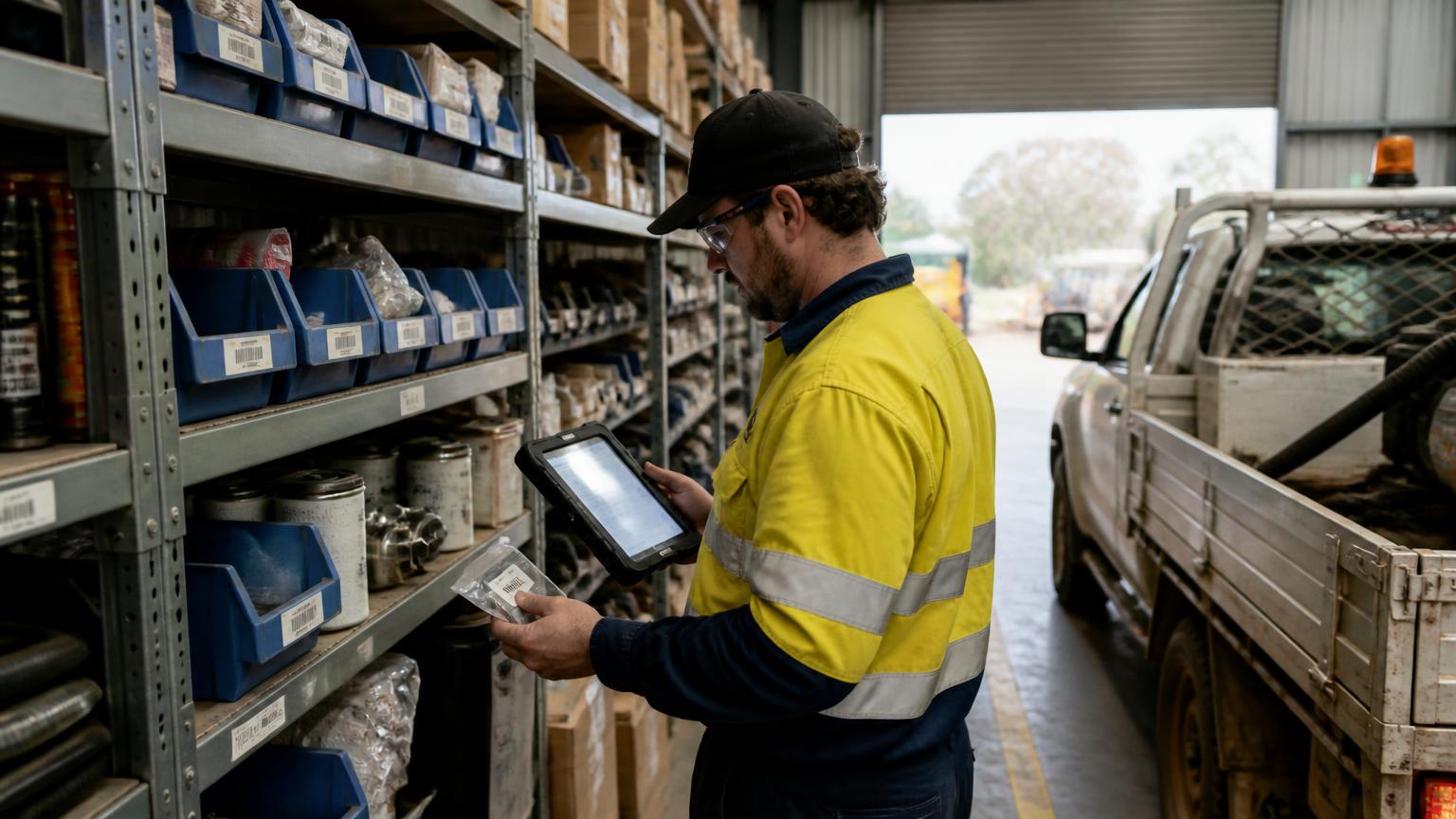
Scanning a bin or part is the only realistic way crews record usage consistently.
Reorder points and alerts
Minimum levels per location so critical spares are reordered before a breakdown, not after.
Purchase orders and approvals
Requests raised from the field, approved against a budget, and receipted against the PO.
Serial, batch and warranty data
Needed for major components, warranty claims and client reporting on rebuilt assets.
Stocktake and variance reporting
Cycle counts you can actually complete, with variance visible instead of buried.
Accounting integration
Stock values, purchases and cost of goods flowing to MYOB, Xero or your ledger without double entry.
Eight options compared
SprintSuite
Best for: Mining, engineering and heavy-industry contractorsStock, consumables and parts sit inside the same platform as jobs, scheduling, assets, purchase orders, timesheets and invoicing. Materials issued to a job land on the job cost immediately, purchase requests can be raised from the field, and stock movement is tied to the asset or work order it was used on.
Watch out: Built for field and workshop contractors rather than retail or ecommerce inventory.
Simpro
Best for: Trade and service businesses with a store or warehouseEstablished job management platform with stock locations, catalogue pricing and prefabs. Strong for plumbing, electrical and HVAC contractors already running the full suite.
Watch out: Heavier setup, and mining-grade compliance and site inductions usually need another system.
Unleashed
Best for: Contractors who want deep inventory on top of XeroDedicated inventory platform with batch and serial tracking, multiple warehouses and purchase management, syncing to Xero for accounting.
Watch out: It is inventory-first — no job scheduling, field app, timesheets or compliance.
Cin7 Core
Best for: Businesses moving stock across multiple locationsMulti-location stock control, assembly, serial and batch tracking with strong reporting and warehouse workflows.
Watch out: Aimed at product and wholesale businesses; job costing for labour-heavy work is limited.
Katana
Best for: Fabrication and light manufacturing workshopsGood for contractors who also manufacture or assemble: bills of materials, work orders and material availability against production.
Watch out: Manufacturing-shaped rather than field-service shaped.
MYOB Acumatica
Best for: Larger contractors wanting ERP-level inventoryFull ERP inventory, warehouse and procurement modules with project accounting for bigger, multi-entity contractors.
Watch out: Longer, costlier implementations and usually a partner-led rollout.
Fishbowl
Best for: Warehouse-driven stock control alongside accountingBarcode scanning, cycle counting, reorder points and warehouse management bolted onto accounting software.
Watch out: Little to do with jobs, crews or site compliance.
Spreadsheets and a stock cupboard
Best for: Very small operations with one locationFree and flexible. Works while one person knows where everything is and the truck stock is small.
Watch out: No live counts, no reorder alerts, and material cost never reaches the job accurately.
Feature sets and pricing change regularly — confirm the current detail with each vendor before you shortlist.
What good inventory control actually gets you
- Fewer wasted trips because critical spares are on the shelf
- Material cost landing on the job while it is still live
- Less overordering and less stock written off at year end
- Truck stock visible instead of a mystery
- Warranty claims supported by serial and batch records
- Purchases approved before they become an invoice surprise
What it costs in Australia
Dedicated inventory platforms commonly sit somewhere between about $100 and $500 per month depending on locations, users and transaction volume. Inventory delivered as part of a job management platform is usually bundled into a per-user monthly licence, which is why contractors who need both rarely buy them separately. ERP-level inventory costs materially more once implementation is included.
The number worth comparing is not the licence. It is the value of stock you currently cannot see, the emergency freight you pay when a spare is missing, and the materials that never reach an invoice.
Tax and record-keeping notes
If you hold trading stock, the ATO sets out how to value it and when a stocktake is required — see the ATO trading stock guidance . Purchase and stock records also form part of your business record-keeping obligations , so keep supplier documents attached to the transaction rather than in a drawer.