Quick Answer
To run a toolbox meeting about respect on site:
- Frame it as risk management, not politics — psychological safety is a WHS duty
- Use a real, recent example of disrespect or exclusion (de-identified)
- Cover banter vs bullying, language, and how to call it out
- Explain how to report safely and confidentially
- Finish with a clear commitment the crew signs off on
This Is Not a Soft Issue — It's a Safety Control
Toolbox talks in mining and heavy industry typically focus on equipment, procedures, hazards and compliance. Rarely do they focus on communication and workplace behaviour. Yet increasingly, research and industry investigations show that culture and communication are directly linked to safety outcomes.
In high-risk environments, hesitation can be dangerous. If someone does not understand an instruction but feels uncomfortable asking for clarification, that creates risk. If a worker notices a hazard but is unsure whether they will be taken seriously, that creates risk. If assumptions or language barriers cause miscommunication, mistakes become more likely.
The Evidence:
- →Google's Project Aristotle: Psychological safety is the strongest factor influencing team effectiveness
- →Safety Science (2020): Inclusive leadership behaviours significantly improve hazard reporting and safety compliance
- →IOGP: Communication breakdown and organisational culture are contributing factors in major incidents
Why This Matters in Mining & Heavy Industry
Australia's mining and heavy industry workforce is increasingly diverse. According to the Australian Bureau of Statistics, nearly 30% of Australia's workforce is overseas-born, and hundreds of languages are spoken across the country. On many mine sites, crews include workers from multiple cultural and linguistic backgrounds.
FIFO operations and contractor-heavy environments add further complexity. Rotating crews, varied communication styles and differing experience levels increase the potential for misunderstanding.
Safe Work Australia consistently highlights human factors — including communication failures and organisational culture — as contributors to serious workplace incidents. In high-risk industries, many major investigations point not to a single mechanical failure, but to a chain of small breakdowns in communication and decision-making.
When people feel respected, they are more likely to:
- ✓Clarify unclear instructions
- ✓Report near misses
- ✓Raise safety concerns
- ✓Support teammates
- ✓Challenge unsafe behaviour
Respect strengthens psychological safety. Psychological safety strengthens physical safety.
How to Structure the Toolbox Meeting
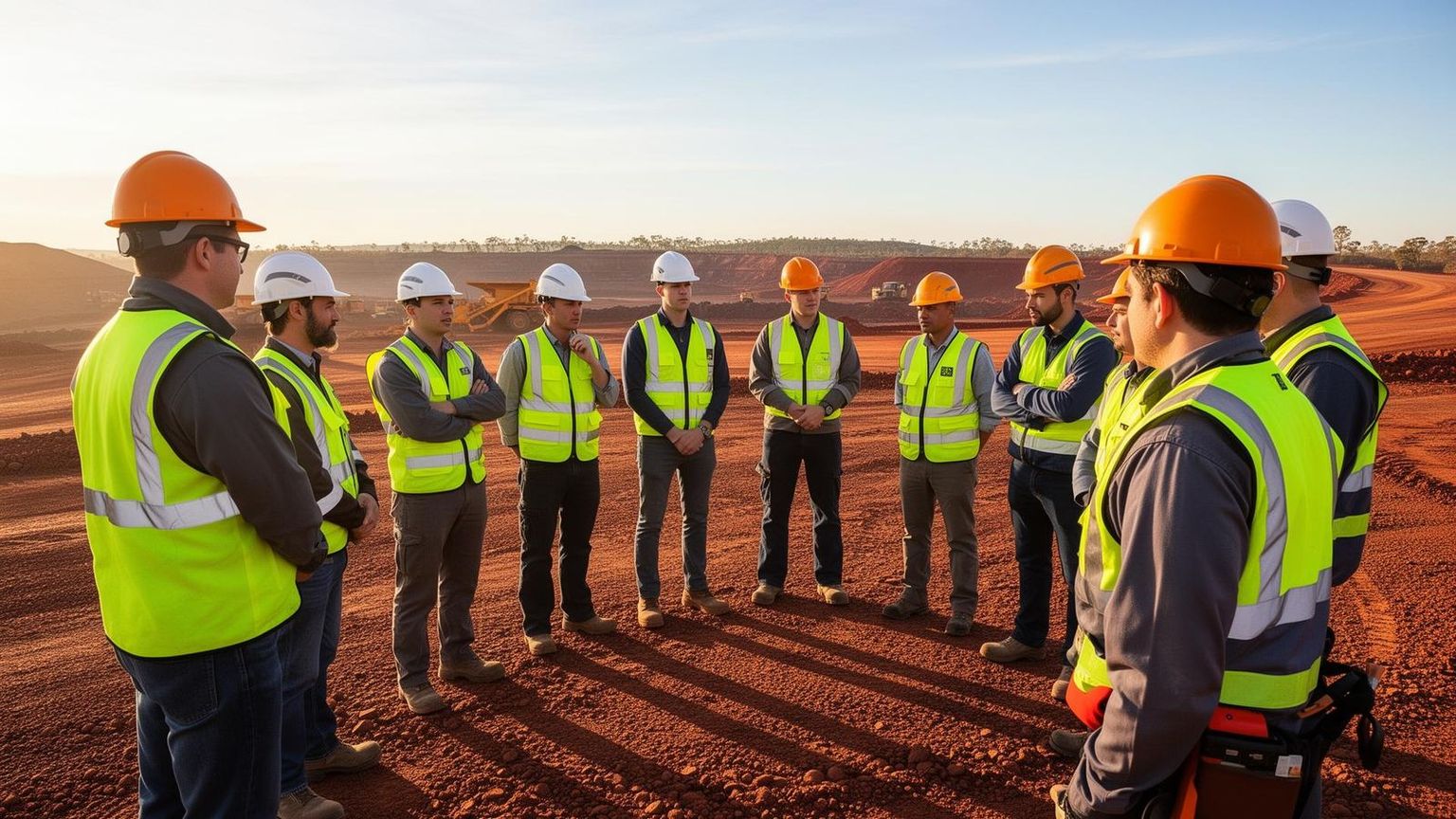
A toolbox talk about respect should be short, structured and directly linked to site safety. Start by framing the conversation clearly. Make it explicit that the focus is professionalism and risk reduction — not politics or social commentary.
A strong opening might be:
"Today we're talking about working respectfully across cultures on site. This isn't about politics — it's about safety, professionalism and making sure everyone feels confident to speak up."
From there, explain the risk connection in practical terms. Reinforce that misunderstandings can lead to mistakes. Emphasise that confirming understanding is a safety behaviour, not a weakness.
Keep the discussion behaviour-focused:
1.Use clear, simple communication and avoid excessive slang
2.Confirm understanding rather than assuming it
3.Avoid assumptions about skill, intelligence or background
4.Be mindful of humour — professionalism strengthens team culture
5.Respect cultural or religious practices where operationally possible
6.Address disrespectful behaviour early
Encouraging Engagement Without Derailing
To encourage engagement without derailing the meeting, ask one or two focused questions:
"What makes someone hesitate to speak up on our site?"
"What can we do as a crew to make it easier to ask questions?"
Allow brief discussion, then close by reinforcing leadership standards. Respect is not about perfection. It is about professionalism and maintaining a culture where everyone goes home safe.
Additional Resources Supervisors May Need
For supervisors running these conversations, having structured resources helps maintain clarity and consistency. Useful tools may include:
- ✓A short, scripted 5-minute toolbox talk template
- ✓A sign-off sheet to document discussion and attendance
- ✓A checklist of practical behaviours to reinforce
- ✓WHS policy references relating to workplace conduct
- ✓Company values or code of conduct summaries
- ✓Links to mental health or EAP services if broader discussions arise
Many industry bodies, including the Queensland Resources Council (QRC) and Chamber of Minerals and Energy WA (CME WA), provide guidance around inclusive leadership as part of modern safety frameworks.
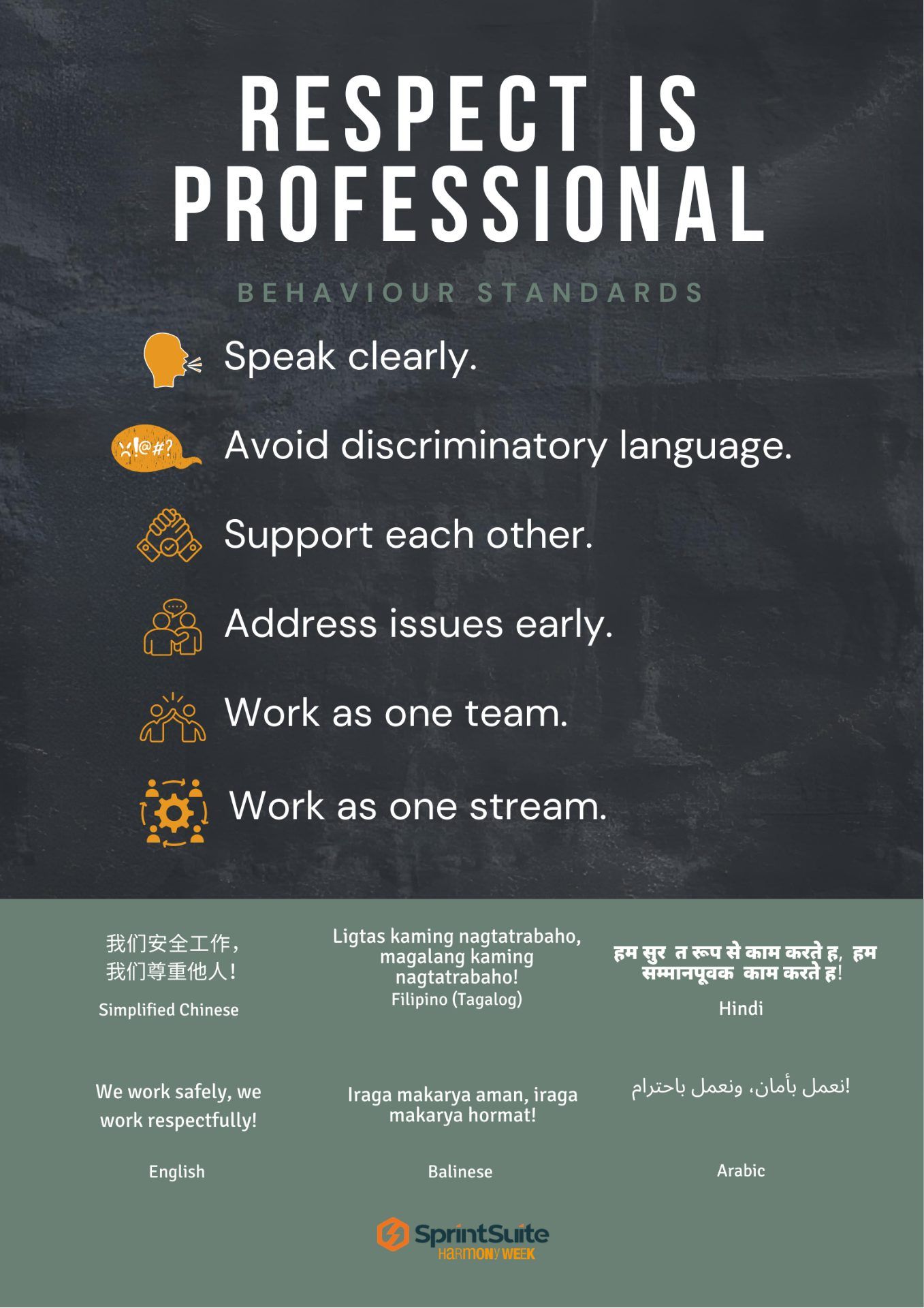
Harmony Week Toolbox Talk Kit
A ready-to-use resource pack designed for mining and heavy industry supervisors:
- Printable Site Posters — Designed for crib rooms and site offices
- Toolbox Talk Template — Step-by-step guide with talking points and prompts
- Safety Tie-Ins — Links respect to hazard reporting and communication
- Facilitator Tips — Short notes for supervisors leading the discussion
The Bigger Picture
Mining and heavy industry already enforce strict standards for lockout procedures, PPE compliance and documentation. Workplace culture deserves the same discipline.
Engineering controls
Reduce mechanical risk
Procedural controls
Reduce process risk
Cultural controls
Reduce human-factor risk
Major incident investigations repeatedly show that small communication breakdowns accumulate over time. A culture where people feel confident asking questions and raising concerns is one of the most powerful preventative measures available.
A toolbox meeting about respect, when handled correctly, reinforces a simple operational standard:
- ✓Clear communication
- ✓Professional behaviour
- ✓Zero hesitation when safety is involved
Because in high-risk environments, the most dangerous words are often: "I didn't want to say anything."