Quick Answer
FIFO stands for fly-in fly-out. It is a work arrangement where an employer flies workers to a remote workplace, houses them in on-site camp accommodation for a set block of days called a swing, then flies them home for a block of rostered days off.
- Typical rosters: 8/6, 2/1, 7/7 and 14/7, on 10 to 12.5 hour day or night shifts.
- Who uses it: remote mining, oil and gas, drilling, and remote construction — plus the contractors and camp services that support them.
- Employer pays: flights from a nominated point of hire, transport to site, a room in the camp and all meals.
- Related terms: DIDO (drive-in drive-out) and BIBO (bus-in bus-out) use the same rosters with different travel.
FIFO meaning, in one sentence
FIFO means you do not live where you work. Australia's biggest mines, gas fields and remote projects sit hundreds or thousands of kilometres from the cities where people actually want to live, so instead of building a town for every project, employers fly a workforce in on a roster and fly it home again. The site runs continuously; the people rotate.
It is a normal, mainstream way to work in Australia — tens of thousands of tradespeople, operators, engineers, cooks, cleaners, medics and administrators do it. The pay is generally higher than the equivalent town-based role, and the time off comes in blocks rather than weekends.
How FIFO work actually works
You are hired for a roster, not a location
Your contract or EBA sets a swing — a block of days on site followed by a block of days at home — instead of a Monday-to-Friday week near where you live.
The employer pays to get you there
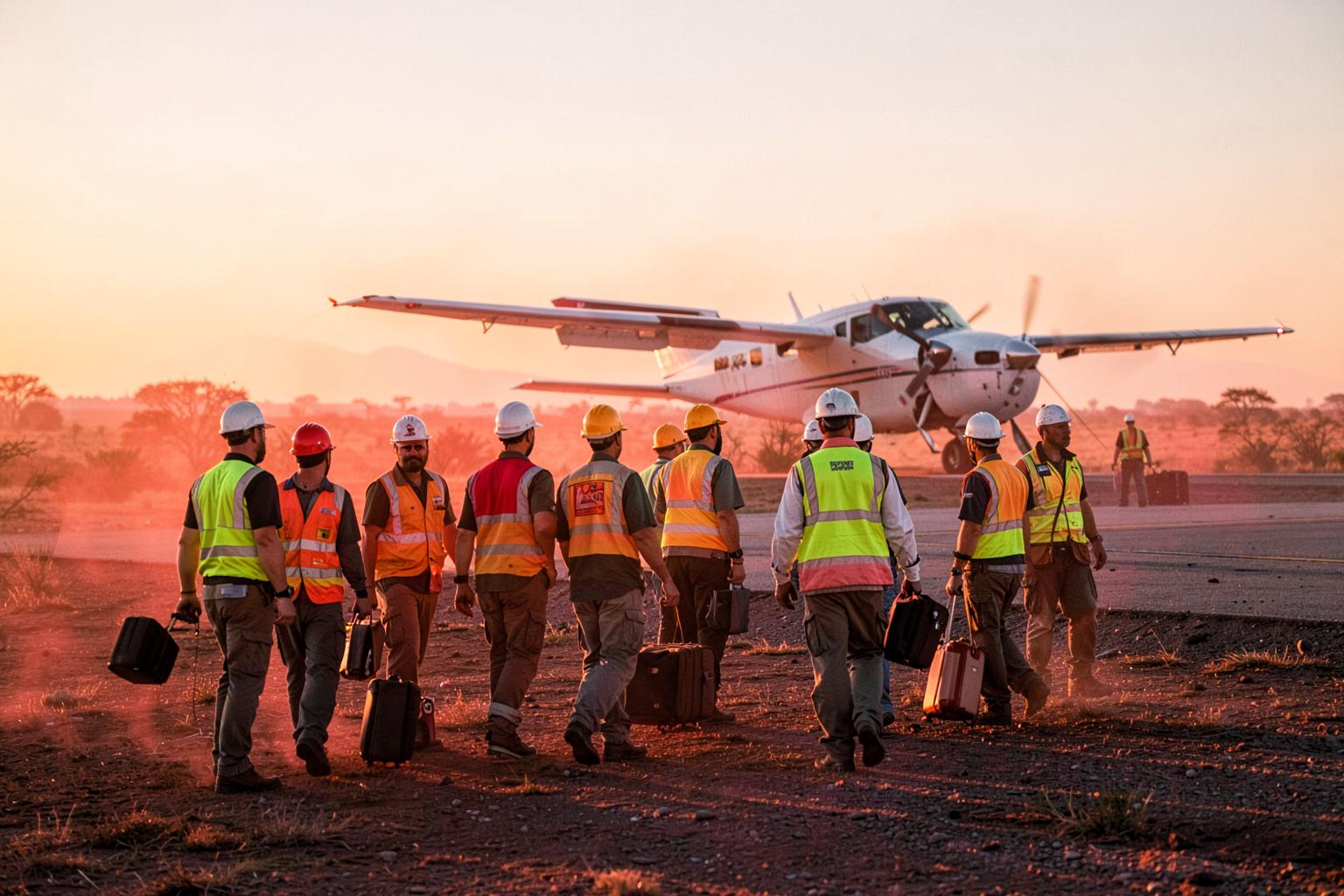
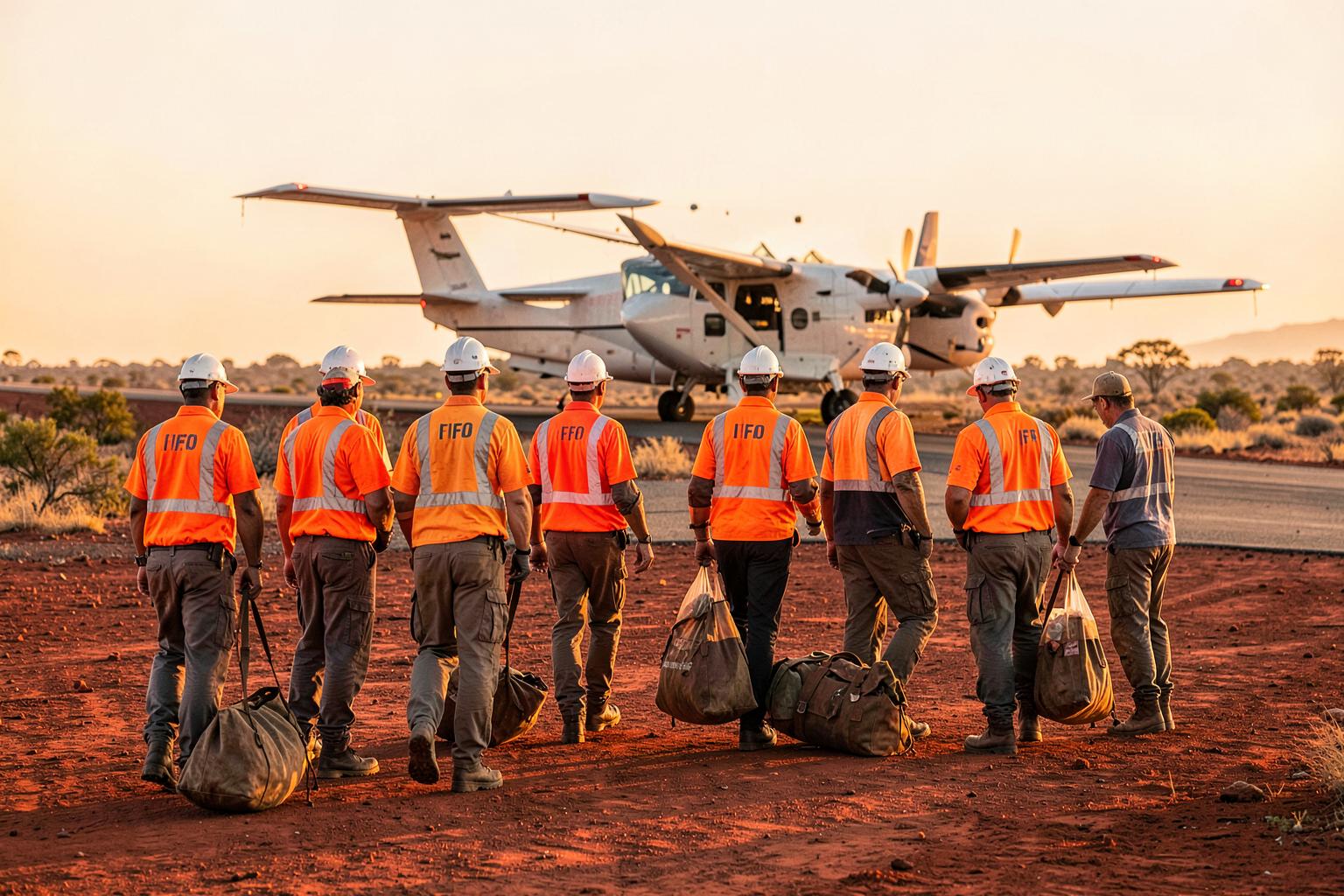
Flights from a nominated 'point of hire' city, or a charter straight to the mine's own airstrip, are arranged and paid for by the employer.
You live on site while you work
Accommodation is a camp or village: a single room, a mess for meals, a wet mess, gym and laundry, all provided.
Shifts are long and continuous
Typically 10 to 12.5 hours a day, day shift or night shift, every day of the swing — including weekends and often public holidays.
You fly home for your break
At the end of the swing you fly back to your home city on your rostered days off, unpaid travel time in some agreements, paid in others.
Compliance travels with you
Inductions, licences, VOCs, a site medical and drug and alcohol clearance have to be current for every swing, not just the first one.
Travel: point of hire, charters and airstrips
Your point of hire is the city your employer flies you from — commonly Perth, Brisbane, Adelaide, Cairns, Townsville, Mackay or Newcastle. From there you either take a scheduled flight to a regional airport such as Karratha, Port Hedland, Kalgoorlie, Emerald or Moranbah and continue by bus, or board a charter that lands on the mine's own airstrip.
Travel days are where most confusion sits. Some agreements treat the flight day as a paid work day, some as a part-day, some as your own time. Check how travel is treated before you accept a roster, because on a 2/1 it is the difference between 13 and 14 paid days a swing.
Accommodation: what camp life looks like
Most FIFO workers live in a camp or village of demountable rooms. A standard room has a single bed, air conditioning, a desk, TV and an ensuite. Some older camps still have shared bathrooms, and some sites use motelling, where you are allocated a different room each swing rather than keeping your own.
Meals are provided in the mess — breakfast, a crib or packed lunch for shift, and dinner. Villages usually have a gym, laundry, a wet mess with limited alcohol service, a pool in warmer regions and internet that ranges from good to memorable. Camp rules on alcohol, noise, visitors and sleeping hours are enforced, because half the camp is on night shift.
Common FIFO rosters explained
A roster is written as days on / days off. These are the patterns you will see most often in Australia:
8/6
Eight days on, six days off. Common on WA iron ore and gold operations.
2/1
Two weeks on, one week off. Widely used for construction, shutdowns and drilling.
7/7
Seven on, seven off — even time, popular for retention and often day/night rotating.
14/7
Fourteen on, seven off. High earnings, hard on fatigue management.
9/5 or 5/2/4/3
Closer to a residential pattern, used where a town or DIDO workforce is nearby.
4/3
Four on, three off — most common for DIDO and bus-in bus-out crews.
For the full breakdown of days worked per year and who uses each pattern, see what are the most common FIFO rosters — and if you are the one building them, how to make FIFO rosters.
Who uses FIFO, and which industries
Mining and minerals processing
Iron ore in the Pilbara, coal in the Bowen Basin and Hunter Valley, gold around Kalgoorlie, and lithium, nickel and copper operations across WA, SA and the NT.
Oil, gas and LNG
Onshore gas fields in Queensland and offshore and remote LNG facilities in WA and the NT, often on longer swings.
Mining contractors and services
Maintenance, shutdowns, drill and blast, earthmoving, labour hire, mechanical and electrical trades — most FIFO workers are employed by a contractor, not the mine.
Construction and infrastructure
Remote projects: rail, ports, renewables, water and defence work far from any residential workforce.
Support and camp services
Catering, cleaning, camp management, security, medics, emergency response, IT and administration all run on FIFO rosters too.
FIFO vs DIDO vs BIBO vs residential
| Model | How you get there | Where you sleep |
|---|---|---|
| FIFO | Employer-paid flight or charter | Camp or village on site |
| DIDO | You drive, often with a travel allowance | Camp, or home if close enough |
| BIBO | Company bus from a town or city | Camp or home |
| Residential | You live in the mining town | Your own house, every night |
The honest trade-offs
Why people do it
Higher pay than the equivalent town-based role, long blocks of time off, accommodation and meals covered, no commute during the swing, and clear career paths into supervision or trades.
What makes it hard
Time away from family, missed events, disrupted sleep on rotating shifts, fatigue by the back end of a swing, shared camp living, and the discipline required to manage money and health across on and off cycles.
Pay, hours and compliance in Australian FIFO work
Pay is set by an award or agreement
Most FIFO work sits under an enterprise agreement or a modern award such as the Mining Industry Award or Black Coal Mining Industry Award. Those instruments set ordinary hours, overtime, shift and site allowances, and how travel and rostered days off are treated.
Fatigue is a WHS duty, not a preference
Rosters, shift lengths, travel time and rest breaks are part of a PCBU's duty to manage fatigue risk. Mining regulators in WA, QLD and NSW publish guidance on shift and roster design and expect it to be documented.
Site access depends on current records
A FIFO worker needs current inductions, licences, verifications of competency, a site or coal board medical and drug and alcohol clearance. If any of these lapse mid-swing the worker is no longer cleared for site.
Hours and records must be kept
Employers must keep accurate records of hours worked, allowances, leave and travel for the periods set by the Fair Work Act, and safety and health monitoring records under WHS and mining legislation.
Before your first swing: a quick checklist
- Right to work evidence and photo ID verified.
- Site or coal board medical booked and completed.
- Pre-employment drug and alcohol screen done inside the site's accepted window.
- Site general induction and any area inductions completed.
- Licences and high risk work tickets current for the role.
- Verifications of competency for every machine you will operate.
- Site-standard PPE, including any respirator fit test.
- Roster, point of hire and how travel days are paid confirmed in writing.
- Flights, bus transfers and camp room allocated for the first swing.
Related reading: The most common FIFO rosters · How to make FIFO rosters · What does mobilisation mean in mining · How to get mining tickets · Staff management.
FIFO — FAQs
This article is general information for Australian mining and heavy industry workers and contractors, not legal or financial advice. Pay, rosters and site requirements vary — confirm them with your employer, the relevant award or agreement, and your state regulator.