Quick Answer
To find the right mining parts in Australia, always start with the machine's serial number, not the model. Search the OEM portal (Parts.Cat.Com, MyKomatsu, Hitachi Parts.it, Liebherr LIDOS) or your authorised dealer portal, cross-check against your mining equipment database, then order through a purchase order tied to the job and asset so parts cost flows into job profitability and maintenance history.
- Start with: Serial number from the data plate
- Portals: Parts.Cat.Com, MyKomatsu, Hitachi Parts.it, Liebherr LIDOS, Volvo Parts Express
- Hours: 24/7 ordering; dispatch in dealer hours
- Best for: Mining, earthmoving and heavy civil fleets
Wrong-part returns cost Australian mining contractors days of downtime every year — usually because someone ordered parts for mining equipment using the model number instead of the serial number, or because the asset register didn't show the right machine details.
This guide walks through how to find the right mining equipment spares the first time, which OEM portal covers each major brand, why a clean mining equipment database matters, and how to tie every parts order back to a job and an asset.
Why mining parts go wrong: model vs serial
Mining OEMs change parts inside the same model name across serial ranges. A Caterpillar 793F built in 2014 has different filters, hoses and sensors to a 2022 build. A Komatsu PC2000-8 has multiple build variants. A Hitachi EX5600 changes again between Stage 4 and Stage 5 engines. Ordering parts for mining equipment from the model alone almost always returns the wrong SKU. The serial number is the only reliable input.
Mining parts Australia: OEM portals at a glance
| OEM | Online portal | Australian dealer/support |
|---|---|---|
| Caterpillar | Parts.Cat.Com | WesTrac, Hastings Deering, Cavpower, William Adams |
| Komatsu | MyKomatsu | Komatsu Australia |
| Hitachi | Hitachi Parts.it | Hitachi Construction Machinery (Australia) |
| Liebherr | LIDOS / MyLiebherr | Liebherr-Australia |
| Volvo CE | Volvo Parts Express | CJD Equipment |
| Sandvik | My Sandvik | Sandvik Mining Australia |
| Epiroc | MyEpiroc | Epiroc Australia |
What is a mining equipment database?
A mining equipment database is your asset register — a single source of truth that records every machine in your fleet with make, model, serial number, year, hours, location, ownership, compliance and service history. Without it, parts ordering becomes a phone call to "find the serial number on the stickered windscreen", which is how wrong-part orders happen.
In SprintSuite Asset Management, every machine is its own record. Prestarts, services, parts orders and jobs all write back to that asset, so when you need to order mining equipment spares, the serial number, hours and last service date are already there.
How to find the right mining parts: step by step
1. Start with the machine's serial number, not the model
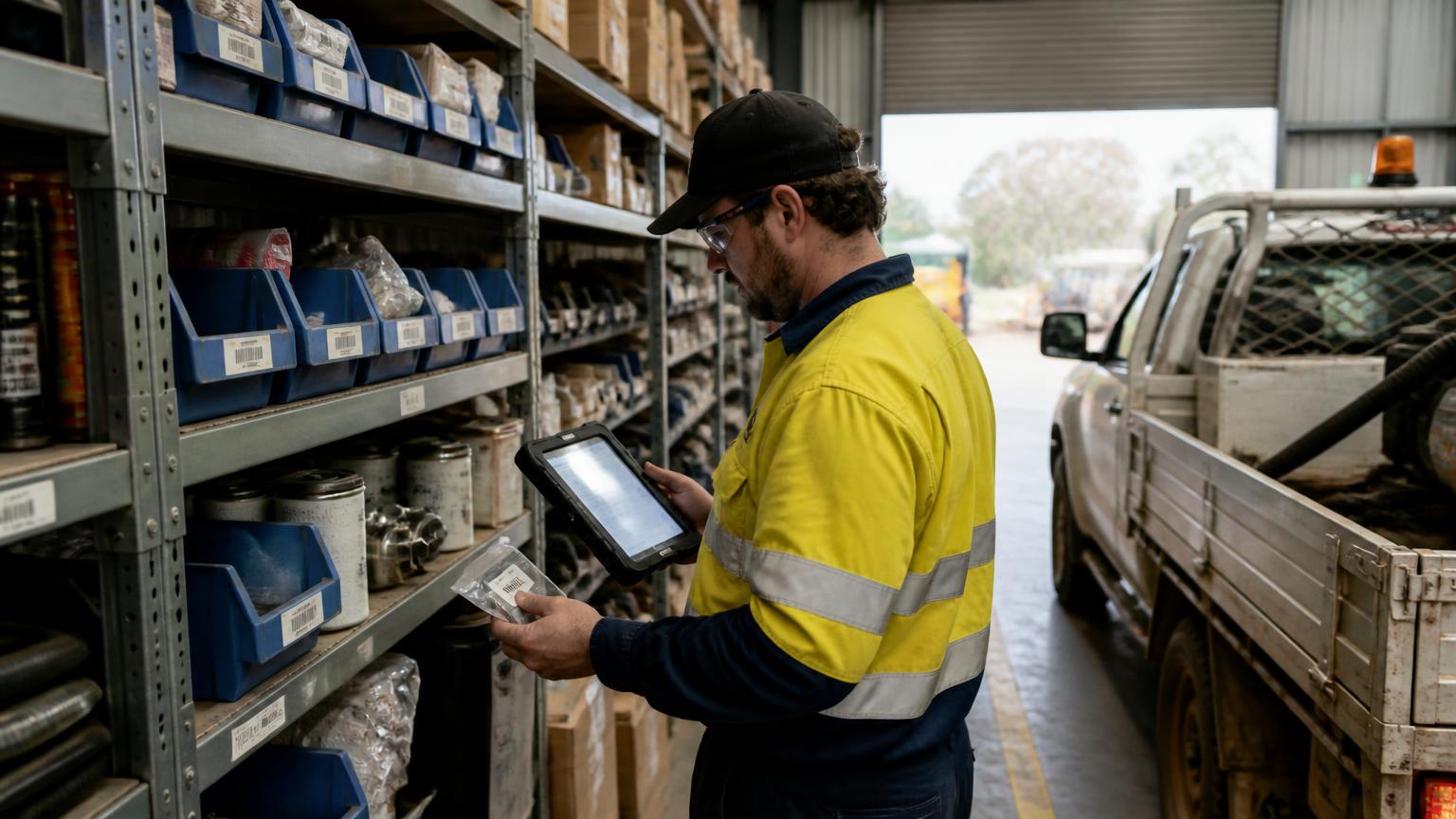
Pull the serial number from the data plate or your asset register. OEM catalogues are organised by serial range — searching by model alone is the single biggest cause of wrong mining equipment spares being shipped.
2. Identify the correct OEM portal or authorised dealer
Caterpillar parts go through Parts.Cat.Com and a Cat dealer (WesTrac, Hastings Deering, Cavpower, William Adams). Komatsu parts go through MyKomatsu. Hitachi runs Parts.it. Liebherr runs LIDOS. Volvo CE runs Volvo Parts Express. Aftermarket suppliers should cross-reference OEM numbers.
3. Search the catalogue by serial, part number or assembly
Inside the portal, search by serial number to load the correct genuine parts manual for that build, then drill into the exploded assembly diagram. Confirm supersessions and compatible alternatives before adding to cart.
4. Check your mining equipment database for similar fits
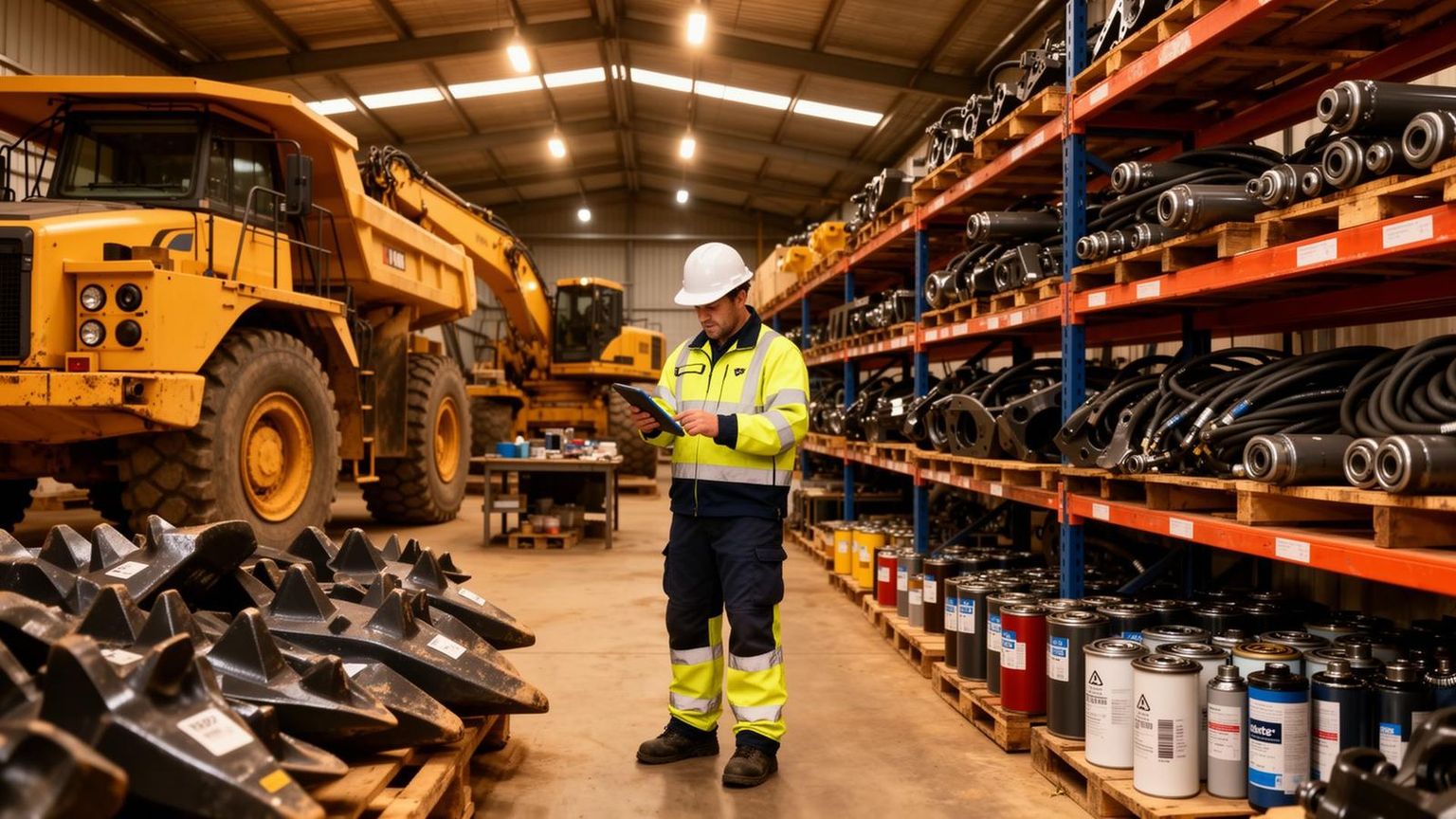
Before ordering, check your asset register: do you already hold the part on another identical machine? A good mining equipment database surfaces fleet commonality so you can rationalise stock and avoid double-ordering during shutdowns.
5. Choose pickup, freight or hot-shot delivery
Branch pickup is fastest if your workshop is close to the dealer. Freight covers planned services and shutdowns. Hot-shot delivery is for breakdowns at remote mines. Pick the option that matches the job's downtime cost.
6. Raise the PO, record the order, reconcile against the asset
Raise the purchase order against the job and the asset, record the OEM order number, and reconcile the supplier invoice when it arrives. The parts cost flows into job profitability and the asset's maintenance history — automatically.
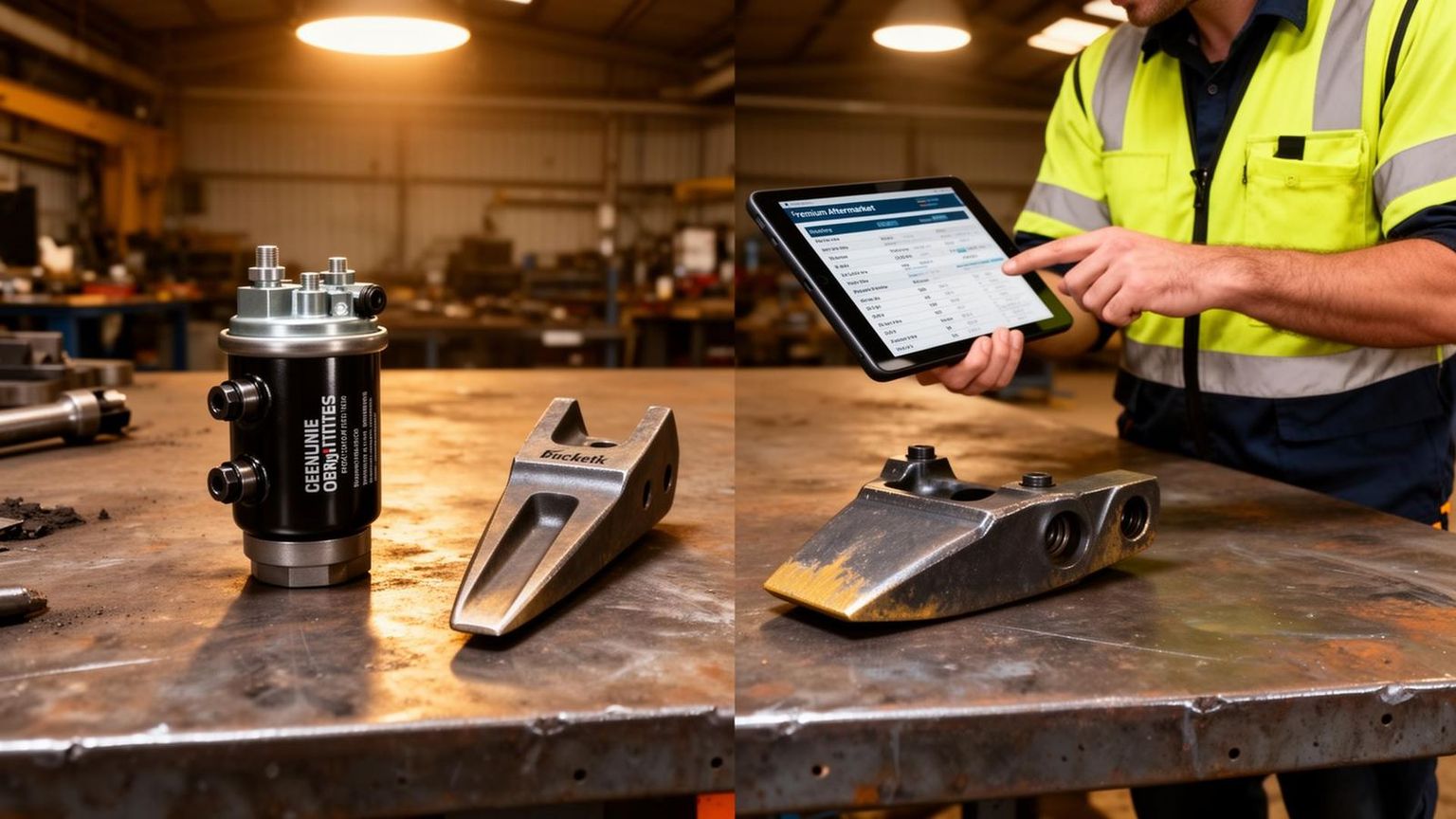
OEM vs aftermarket mining equipment spares
| Factor | OEM parts | Aftermarket spares |
|---|---|---|
| Warranty coverage | Maintains OEM warranty | Varies by supplier |
| Best for | Safety-critical & engine internals | Wear items, filters, lights, GET |
| Lead time | OEM stock at dealer | Often local stock |
| Compliance | Aligned with OEM service manual | Confirm against OEM cross-reference |
| Cost | Premium | Lower, but verify quality |
Tying mining parts orders back to jobs and assets
The real value of getting mining parts right comes when every order is linked to a job and an asset. Without that, parts cost lives in your accounting system and never connects back to job profitability or the machine's maintenance history.
In SprintSuite Procurement, you raise a purchase order against a job and asset, record the OEM order number, and let the invoice match against that PO when it arrives. From there, the parts cost rolls into job management and the work history of the machine in asset management.
That means the next time you quote a similar job, your numbers are grounded in real mining equipment spares cost — not a guess.
Frequently asked questions
Build your mining equipment database in SprintSuite
SprintSuite gives Australian mining contractors a single place to register every machine, raise purchase orders, match OEM invoices, and tie every part back to a job and an asset.
Book a demo