Quick Answer
To get urgent mining equipment parts delivered in Australia, confirm the machine serial number, call your OEM dealer's 24/7 breakdown line (Caterpillar, Komatsu Australia, Hitachi, Liebherr or Volvo CE), raise a hot-shot PO, and dispatch the parts by light truck, driver relay or charter flight straight to site. A clean asset database with serial numbers and authorised buyers is the difference between hours and days.
- Channel: OEM 24/7 breakdown lines + hot-shot freight
- Coverage: Pilbara, Goldfields, Bowen Basin, Hunter Valley, NT, SA
- Typical ETA: 4–12 hours by road, 2–4 hours by charter
- Best for: Mining parts Australia, mining equipment spares, breakdown response
On an Australian mine, an hour of haul-truck or excavator downtime can cost more than a year's worth of freight. That changes the maths on mining equipment supply: the question isn't whether urgent freight is expensive — it's whether your team can get the right mining parts onto site fast enough to keep production running.
This guide walks through how to source urgent mining equipment spares in Australia, who to call, which freight method to use, and how to use your asset and job data so the right part lands at the gate the first time.
Mining parts Australia: who to call for urgent supply
Every major OEM dealer in Australia runs a 24/7 breakdown line for mining equipment spares. Programme these into your supervisors' phones before you need them.
| OEM / supplier | Covers | Urgent supply channel |
|---|---|---|
| WesTrac (Cat) | WA, NSW, ACT | 24/7 breakdown + Parts.Cat.Com |
| Hastings Deering (Cat) | QLD, NT | 24/7 breakdown + Hastings portal |
| Komatsu Australia | Nationwide | 24/7 breakdown + MyKomatsu |
| Hitachi Construction Machinery Australia | Nationwide | 24/7 breakdown + HCA portal |
| Liebherr Australia | Nationwide mining | 24/7 breakdown + LIDOS |
| Volvo CE Australia | Nationwide | 24/7 breakdown + dealer portal |
What is hot-shot delivery for mining equipment spares?
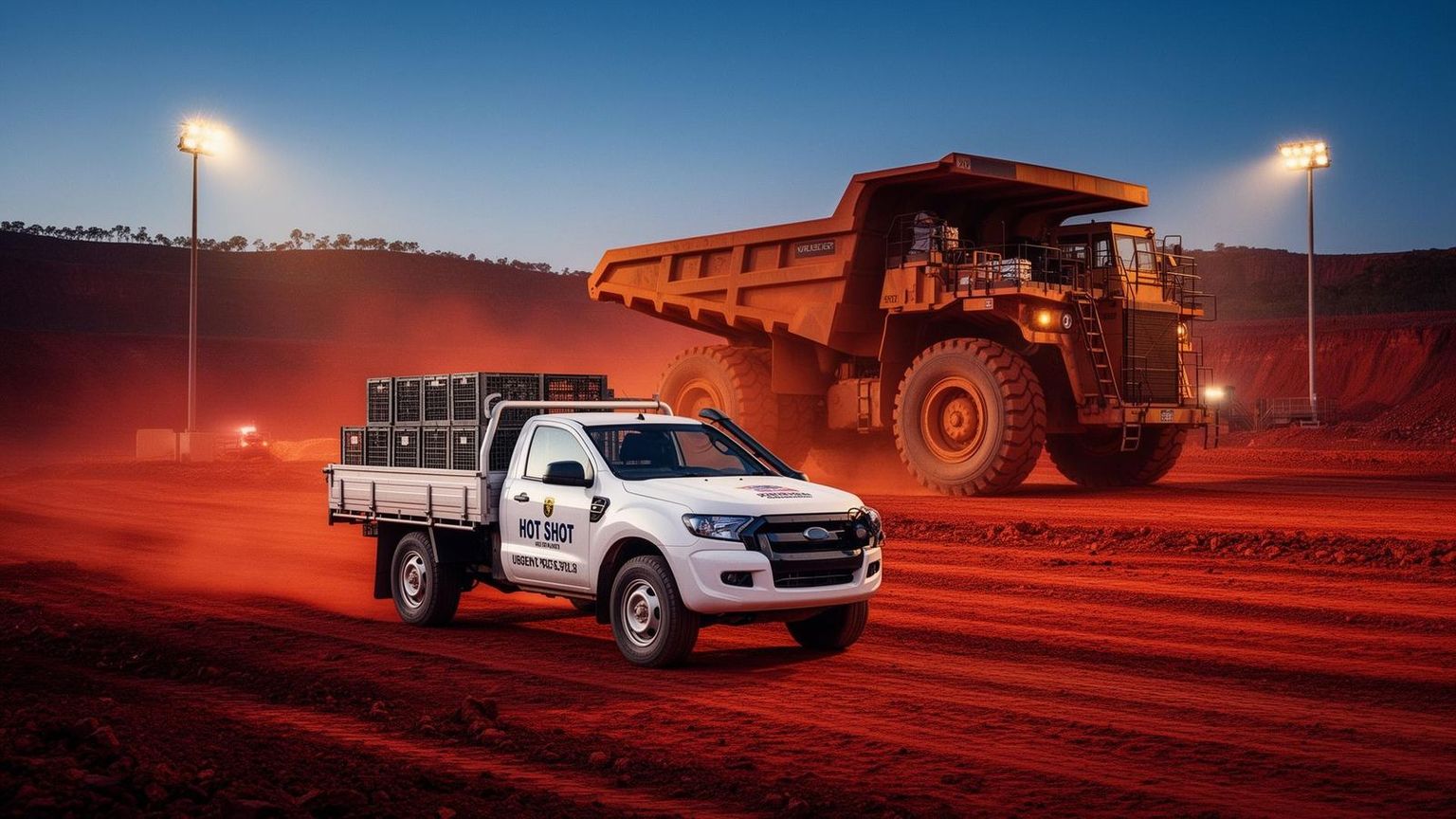
Hot-shot delivery is dedicated, non-consolidated freight used when downtime is more expensive than the freight bill. The driver leaves the branch as soon as the mining parts are picked, drives directly to site, and is not held up by other deliveries. For ultra-remote mines, hot-shot is replaced or supplemented by charter flight.
- Hot-shot ute / light truck: capital city → regional mine (e.g. Perth → Pilbara, Brisbane → Bowen Basin)
- Driver relay: overnight cross-state runs with rotating drivers
- Charter flight: ultra-remote or roadblock situations, where airstrips are available
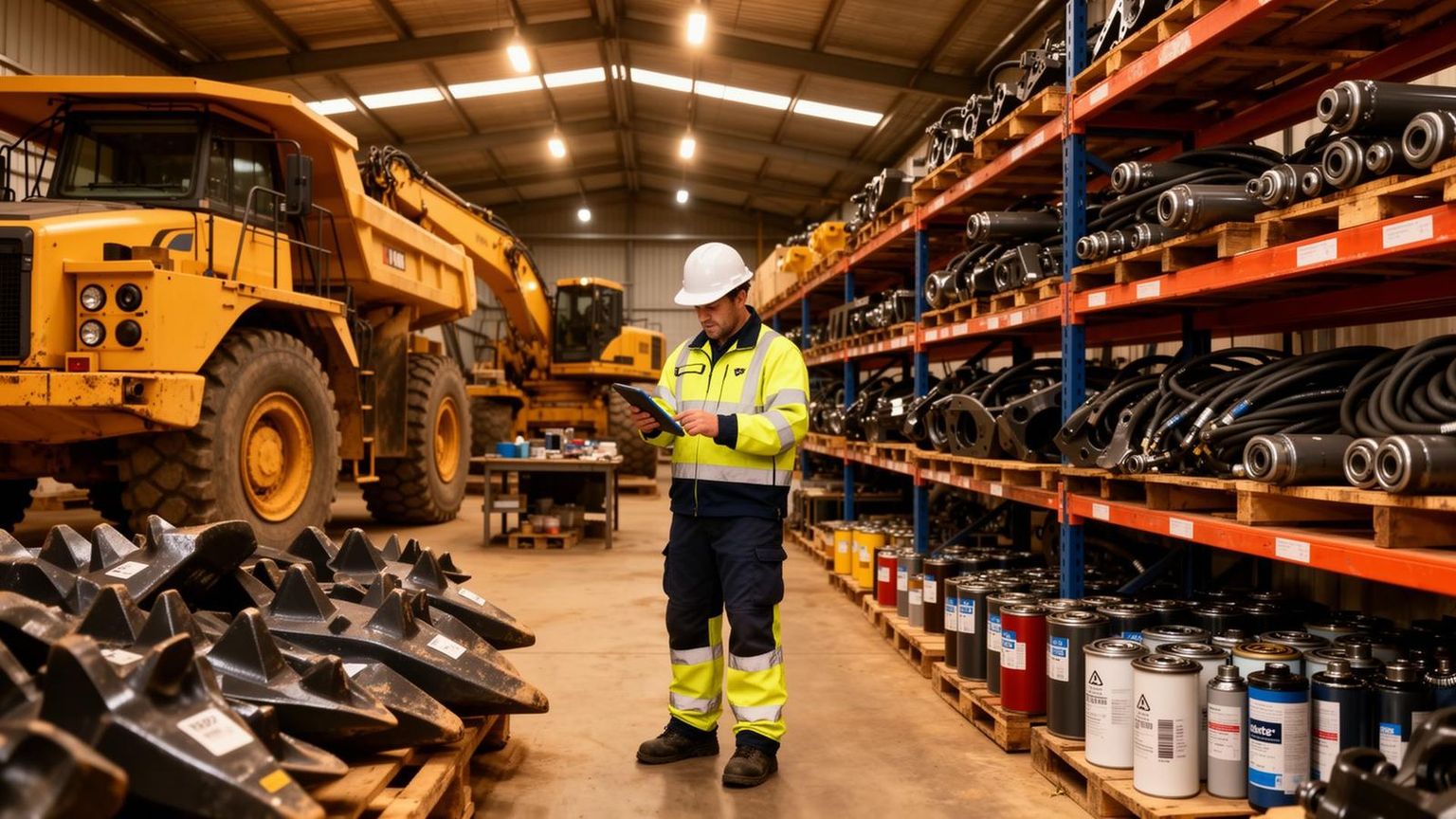
- On-site stock: the fastest "delivery" — already in the site store
Who needs urgent mining equipment supply?
Mining contractors, drilling and blasting crews, fixed-plant maintainers, civil contractors on mine builds, and independent workshops servicing mining fleets all live and die by urgent mining equipment spares. If your business is paid by tonnes moved, hours run, or jobs completed, the speed of your parts response is a direct lever on revenue.
How to get urgent mining parts delivered: step by step
1. Confirm the failure and the machine serial number
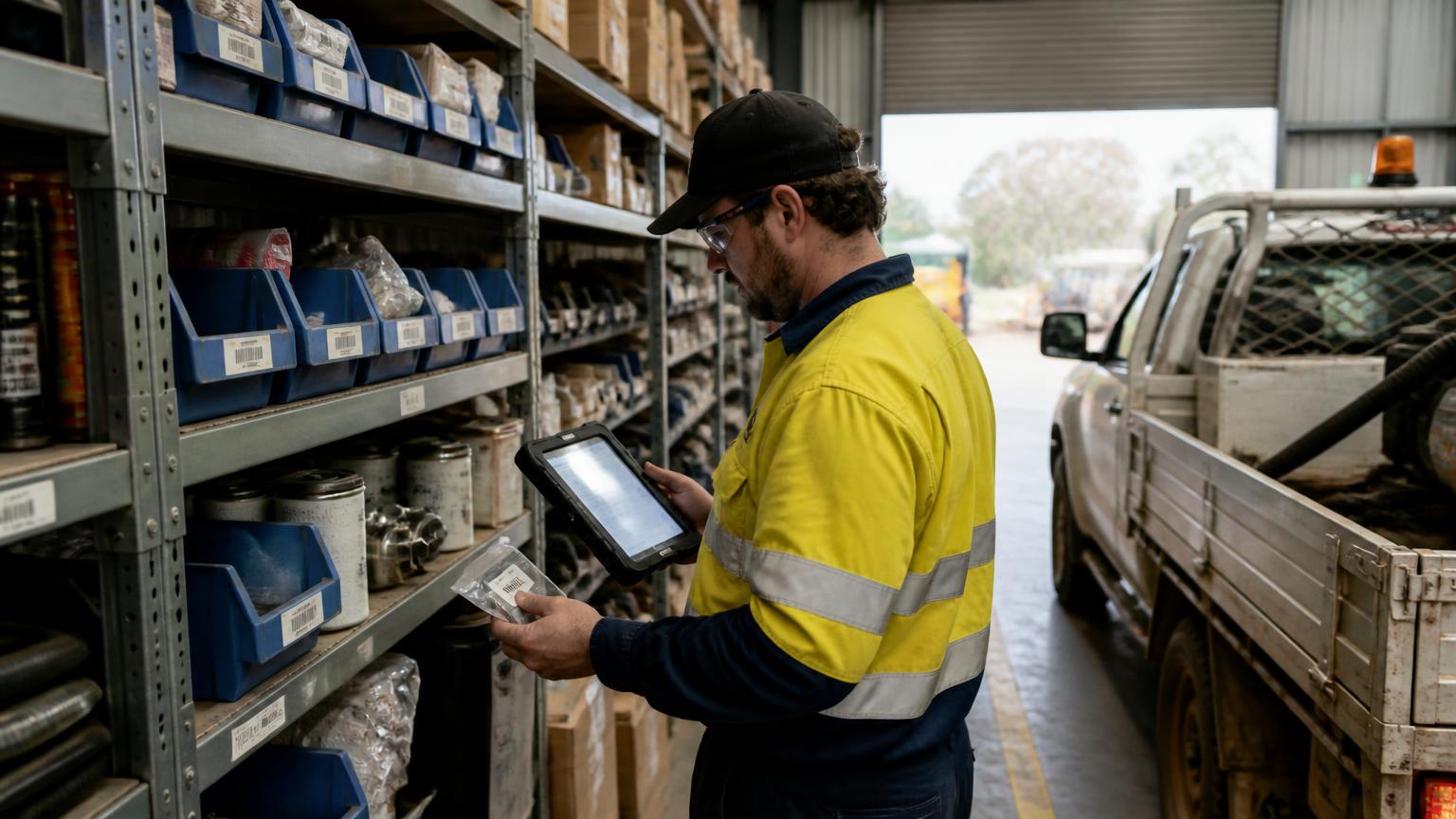
Before you call anyone, confirm the failed component and pull the machine serial number from the data plate or your asset register. The serial number — not just the model — is what lets the OEM dealer load the correct mining parts catalogue and dispatch the right part. Take photos of the failure and the data plate for parts interpreters.
2. Call the OEM 24/7 breakdown line
Every major mining equipment supply chain in Australia has a 24/7 breakdown line — WesTrac, Hastings Deering, Komatsu Australia, Hitachi Construction Machinery Australia, Liebherr Australia and Volvo CE. Have your account number, serial number, part number (if known) and delivery address ready before you dial.
3. Raise a hot-shot purchase order
Raise an urgent PO in your job and asset management system against the broken machine and the active job. Record the OEM order number, the part number, the freight method (hot-shot road, charter flight, driver relay) and the expected ETA. This is the audit trail your accounts team and supervisors will need.
4. Choose the right urgent freight method
Match the freight method to the downtime cost: hot-shot ute or light truck for capital-city → regional runs, charter flight for ultra-remote mines with airstrips, and driver relay for cross-state runs (e.g. Perth → Pilbara overnight). The right choice is usually whatever method costs less than another hour of haul-truck downtime.
5. Notify the on-site receiver and gate
Send the freight details, driver name, vehicle rego and ETA to the on-site receiver and the mine gate. Site inductions and isolation procedures can delay an urgent mining parts delivery by hours if the gate isn't expecting the driver.
6. Reconcile, record and learn
Once the part is fitted and the machine is back online, reconcile the OEM invoice against your hot-shot PO, attach the order number to the asset's maintenance history, and flag the failure in your mining equipment database. Repeat failures are a signal to add the part to on-site stock and stop paying hot-shot freight.
Choosing the right urgent freight method
| Method | Best for | Typical ETA |
|---|---|---|
| On-site stock | Known wear & high-failure parts | Minutes |
| Hot-shot ute / light truck | Capital → regional mine runs | 4–12 hours |
| Driver relay | Long cross-state runs | 8–18 hours |
| Charter flight | Ultra-remote or roadblock | 2–4 hours |
| Standard freight | Non-urgent service & shutdown parts | 1–3 days |
Why most urgent mining parts orders go wrong
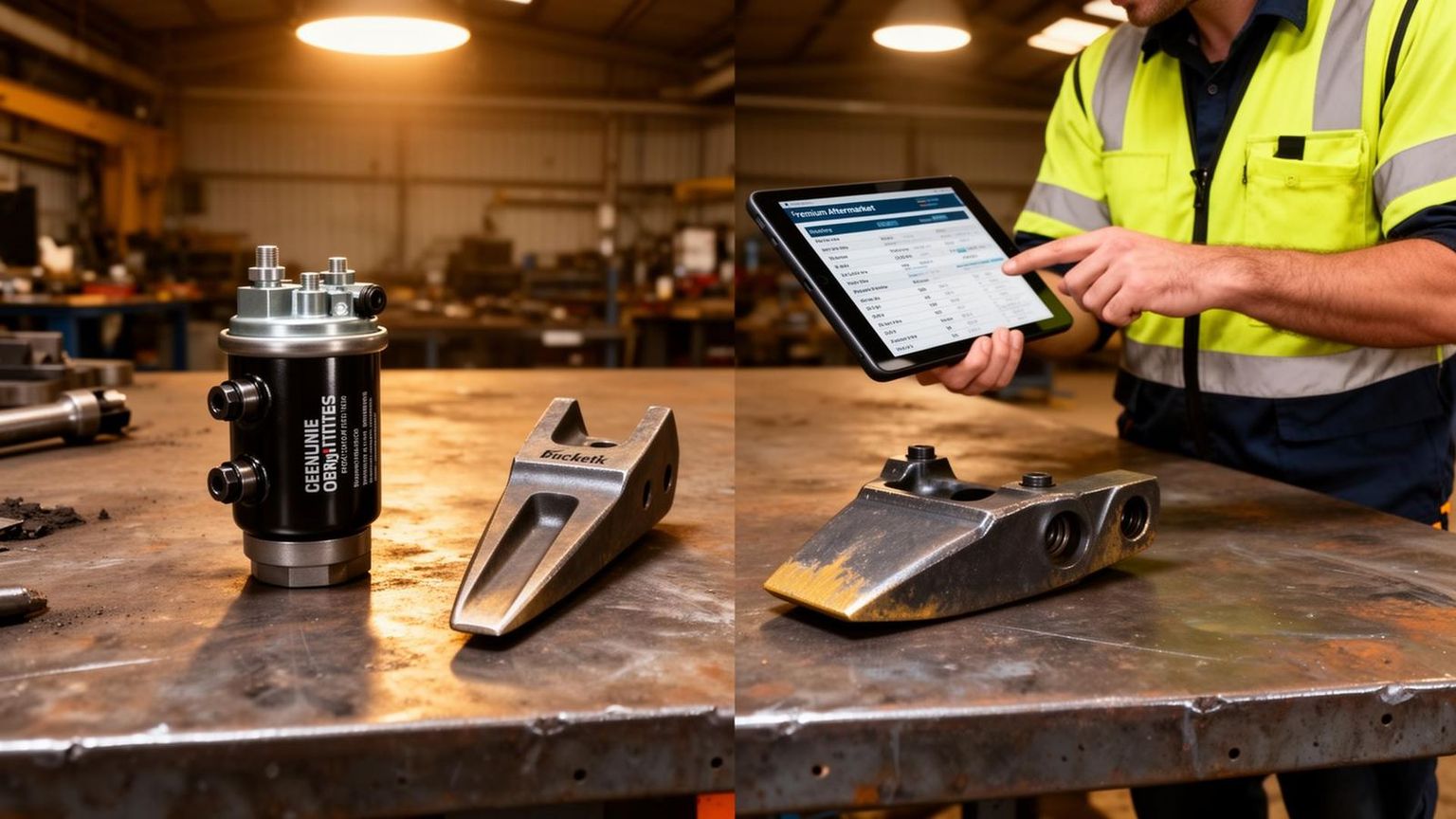
The biggest cause of failed urgent mining equipment supply isn't freight — it's bad data. A supervisor calls in the wrong serial number, the dealer picks a superseded part, the hot-shot truck arrives at the gate, and the machine still doesn't run. By the time the right mining parts are on the road, you've burned a shift.
The fix is a clean mining equipment database — every asset, every serial number, every authorised buyer, every common part — accessible to whoever is on the radio at 2am.
Tying urgent parts orders back to jobs and assets
In SprintSuite Procurement, supervisors raise a hot-shot purchase order against the broken machine and the active job in seconds — with the serial number and authorised buyer pulled straight from the asset record. The PO links to the OEM invoice when it arrives, and parts cost flows into job management and the breakdown history of the machine in asset management.
Over time, that history tells you which parts to start holding on site — so the next breakdown doesn't need a hot-shot at all.
Frequently asked questions
Cut downtime on urgent mining parts orders
SprintSuite gives Australian mining contractors a single place to raise hot-shot purchase orders, match OEM invoices, and tie every mining equipment spare back to a job, an asset and a breakdown history.
Book a demo