Quick Answer
To order a hydraulic hose in Australia, capture the STAMP spec — Size (hose ID and fitting size), Temperature, Application, Media and Pressure — plus the fitting type and orientation at each end, and the overall length. Send it to a hydraulic specialist (Pirtek, Enzed, RYCO 24•7, Hose Mania, BSP) or your OEM dealer. For mining hoses Australia-wide, request a mobile service van to site. To connect hydraulic hoses on an excavator, isolate, cap ports, align without twisting, hand-start the fitting, torque to spec, clamp the routing and leak-test at low pressure.
- Spec method: STAMP (Size, Temp, Application, Media, Pressure)
- Suppliers: Pirtek, Enzed, RYCO 24•7, Hose Mania, BSP, OEM dealers
- Coverage: Mining hoses Australia-wide, 24/7 mobile service
- Best for: Mining excavators, haul trucks, drill rigs, attachments
On an Australian mine site, a burst hydraulic hose on a haul-truck-loading excavator can stop a production unit cold. Ordering the right replacement hose — and connecting it correctly the first time — is one of the highest-leverage workshop skills in mining.
This guide covers how to order a hydraulic hose using the STAMP method, where to buy mining hoses in Australia, how to connect hydraulic hoses on an excavator safely, and how to tie every hose order back to the machine and job in your management system.
What is the STAMP method for ordering hydraulic hoses?
STAMP is the industry shorthand for the information a hydraulic specialist needs to build a correct hose assembly. Use it every time you order a hydraulic hose — it's the fastest way to cut wrong-spec returns to near zero.
| Letter | What it means | Example |
|---|---|---|
| S | Size — hose ID + fitting size at each end | 1/2" ID, JIC -8 each end |
| T | Temperature — fluid + ambient | Up to 100°C oil, Pilbara ambient 50°C |
| A | Application — machine, circuit, attachment | Cat 374 excavator main pump line |
| M | Media — fluid type | ISO 46 hydraulic oil |
| P | Pressure — working + surge | 350 bar working, SAE 100R12 spec |
| E | Ends — fitting type & orientation (STAMPED) | JIC straight + JIC 90° elbow |
| D | Delivery — length & routing (STAMPED) | 1850 mm overall, 2 clamps |
Mining hoses Australia: who supplies them?
Australia has a strong national network of hydraulic hose specialists, plus OEM dealers that build hoses to factory spec. Most run 24/7 mobile service vans for mining — they come to your site or workshop and build the assembly on the spot.
| Supplier | Coverage | Mobile service |
|---|---|---|
| Pirtek | National, 100+ centres | Yes — 24/7 |
| Enzed (Parker) | National | Yes — 24/7 |
| RYCO 24•7 | National | Yes — 24/7 |
| Hose Mania | QLD, NSW, VIC, WA | Yes |
| BSP Hydraulics | National | Yes |
| Hyspecs | WA, QLD mining | Yes |
| OEM dealers (Cat/Komatsu/Hitachi/Liebherr) | Nationwide | Field service via dealer |
Who needs to order hydraulic hoses fast?
Mining contractors running excavator, haul truck, dozer and drill rig fleets; civil contractors with hydraulic attachments; quarry and crushing crews; and independent workshops servicing mining equipment — all need a fast, repeatable process for ordering hydraulic hoses. The workflow is the same whether the hose is on a Cat 374 excavator or a 5-tonne mini ZX.
How to order a hydraulic hose: step by step
1. Isolate the machine and capture STAMP info
Before touching anything, isolate, tag out and bleed pressure from the circuit. Then capture STAMP information for the failed hose: Size (hose ID and fitting size), Temperature, Application (machine, circuit), Media (oil type) and Pressure. If you can safely remove the failed hose, do so — the supplier can build an exact match.
2. Identify the fittings at each end
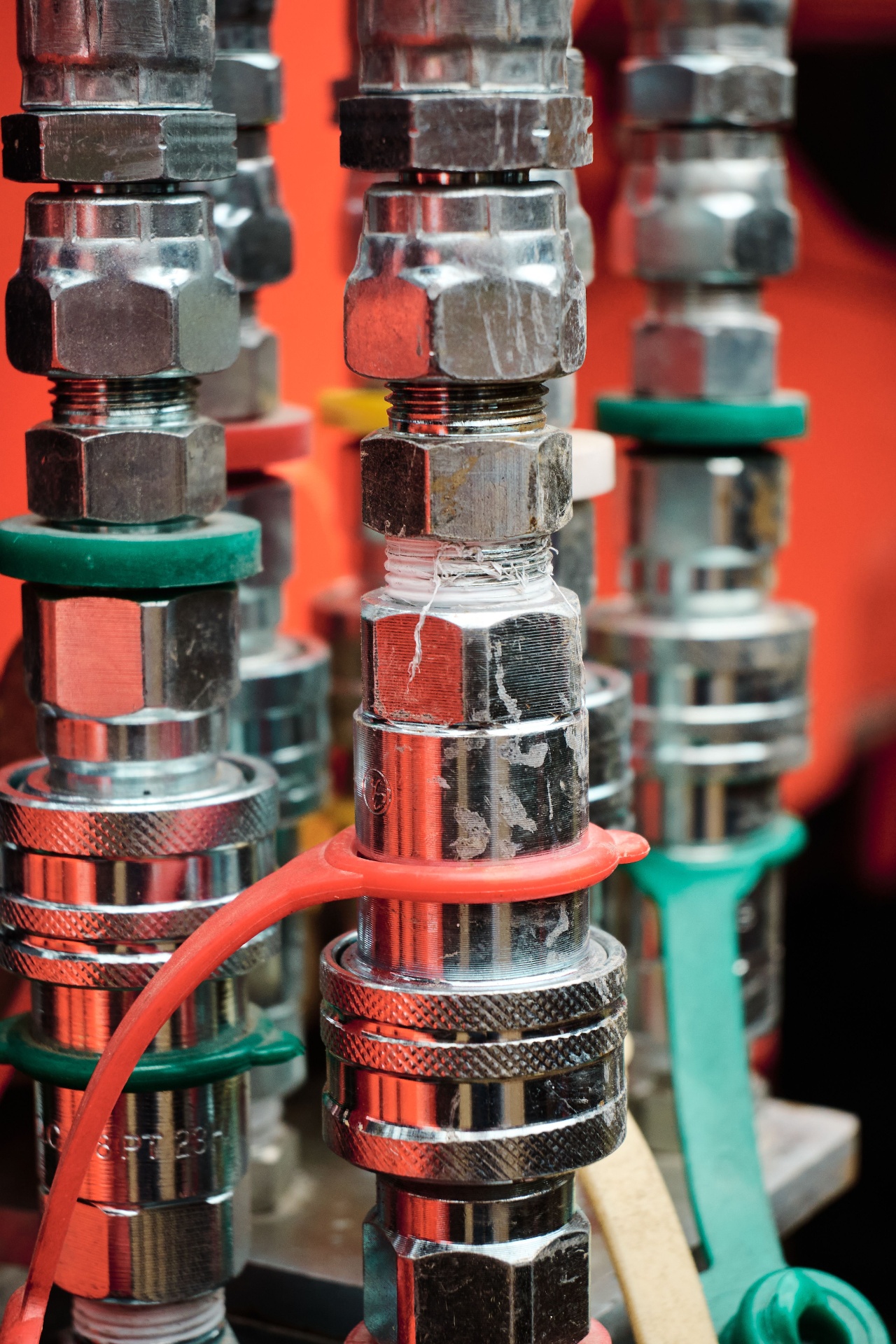
Identify the fitting type and orientation at each end of the hose — JIC 37°, ORFS, BSP, Metric, Code 61 or Code 62 flange, and whether it's straight, 45° or 90°. Photograph both ends next to a ruler. On excavator high-pressure circuits, fitting type is the most common source of wrong-part assemblies.
3. Measure overall length and routing
Measure the overall length from sealing face to sealing face (not from the hose cover). Note the routing — where the hose passes through brackets, clamps and over heat sources — so the new assembly is built to the same length and the same bend radius. On excavators, slightly longer is usually better than tight.
4. Match the hose spec
Specify the hose type and SAE/EN rating (e.g. SAE 100R2AT, R12, R15, 4SP, 4SH) so the new hose meets or exceeds the working and burst pressure of the original. On high-pressure mining circuits — main pump, breakers, hammer attachments — never downgrade the spec.
5. Order from a hydraulic hose specialist
Send the full spec to a hydraulic hose supplier — Pirtek, Enzed, Hose Mania, RYCO 24•7, BSP, Hyspecs or your OEM dealer. For mining hoses Australia-wide, request a mobile service van to site if the machine is down. Raise an internal PO against the broken machine and the active job in your job management software.
6. Connect the hose correctly on the excavator
Cap and plug ports while the hose is off, align the new hose without twisting (lay-line straight), start fittings by hand, torque to the manufacturer's spec, clamp the routing, then cycle the machine at low pressure and inspect for leaks before returning to full operation. Record the swap against the asset.
How to connect hydraulic hoses on an excavator
Connecting hydraulic hoses on an excavator is a controlled procedure — not a feel-it-out job. Follow these steps every time:
- Isolate and tag out the machine, lower attachments to the ground, and bleed residual pressure from the circuit.
- Cap and plug all open ports as soon as the old hose is off — contamination is the #1 killer of hydraulic components.
- Inspect the new hose for damage, correct part number, and matching fittings before you install it.
- Align without twisting — the lay-line printed on the hose cover must remain straight from end to end. A 7° twist halves hose life.
- Hand-start the fitting to avoid cross-threading, then bring to spec with a torque wrench. Don't guess by feel.
- Respect the bend radius — never tighter than the manufacturer's minimum, and keep the hose away from hot surfaces and sharp edges.
- Clamp the routing back to the original brackets so the hose isn't whipping or rubbing in operation.
- Cycle at low pressure, inspect for leaks, then bring the circuit to full pressure. Re-inspect after the first shift.
A pinhole hydraulic leak at 350 bar can inject fluid through skin and cause permanent injury. Always wear gloves and safety glasses, and never run your hand along a pressurised line looking for a leak — use cardboard.
Common hose fitting types on Australian excavators
| Fitting | Where you'll see it | Seal type |
|---|---|---|
| JIC 37° | Cat, Komatsu, Hitachi excavator circuits | Metal-to-metal flare |
| ORFS (O-Ring Face Seal) | Late-model Cat & Komatsu | Face O-ring |
| BSP | European machines (Volvo CE, Liebherr) | Tapered or parallel + bonded seal |
| Metric DIN | European mining hydraulics | 24° cone, O-ring |
| Code 61 / Code 62 flange | Main pump & high-pressure lines | Flat face + O-ring under flange |
Tying hydraulic hose orders back to jobs and assets
In SprintSuite Procurement, supervisors raise a purchase order against the broken machine and the active job in seconds, attach the STAMP spec and photos, and record the supplier's order number. The PO matches the Pirtek or Enzed invoice when it arrives, and the parts cost flows into job management and the work history of the machine in asset management.
Over time, repeat hose failures on the same circuit become visible against the asset — and that's your signal to add a pre-built spare hose to the machine, change the routing, or upgrade the hose spec.
Frequently asked questions
Connect hydraulic hose orders to your jobs and assets
SprintSuite gives Australian mining contractors a single place to raise hose POs, attach STAMP spec, match Pirtek/Enzed/OEM invoices, and tie every mining hose back to a job, asset and failure history.
Book a demo