Quick Answer
A mining site readiness checklist covers five areas: people, compliance and competency, documents and approvals, equipment and plant, and logistics and travel. Work through each one with a named owner and a due date per line, and re-run the whole checklist at a pre-mobilisation review about a week before the crew travels.
- People — crew list, standby workers, employment paperwork, supervision.
- Compliance — inductions, licences, VOCs, medicals, screening, expiries, access passes.
- Documents — prequalification, insurances, contract, SWMS, SDS, record retention.
- Equipment — servicing, inspections, light vehicle compliance, tagged gear, tools, freight.
- Logistics — flights, accommodation, transport, PPE, communications, permits, demob.
Mobilisations rarely fail on the big things. They fail on one lapsed verification of competency, an insurance certificate that expired last month, or a pallet of consumables that lands two days after the crew. A written checklist turns that risk into a status you can see weeks out, while it is still cheap to fix. If you are new to the term, start with what “site ready” means in mining.
Use the checklist below as a template and tailor it to each operator's requirement set — the sections are stable across sites, but the specific inductions, medicals, VOCs and vehicle standards are not.
1. People
One row per named worker, plus a cleared standby for every critical role.
- Crew list confirmed against the roster, shift pattern and scope — including supervisors and leading hands.
- Identity verified and right to work confirmed (citizenship, or a visa with work rights for the role and hours).
- Employment paperwork done: contract or letter of offer, tax and super details, award or agreement classification, emergency contacts, next of kin.
- Roles and reporting lines set — who supervises whom on site, and who the client's point of contact is.
- Fatigue and roster limits checked against the site's fitness-for-work rules before travel is booked.
- A cleared standby worker nominated for each critical role, not just a name on a list.
- Crew briefed on scope, roster, camp, travel, site rules and what to bring.
2. Compliance and competency
Every item current, evidenced, and valid to the last day of the campaign — not just day one.
- Site general induction booked or completed, plus any area, department or task-specific induction.
- Licences and tickets current: high risk work licence, driver's licence for the class being driven, statutory tickets for the task.
- Verification of competency held for every machine, vehicle or plant item the worker will actually operate on that site.
- Site or coal board medical current, plus audiometric, respiratory or other health monitoring the role triggers.
- Drug and alcohol screening completed inside the site's accepted window.
- Training refreshers done: working at heights, confined space, first aid, fire extinguisher, isolation and tagging, as required.
- Expiry dates recorded for every record and checked against the campaign end date.
- Evidence attached — certificates, cards, statements of attainment — not just a tick in a spreadsheet.
- Site access request approved and gate pass or access card issued for each worker.
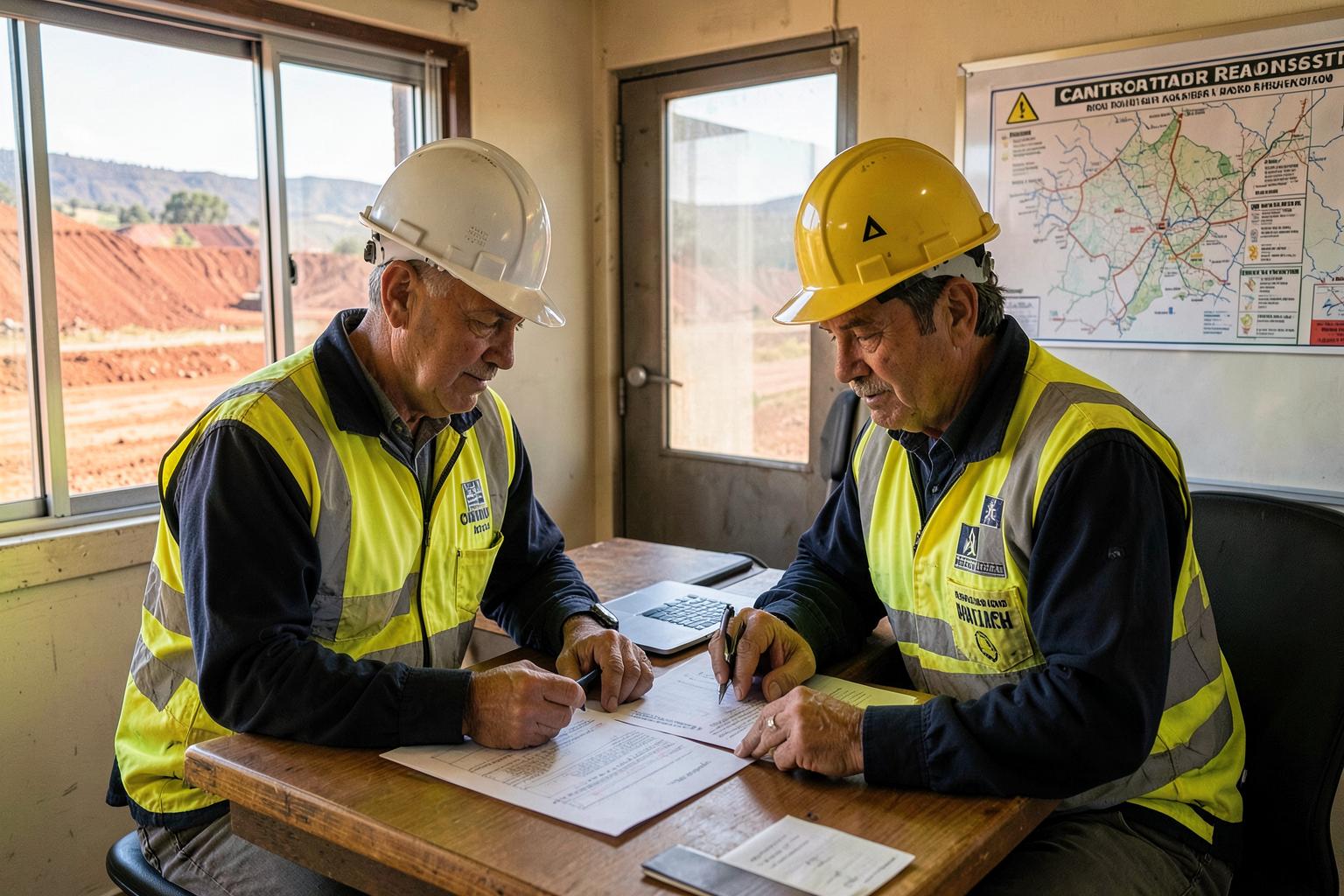
3. Documents and company approvals
Submitted is not approved. Every item below needs the client's acceptance.
- Prequalification approved in the operator's contractor management system or portal.
- Insurances current at the required limits — public liability, workers compensation, plant, motor vehicle — with certificates of currency in date.
- Contract, purchase order or licence to work executed, with rates and scope matching the quote.
- SWMS, JSAs and risk assessments written for this task and this area, accepted by the operator.
- WHS management plan, emergency response and incident reporting procedures supplied.
- Plant and equipment documentation: service history, inspection reports, test and tag records, engineering certificates.
- SDS for every chemical and consumable coming to site, plus a chemical register.
- Environmental and waste requirements understood — spill kits, containment, disposal and reporting.
- Timesheet, dayworks, variation and invoicing process agreed with the client in writing.
- Record retention set up so inductions, competencies, inspections and incidents can be produced on request.
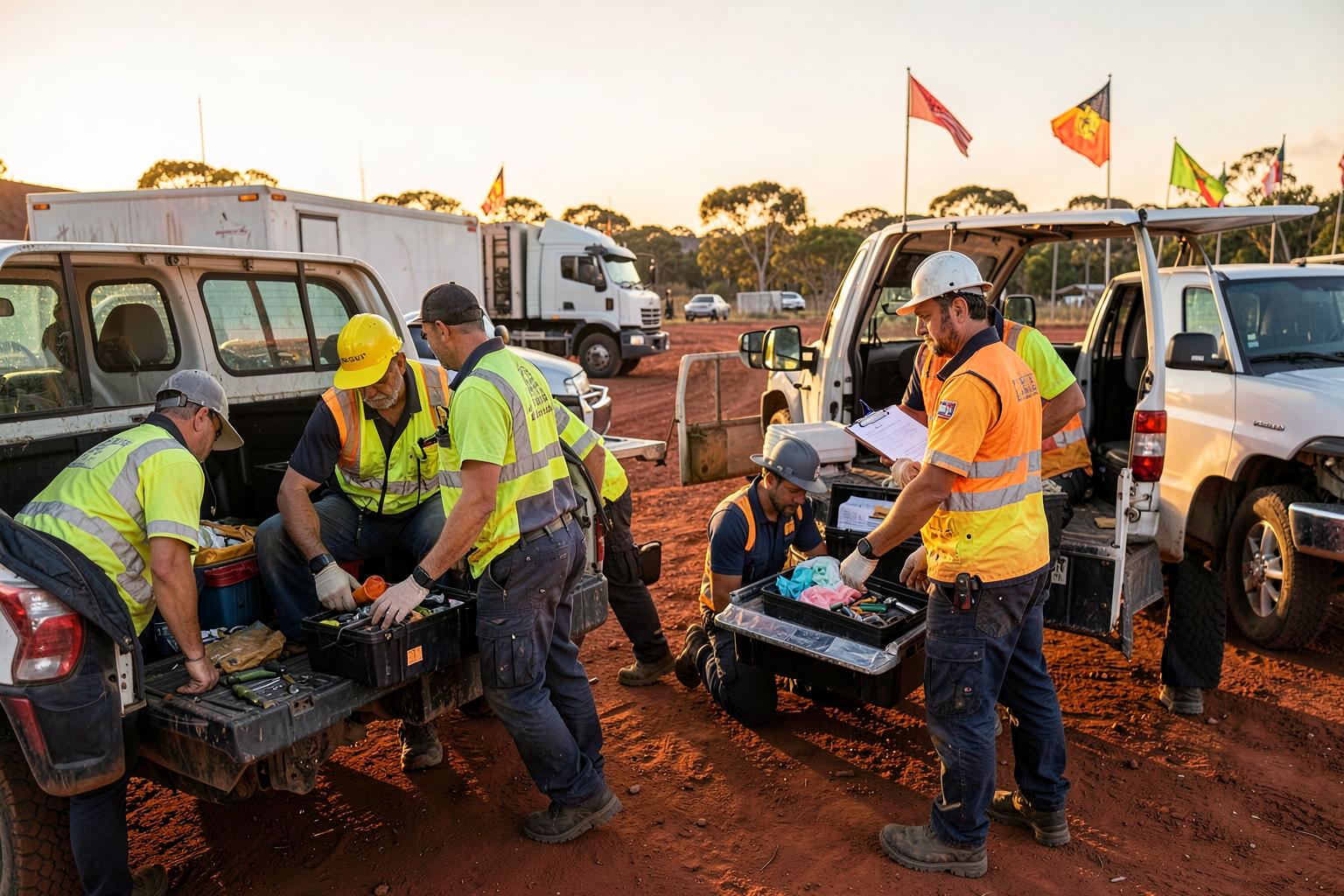
4. Equipment, plant and vehicles
Plant that fails a gate inspection stops the job as effectively as a missing induction.
- Plant list finalised against the scope, including attachments and standby items.
- Servicing and scheduled maintenance completed, with records available on site.
- Pre-mobilisation inspections done and defects closed out, not just logged.
- Light vehicle compliance to the site standard: beacons, flags, UHF, roll-over protection, first aid kit, extinguisher, recovery gear, signage.
- Registration, insurance and plant risk assessments in place; plant registered on the operator's plant register.
- Lifting gear, slings, chains and pressure equipment tagged and in test.
- Isolation and tagging equipment, locks and danger tags supplied per worker.
- Test and calibration certificates current for gas detectors, torque tools and measuring equipment.
- Tools, consumables, spares and service kits ordered to arrive before the crew, not with it.
- Transport booked for plant — low loader, escorts and oversize permits where needed.
5. Logistics and travel
The part that quietly burns the most money when it slips.
- Flights or charter seats booked against the roster, with the correct swing days and DIDO or FIFO arrangement confirmed.
- Camp rooms or town accommodation allocated for the full swing, including standby workers.
- Ground transport sorted: airport transfers, bus to site, and vehicles for the crew on site.
- Meals, crib arrangements and camp rules communicated to the crew.
- Site access hours, gate location, muster points and parking confirmed.
- Vehicle permits and access for company utes and service trucks approved.
- Communications ready: UHF channels, phone coverage, satellite or Starlink where coverage is poor, and site contact numbers issued.
- PPE issued to the site standard and sized, including respirator fit testing where required.
- Who pays for what agreed in writing — travel, accommodation, meals, training and mobilisation time.
- Demobilisation planned at the same time: plant transport, area clean-up, pass returns and final costing.
When to work through each section
The checklist is only useful if it is sequenced. Long-lead compliance items go first, because no amount of effort in week seven creates an induction seat that was already full.
8 weeks out
Confirm scope, roster and commencement date, name the crew and run a compliance gap check against the site's requirement set.
6 weeks out
Book medicals, health monitoring and third-party VOCs — the longest lead items and the usual reason a start date slips.
4 weeks out
Lodge company documentation for approval, book induction seats and training, and book flights and accommodation.
2 weeks out
Service and inspect plant, book freight, order consumables, issue PPE and complete drug and alcohol screening.
1 week out
Run the pre-mobilisation review against this checklist. Every line either green with evidence, or red with an owner and a date.
For indicative lead times per item and a worked eight-week plan, see how to build a mobilisation schedule.
Where readiness checklists go wrong
Running the checklist once, at the start
Readiness decays. A record that was current when you built the crew can lapse before day one, so the checklist has to be re-run at the pre-mobilisation review.
Checking expiries against day one
A ticket or medical expiring mid-swing demobilises a worker halfway through and leaves the crew short.
Confusing submitted with approved
Prequalification, SWMS and insurances awaiting client review are outstanding items, not completed ones.
No named owner per line
'Admin will sort it' is how items sit untouched for three weeks. Every line needs a person and a due date.
Forgetting the plant stream
People and equipment have different lead times. Run them as parallel tracks that converge at the pre-mobilisation review.
Consumables arriving with the crew
A full crew standing around waiting on a delivery is the most expensive kind of readiness failure.
No post-mobilisation review
Without capturing what slipped and why, the same delay repeats on the next job.
The pre-mobilisation review
One meeting, one checklist, roughly a week before travel. Every line is green with evidence attached, or red with an owner and a date. Nothing sits amber.
- Every named worker cleared against this site's requirement set, evidence attached, expiries valid to the last day of the campaign.
- Standby workers cleared for each critical role.
- Company documentation accepted by the client, not pending.
- Plant serviced, inspected, tagged and approved on the operator's plant register.
- Task-specific SWMS and JSAs ready to sign on in the actual work area.
- Permits, isolations, gate access and vehicle permits approved.
- Flights, accommodation and ground transport confirmed against the roster.
- Tools, consumables and spares delivered or in transit to land before the crew.
- Demobilisation dates, transport and costs planned.
- Mobilisation costs set up to be captured against the job.
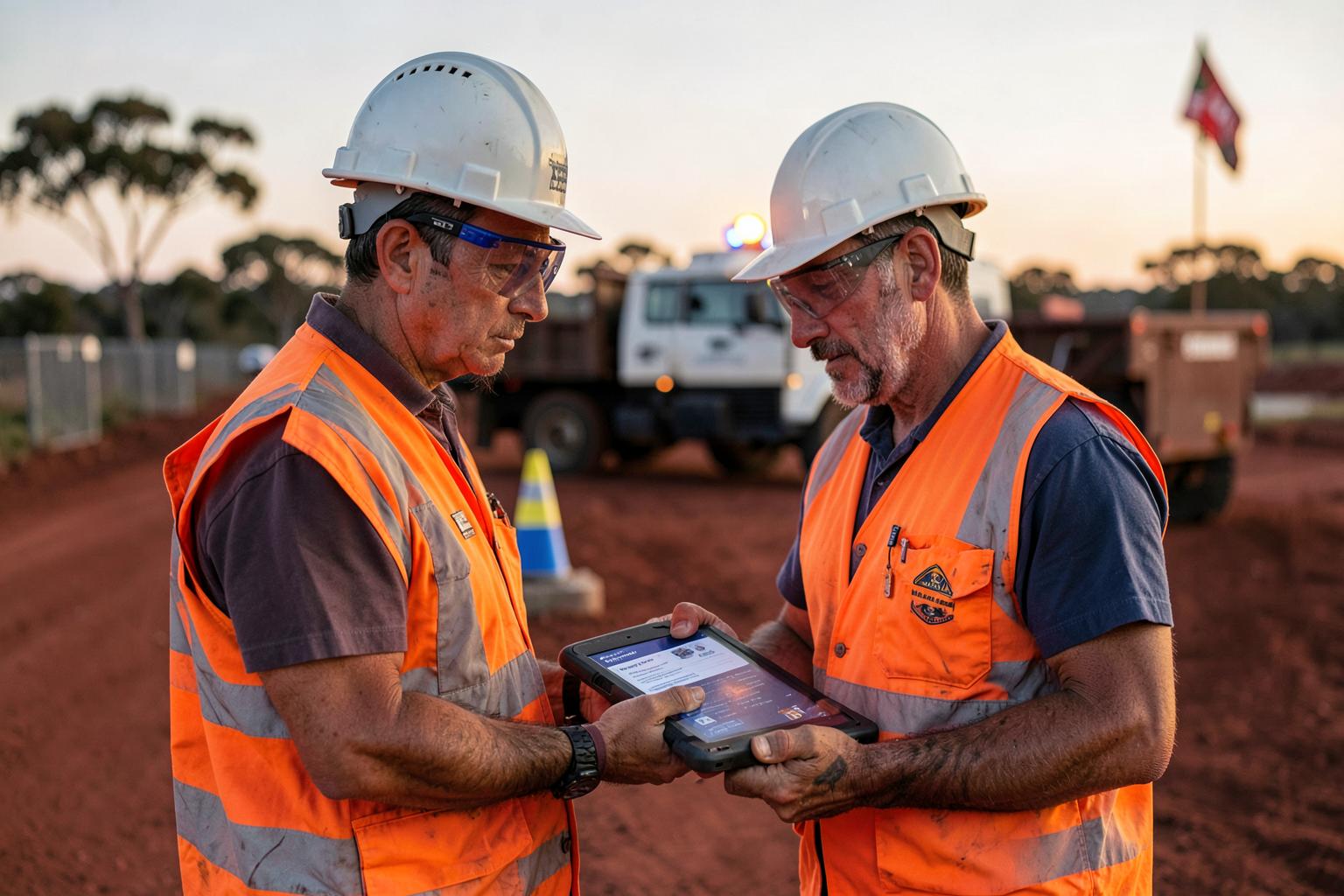
Make site readiness a live status, not a spreadsheet audit.
SprintSuite tracks every worker's inductions, licences, tickets, VOCs and medicals with expiry alerts, matches them to each site's requirements, and shows crew readiness before you roster or mobilise.
Related reading: What does “site ready” mean in mining · How to build a mobilisation schedule · How to know if a worker is compliant for site · How to digitise mining compliance paperwork · Staff management.
Site readiness checklists — FAQs
This article is general information for Australian mining and heavy industry contractors, not legal advice. Requirements and lead times vary by site, state and role — confirm them with the site operator, your providers, your state regulator and your own WHS advisers.