Quick Answer
A site readiness assessment is a formal check that a contractor's workers, plant, documentation, safety systems and logistics meet all of the mine operator's requirements before work starts. It is normally run by the operator after the contract is awarded and two to four weeks before mobilisation, and it ends either in approval to mobilise or a list of items to close out.
- What is assessed — competency and medicals, documentation and approvals, plant compliance, safety systems, logistics.
- When — at prequalification, again before mobilisation, verified at the gate, then maintained during the campaign.
- Who — the operator decides; the contractor assembles the evidence; third-party assessors supply it.
- What blocks it — expired competencies, unapproved documents, defective plant, generic SWMS, unavailable induction seats.
Definition, and why operators run one
A site readiness assessment converts a claim into evidence. Any contractor will say their crew is compliant and their gear is right; the assessment is where that is checked line by line against the site's own requirement set, with certificates, inspection records and approvals attached.
Operators run them because duties are shared. Under Australia's model WHS laws a mine operator and its contractors hold overlapping duties, and each must consult, cooperate and coordinate. The operator cannot discharge its duty by trusting a supplier, so it verifies. For related background, see what “site ready” means in mining.
What gets assessed
Workforce and competency
Named crew list against the scope and roster, right-to-work verification, inductions completed, licences and tickets current, a VOC for every machine each worker will operate, medicals and health monitoring in date, drug and alcohol screening within the accepted window, and fitness-for-work and fatigue arrangements.
Documentation and approvals
Prequalification status, certificates of currency for insurances, executed contract or purchase order, SWMS and JSAs written for this task and area, WHS management plan, emergency response procedures, chemical register and SDS, and how records will be captured and retained.
Plant, vehicles and equipment
Plant list against scope, servicing and inspection records, defect status, light vehicle compliance to the site standard, plant risk assessments, lifting gear and pressure equipment tagged and in test, calibration certificates, and registration on the operator's plant register.
Safety systems and controls
How hazards are identified and controlled, isolation and tagging procedures, permit-to-work understanding, incident and hazard reporting, supervision structure, and how the crew is briefed and signs on to risk assessments each shift.
Operational and logistical readiness
Travel and accommodation booked to the roster, ground transport, PPE issued and fit-tested, communications, gate access and vehicle permits, tools, consumables and spares landing before the crew, and demobilisation arrangements.
The line-by-line version of all five areas is in the mining site readiness checklist.
When it happens
Readiness is assessed more than once. Treating it as a single event before mobilisation is how contractors get caught by an expiry mid-swing.
At tender or prequalification
A desktop assessment of the business: insurances, WHS system, safety performance, licences, referees and financial capability. This decides whether you are eligible to be engaged at all.
After award, before mobilisation
The main site readiness assessment. The operator checks your crew, documentation, plant and logistics against the site's requirement set and confirms you can start on the commencement date.
One week out (your own review)
Your internal pre-mobilisation review against the same criteria. This is where problems should be found — while there is still time to substitute a worker or chase an approval.
On arrival at site
Verification at the gate and in induction: crew list matches, passes valid, plant inspected on site, and area-specific briefings completed before work starts.
During the campaign
Ongoing checks and audits. Expiries, new workers, replacement plant and scope changes all trigger re-assessment, so readiness is a status that has to be maintained, not a one-off pass.
Who completes it
The mine operator or client
Sets the requirements, runs prequalification and induction, and holds the final decision on whether you are approved to mobilise. Usually via a contractor management team, a superintendent or a portal.
The contractor
Assembles and verifies the evidence: worker records, documentation, plant records and logistics. Typically owned by an operations or contracts manager with admin, HR and workshop support.
A nominated site supervisor
Confirms the crew, scope, risk assessments and daily controls are workable in the actual work area, and takes the readiness position on site.
Third parties
Assessors and providers who issue the underlying evidence — medical providers, VOC assessors, RTOs, inspectors and calibration services.
An auditor or independent reviewer
On larger contracts, a prequalification service or independent auditor reviews systems and records before approval is granted.
What can prevent readiness
Almost every failed assessment traces back to one of these. None of them are difficult to fix six weeks out; all of them are expensive to fix three days out.
Expired or missing competency evidence
A lapsed VOC, ticket or induction, or a certificate you cannot produce. The most common single reason a worker fails readiness.
Expiries falling mid-campaign
Valid on day one is not enough. If a medical or licence expires during the swing, the assessment fails for that worker.
Documentation submitted but not approved
SWMS awaiting review, prequalification pending, or an insurance certificate that lapsed between submission and start.
Insurance limits below requirement
Cover in place but not at the limits the contract specifies, or missing an endorsement the operator requires.
Plant that fails inspection
Outstanding defects, overdue servicing, untagged lifting gear, or a light vehicle that does not meet the site standard.
Generic risk assessments
A SWMS copied from another job, without the actual hazards, area and controls for this task. Routinely rejected.
No induction seats available
Inductions run on set days with limited places. Booking late can cost a fortnight regardless of how compliant your crew is.
Failed medical or screening with no standby
One worker ruled out becomes a short crew when no cleared alternate was prepared.
Logistics not locked in
Unconfirmed charter seats, camp rooms or transport, which makes the start date unachievable even with a compliant crew.
Records nobody can find
Evidence scattered across folders, inboxes and spreadsheets. If it cannot be produced on request, it does not count.
How to prepare for the assessment
Get the requirement set in writing
Ask the operator for the exact list — inductions, licences, VOCs, medicals, vehicle standard, documentation and lead times. Assessment criteria differ between mines and between areas.
Run a gap check per worker
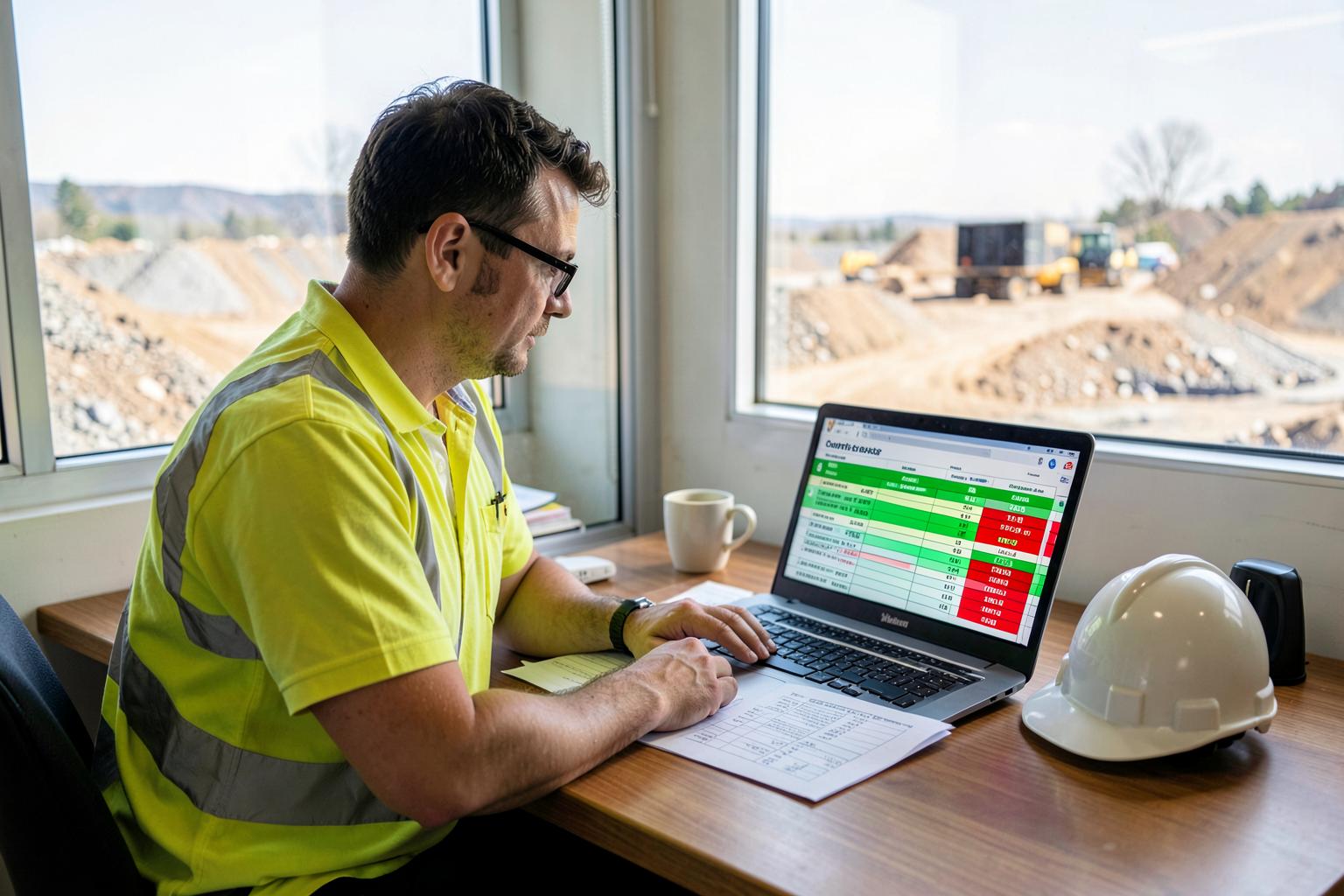
Compare each named worker's records against that list, and against the campaign end date. Produce a red, amber, green position per person.
Book the long-lead items immediately
Medicals, third-party VOCs and induction seats are the critical path. Everything else fits around them.
Prepare the evidence pack
One organised pack per worker and per plant item, with the certificate or record attached and the expiry visible. Assessors approve packs; they chase claims.
Write task-specific risk assessments
SWMS and JSAs for this scope, this area and these hazards, with the controls the crew will actually use.
Nominate cleared standby workers
One per critical role, fully assessed, so a failed medical does not stop the mobilisation.
Hold your own review a week out
Same criteria as the operator's. Every line green with evidence, or red with an owner and a date.
Keep readiness live during the campaign
Track expiries, new starters and replacement plant continuously so the next assessment or audit is a formality.
The evidence has to be retained, not just shown
Inductions, competency records, health monitoring, risk assessments and plant inspections must be documented and kept for the periods set by WHS, mining safety and health monitoring requirements — which in the case of health monitoring can be decades. An assessment you passed but cannot evidence later is a problem during an audit or an investigation.
See how long mining safety records should be kept and how to digitise mining compliance paperwork.
Related reading: What does “site ready” mean in mining · Mining site readiness checklist · How to build a mobilisation schedule · How to know if a worker is compliant for site · Staff management.
Site readiness assessments — FAQs
This article is general information for Australian mining and heavy industry contractors, not legal advice. Assessment criteria, lead times and record-keeping obligations vary by site, state and role — confirm them with the site operator, your state regulator and your own WHS advisers.
Timeframes quoted are indicative of common practice on Australian mine sites and are not a standard. Always work to the operator's stated dates.