Quick Answer
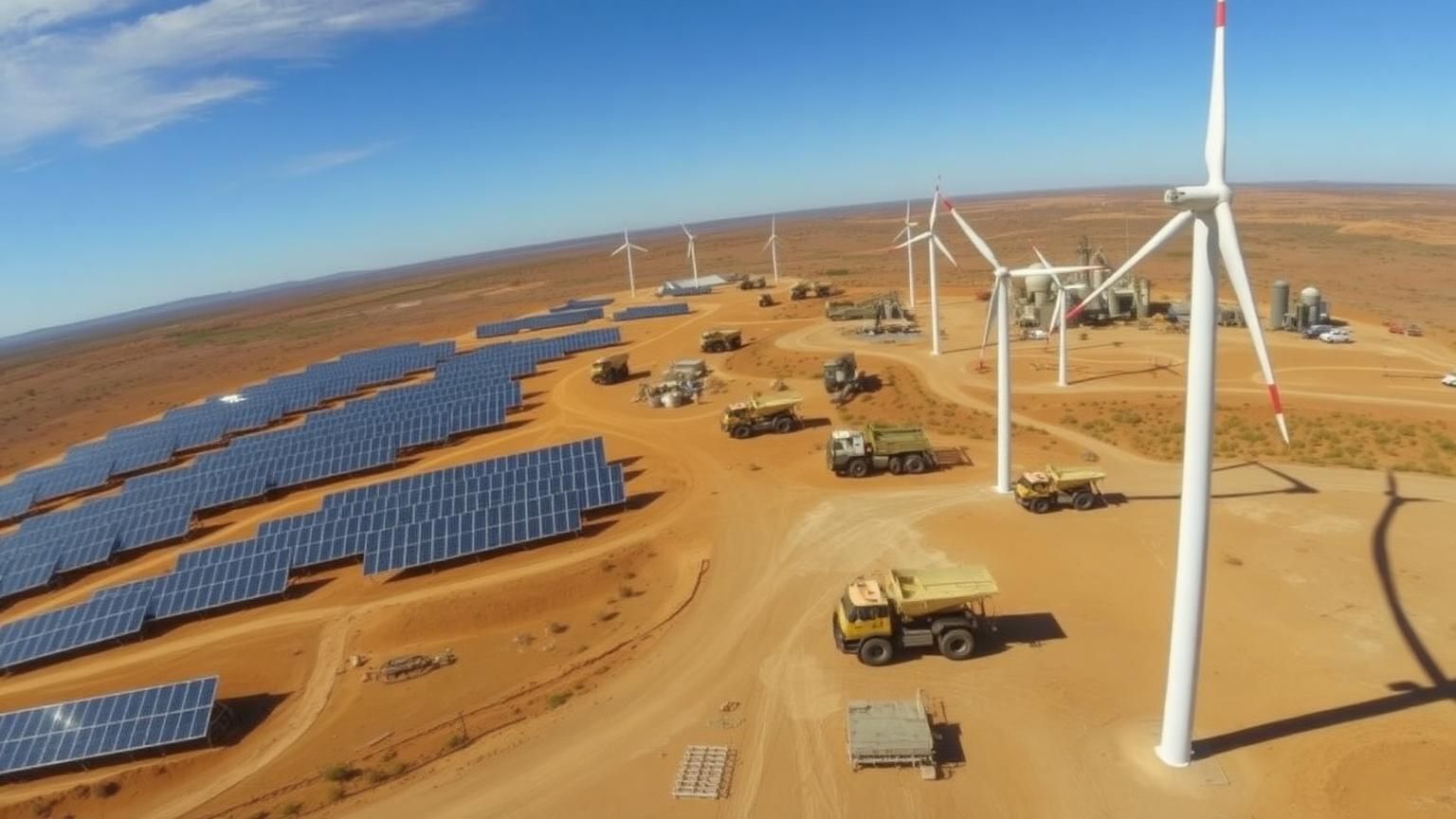
Renewables are supporting Australian mining by:
- Cutting diesel reliance and energy costs at remote sites
- Powering electrified fleets and processing plants
- Lowering Scope 1 and 2 emissions to support ESG targets
- Unlocking Renewable Energy Zones (REZs) for industrial growth
- Driving demand for critical minerals mined in Australia
Australia's mining industry is undergoing a major transformation. As operations expand into remote regions and pressure mounts to reduce emissions, renewable energy is becoming a critical part of how mining companies power sites, manage costs, and strengthen long-term sustainability.
Across the country, renewable energy projects and Renewable Energy Zones (REZs) are helping mining operations access cleaner, more reliable power while supporting the future demands of electrification, automation, and critical mineral production. According to the Australian Energy Market Operator (AEMO) , Renewable Energy Zones are designed to cluster renewable generation, storage, and transmission infrastructure in strategic locations to support Australia's energy transition.
Why the Mining Industry Is Turning to Renewable Energy
Mining is one of Australia's most energy-intensive industries. From processing plants and underground operations to accommodation camps and transport infrastructure, mine sites require enormous amounts of reliable power.
Historically, many operations — particularly in regional and remote Australia — have relied heavily on diesel and gas-powered generation. However, rising fuel costs, emissions reduction targets, and investor pressure are driving the industry toward renewable alternatives.
Renewables are helping mining companies:
- Reduce long-term operational costs
- Improve energy security in remote locations
- Lower Scope 1 and Scope 2 emissions
- Support ESG and sustainability targets
- Prepare for fleet electrification
- Future-proof operations against energy market volatility
As Australia accelerates its clean energy transition, mining companies are increasingly viewing renewable energy as both a commercial and operational advantage.
Renewable Energy Zones (REZs) and the Future of Mining
Renewable Energy Zones are becoming a major enabler for industrial growth and mining decarbonisation across Australia. The Infrastructure Australia Renewable Energy Zones overview describes REZs as coordinated renewable infrastructure hubs that connect large-scale generation, storage, and transmission projects in high-quality renewable resource areas.
For the mining sector, this creates several opportunities:
- Improved access to large-scale renewable power
- Reduced dependence on standalone diesel systems
- Stronger transmission connectivity in regional areas
- Increased energy reliability for growing operations
- Greater support for processing critical minerals domestically
Many mining regions naturally align with renewable energy development due to their strong solar and wind resources, industrial infrastructure, and high electricity demand.
Queensland, Western Australia, and New South Wales are already seeing major investment in transmission infrastructure and renewable generation designed to support both industry and regional economic growth.
Renewables Are Helping Reduce Mining Costs
Energy is often one of the largest operational expenses for mine sites, particularly in remote locations where diesel transportation adds significant costs.
Hybrid renewable systems — combining solar, wind, battery storage, and traditional generation — are helping mining operations reduce fuel consumption while improving energy stability.
Battery Energy Storage Systems (BESS) are also playing a growing role in:
- Managing peak demand
- Supporting grid stability
- Reducing generator runtime
- Improving operational resilience
According to Nexia Australia's energy transition analysis , large-scale energy storage will become increasingly important for supporting mining electrification and critical minerals processing as Australia transitions away from coal-fired generation.
These changes are particularly important as mining companies seek greater cost certainty in an increasingly volatile global energy market.
Critical Minerals Are Connecting Mining and Renewables
The relationship between mining and renewable energy works both ways. While renewables are helping power mining operations, mining is also supplying the materials needed to build clean energy technologies.
Critical minerals such as lithium, nickel, cobalt, copper, graphite, and rare earth elements are essential for:
- Electric vehicle batteries
- Wind turbines
- Solar panels
- Grid-scale battery storage
- Transmission infrastructure
The Reserve Bank of Australia's analysis on critical minerals and the energy transition notes that Australia is one of the world's leading producers of several minerals critical to the global energy transition, including lithium, cobalt, and rare earths. As global demand for clean energy infrastructure rises, Australia's mining industry is expected to play an increasingly important role in supporting renewable supply chains worldwide.
Electrification Is Increasing Demand for Renewable Energy
The mining industry is also moving toward greater electrification. From electric light vehicles and charging infrastructure to the future rollout of battery-electric haul trucks, electrification is becoming a major focus across the sector.
However, electrified mining operations require significantly more power capacity — creating greater demand for renewable generation and storage solutions.
Renewable energy systems are helping support:
- Electric fleet charging
- Automated mining equipment
- Smart operational infrastructure
- Electrified processing plants
- Digital and AI-enabled mining systems
This growing integration between mining and clean energy infrastructure is expected to accelerate over the next decade as technology improves and energy systems mature.
Renewables Are Supporting ESG and Decarbonisation Goals
Investors, governments, customers, and communities are placing increasing pressure on mining companies to reduce emissions and improve sustainability outcomes. Renewables are helping miners progress toward net-zero targets by lowering operational emissions and reducing reliance on fossil fuels.
Many organisations are now embedding renewable energy into broader ESG strategies focused on:
- Emissions reduction
- Sustainable operations
- Community impact
- Energy efficiency
- Responsible supply chains
Australia's growing renewable infrastructure pipeline is expected to further support industrial decarbonisation initiatives. The National Renewable Energy Priority List identifies dozens of transmission, generation, and storage projects designed to strengthen renewable capacity nationwide.
The Future of Mining and Renewable Energy in Australia
Renewable energy is no longer a future concept for the mining industry — it is rapidly becoming a core operational strategy. As Renewable Energy Zones expand and transmission infrastructure improves, mining companies will likely gain greater access to reliable, lower-cost renewable energy sources.
At the same time, demand for critical minerals will continue linking Australia's mining sector directly to the global clean energy transition.
The industries of mining and renewables are becoming increasingly interconnected:
- Renewables help power mining operations
- Mining supplies the minerals required for renewable technologies
- REZs help unlock regional industrial growth
- Electrification drives further renewable demand
For Australia, this creates a significant opportunity to strengthen both its mining sector and clean energy economy simultaneously.