Quick answer
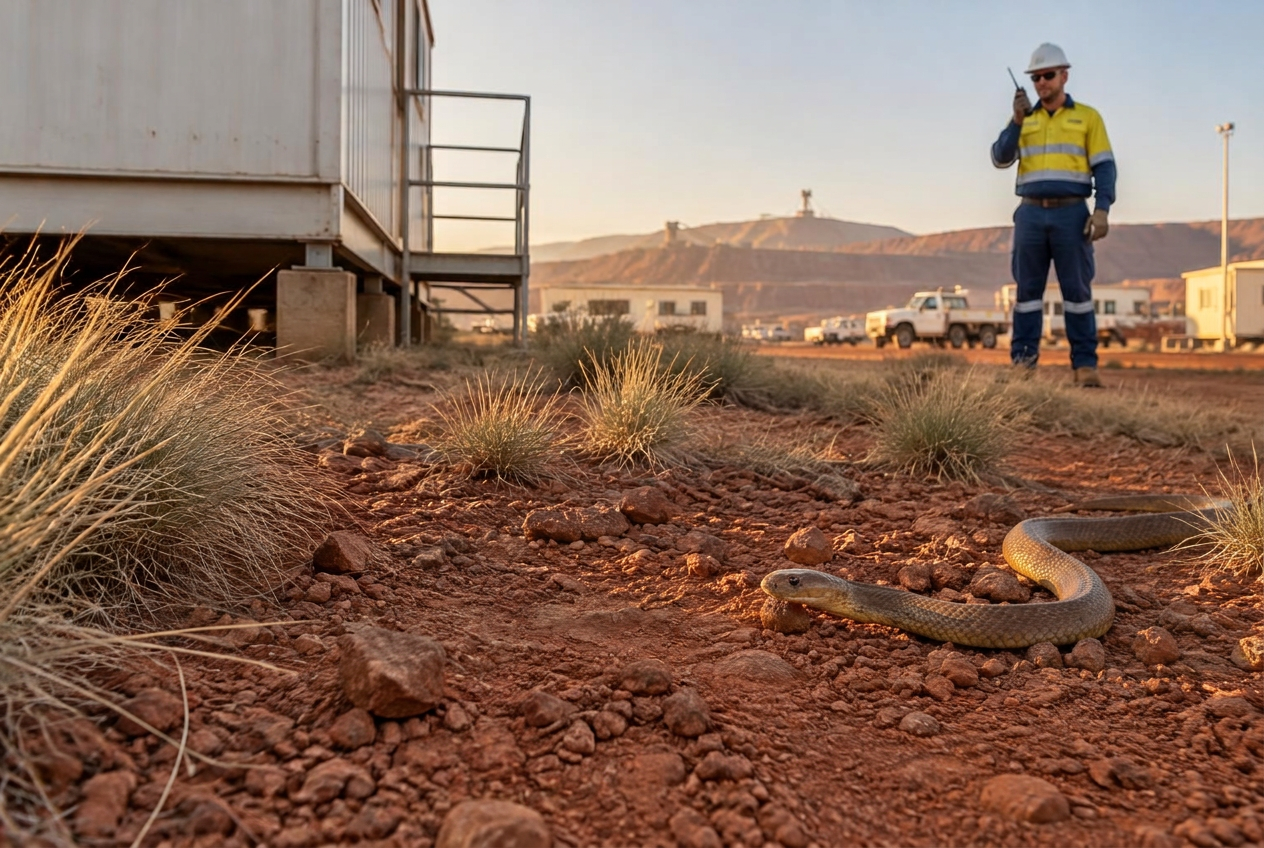
If you see a snake on a mine site: stop, warn people nearby, keep your distance and call the site's qualified snake catcher. Never try to move, catch or kill it. Sites should have trained snake catchers on every roster, proper handling gear, and snake bite bandage kits spread across the site.
Interactive scenario
What would you do?
You spot a snake near a crib room on site. What should happen next?
First response
What should you do if you see a snake on a mine site?
Stop, alert nearby workers, keep your distance and contact the site's qualified snake catcher. If it's safe, keep the snake in sight and note its direction if it moves away.
- 1Stop what you're doing
- 2Make the immediate area aware
- 3Keep your distance
- 4Call the site's snake catcher
- 5Keep eyes on it — if safe
- 6Note its direction if it moves
The first step is to stop, make the immediate area aware, and contact your on-site qualified snake catcher. Keep eyes on the snake if it's safe to — and if it moves off, note the direction it went.
Don't be a hero
Should you move a snake yourself at work?
No. General workers should stop, keep their distance and notify the site's qualified snake catcher. Only trained, properly equipped snake catchers should carry out authorised removal work.
It's tempting to deal with it yourself so work can carry on. But an untrained person with a shovel or stick is far more likely to be bitten than someone who simply backs off. The job can wait a few minutes for the right person.
The right person
Who should remove a snake from a mine site?
The site's qualified snake catcher, trained and properly equipped to carry out authorised removal work.
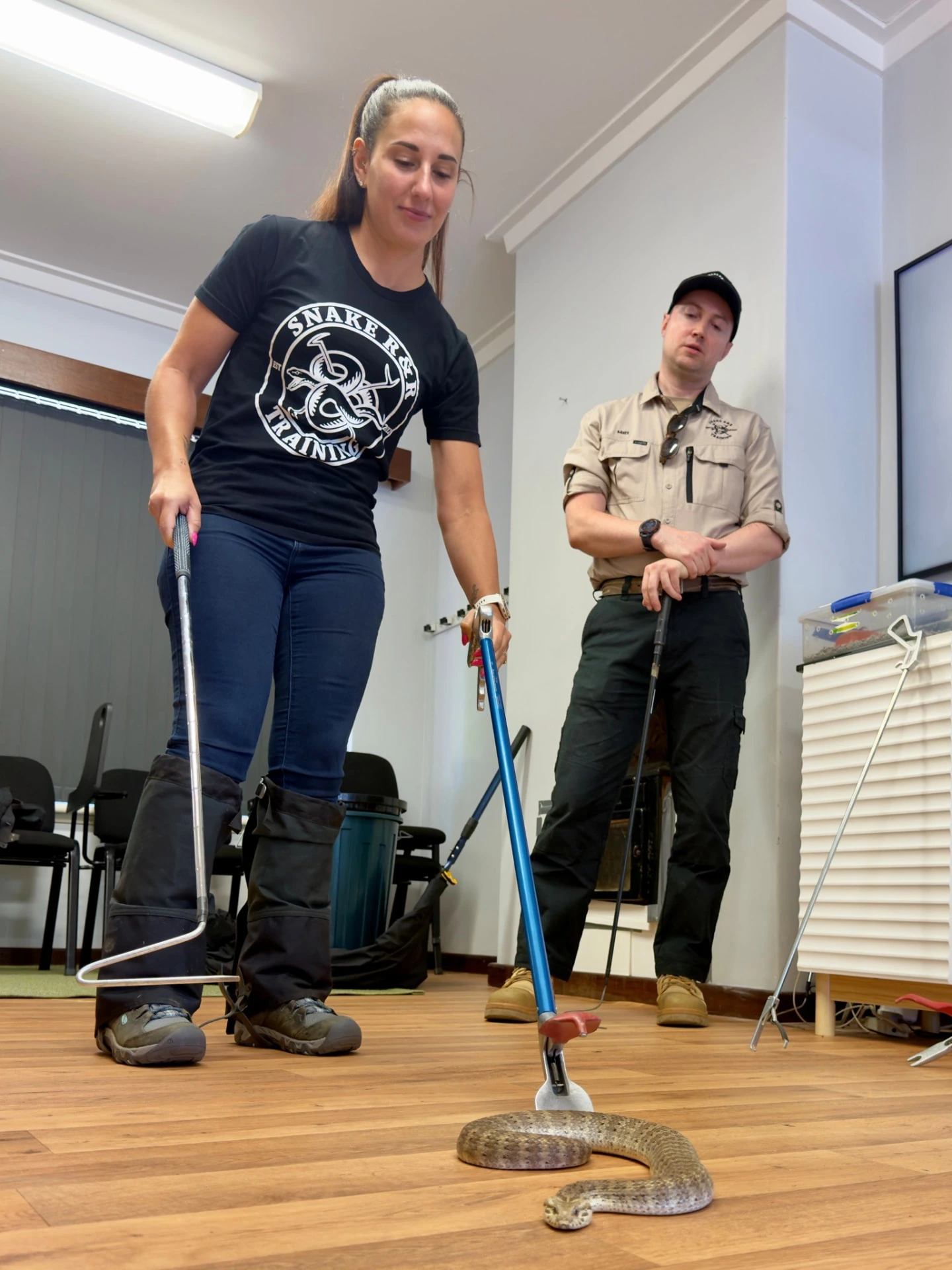
According to Snake R&R Training, a trained handler should be called every time, no matter how small or harmless the snake looks. Identifying species by eye is unreliable, and juvenile snakes can still deliver a dangerous bite.

Coverage
Do mine sites need trained snake catchers?
Yes — wherever snake encounters are possible, companies should have trained snake catchers available on each site and on each roster.
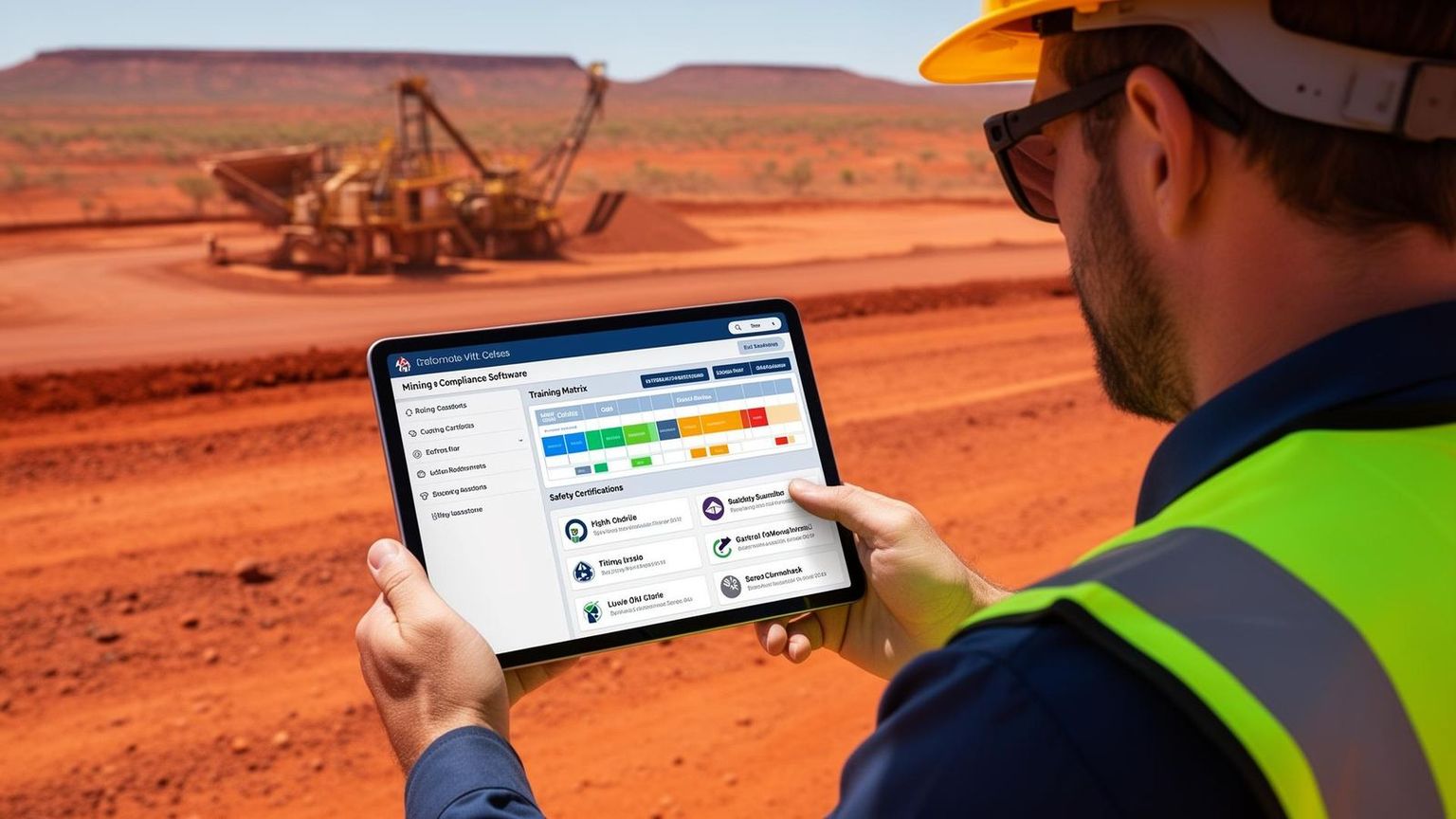
One trained person on day shift doesn't help the night crew, and a catcher who's on R&R this swing can't respond either. Coverage needs to follow the roster, so there's always someone competent on site. That's why keeping a training matrix current matters as much as the training itself.
Kit
What equipment should mine sites have for snake incidents?
Correct snake catching and removal gear for trained personnel, plus several snake bite bandage kits placed across the site.
For trained catchers
Snake hooks, tongs, bags or containers and protective gear — only used by trained, properly equipped snake catchers carrying out authorised work. Ordinary workers and course participants must not physically touch, pick up or hold a snake.
For everyone
Snake bite bandage kits in vehicles, crib rooms, workshops and first aid stations — close enough to reach in minutes.
Seasonal risk
When are snakes most active in Western Australia?
Snakes are generally more active in spring and the warmer months, but vigilance is needed all year.
Spring
Snakes emerge, feed and look for mates. Expect more sightings around camps and work areas.
Warmer months
High activity through summer, especially early morning and evening.
Extreme heat
Snakes seek cool, sheltered spots — including air-conditioned buildings.
Do snakes enter air-conditioned buildings in hot weather?
They can. Snake R&R Training notes that in extreme heat, snakes may look for cooler places — and that can include air-conditioned crib rooms, offices and dongas. Keep doors shut, check under desks and around gaps, and report any sighting.
Interactive map
Where are Australia's most venomous snakes found?
Tap a region to see some of the notable venomous snakes found there.
Pilbara & Goldfields (WA)WA
- Mulga (king brown) snake
- Western brown snake (gwardar)
- Pilbara death adder
Hot, arid mining country. Snakes shelter around camps, laydown yards, pipe stacks and air-conditioned buildings.
A simplified visual guide, not a scientific distribution map. Wildlife risk varies by region and local environment — always use your site-specific risk assessment.
What not to do
What are the most common mistakes people make around snakes?
Panicking, getting too close, trying to shoo snakes away with rocks or sticks, and trying to catch or kill them.
Panicking
Sudden movement and shouting make a bad situation worse. Stop and stay calm.
Getting too close
Most bites happen when people step in for a closer look or a photo.
Throwing rocks or sticks
Trying to shoo a snake away agitates it and brings you into strike range.
Trying to catch it
Leave it to a trained, properly equipped snake catcher. Always.
Trying to kill it
Native snakes are protected in WA — and attempting to kill one is a common cause of bites.
The biggest mistakes we see are people panicking, trying to shoo the snake away with rocks or sticks, or trying to kill it.
Readiness
What should a workplace do to prepare for snake encounters?
Have trained people, the right equipment, first aid supplies, a clear reporting and escalation process, and a workforce that knows what to do.
Is your site prepared for a snake incident?
0 / 6 readyThere are gaps worth closing now. Start with trained people on every roster and bandage kits across site.
Emergency
What is the correct first aid for a snake bite in Australia?
Call Triple Zero (000) immediatelyDo
- Keep the person still and calm
- Apply a pressure immobilisation bandage, following Australian first aid guidance
- Keep the limb still — splint it if you can
- Note the time of the bite
Don't
- Wash, cut or suck the bite
- Remove the bandage
- Let the person walk around
- Try to catch or kill the snake
General information only. Always follow official Australian first aid guidance and your site's emergency procedures.
A common misconception is that because there aren't many deaths, bites aren't serious. Serious long-term damage can happen if a bite isn't treated correctly and quickly.
The law
Should you kill a snake at work in WA?
No. Native snakes are protected in Western Australia and should not be killed.
Are snakes protected in Western Australia?
Yes. Native snakes are protected wildlife in WA. Beyond the law, trying to kill a snake is one of the most common ways people get bitten. Leave it, keep your distance and call the snake catcher.
Risk management
How should mining companies manage snake risk?
Treat it like any other site hazard: competent people, the right equipment, documented response processes, clear communication and visibility over who is ready.
 Readiness happens before the incident
When a snake turns up near the crib room, nobody has time to work out who's trained. Safety depends on knowing, in advance, who holds which competency, who is on this roster, and whether the right people and information are on site.
Beyond snakes
What wildlife hazards should mining companies plan for?
Snakes are one part of it. Remote and regional sites should include all relevant wildlife in site-specific planning.
Depending on location, that can include spiders, scorpions, kangaroos and livestock on access roads, wild dogs and dingoes around camps, crocodiles near northern waterways and stinging insects. The same principles apply: know the local risks, train people, have the right first aid on hand and make reporting simple.