Quick Answer
Regions Before Royalties is a campaign led by Resource Industry Network (RIN) calling for a review of Queensland's coal royalty settings so regional suppliers, jobs and communities are part of the conversation. Queensland's top coal royalty rate went from 15% to 40% in 2022 — the highest in the world — and coal's direct spend in Queensland has since fallen by $4.3 billion, with nearly $3 billion of that drop in the Mackay, Isaac and Whitsunday region.
- Who it affects: mining service contractors, engineering workshops, labour hire, transport and the towns around them.
- Why it matters: supplier spend, shutdown scopes and maintenance budgets are the first things cut.
- How to get involved: sign the petition at regionsbeforeroyalties.com.au, use RIN's member toolkit, share your business's impact story, and write to your local MP.
Most of the royalties debate is reported as a story about big miners.
It isn't. The money that moves when a royalty rate changes moves through the supply chain — the fitter, the boilermaker, the labour hire crew, the hose shop, the motel and the cafe in a coal town. Regions Before Royalties exists to put that part of the story in front of decision-makers, and it only works if regional businesses actually put their names to it.
What is Regions Before Royalties?
Regions Before Royalties is a campaign run by Resource Industry Network (RIN), the Mackay-based industry body representing around 8,500 businesses that supply Queensland's resources sector. Its argument is simple: the discussion about Queensland's coal royalties has focused on mining companies, while the small and medium regional businesses that keep the sector moving have been largely left out of it.
The campaign is member-led and built in phases — a public petition to demonstrate the scale of the impact, digital advocacy through supplier stories, and direct engagement with MPs, particularly across Central Queensland. It runs alongside the Queensland Resources Council's separate call for a formal review of coal royalty settings.
The Numbers Behind the Campaign
Queensland lifted its maximum coal royalty rate from 15% to 40% in 2022, making it the highest coal royalty jurisdiction in the world — around three times the rate in New South Wales.
Roughly 387,000 Queensland jobs are supported by the resources sector, the vast majority of them in supplier businesses rather than mines themselves.
QRC's Economic Impact of the Resources Sector report showed coal's direct spend in Queensland has fallen by $4.3 billion — with nearly $3 billion of that drop in Mackay, Isaac and Whitsunday.
Resource Industry Network represents around 8,500 businesses — mechanics, engineers, workshops, labour hire, motels and cafes across Queensland's mining communities.
Royalties are payments to the Queensland Government for the right to extract state-owned resources, paid on revenue on top of company tax, payroll tax, land tax and council rates — and paid whether or not a project is profitable. That last point is why the 2022 settings, introduced during record prices, land differently in 2026 with softer prices and higher operating costs.
Why Contractors and Workshops Should Care
When an operator needs to reduce cost, it rarely starts with the ore body. It starts with discretionary and deferrable spend: shutdown scopes, rebuild programs, fabrication, upgrades, extra crews. Announcements already flowing through the region make the pattern obvious — BMA reducing around 750 roles and placing Saraji South into care and maintenance, and QCoal winding back about half its Blackwater sites, affecting roughly 170 roles.
Mining service contractors
Shutdown scopes get trimmed, maintenance is deferred and rates come under pressure. Fewer purchase orders arrive and the ones that do are scrutinised harder.
Engineering workshops
Componentry rebuilds, fabrication and repair work are among the first line items cut when a site is chasing cost. Workshops carry the labour and the stock.
Labour hire and trades
Crew numbers follow the shutdown calendar. Announcements like BMA's 750-role reduction and QCoal's Blackwater cutbacks flow straight into contractor headcount.
Regional towns
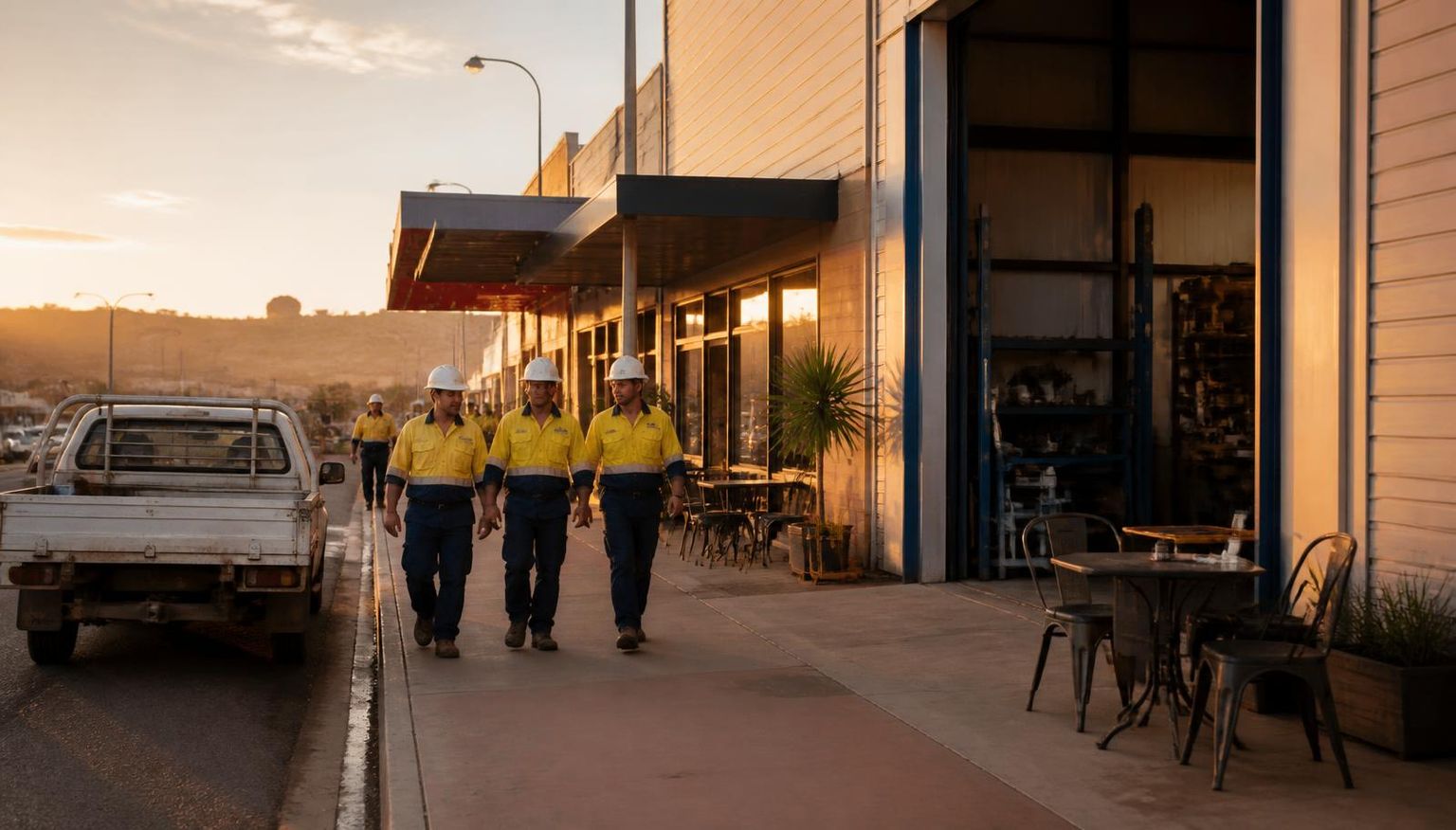
Cafes, motels, gyms, transport operators and sporting clubs in Mackay, Moranbah, Emerald, Dysart and Blackwater all sit downstream of mine-site spend.
If you're weighing what this means for the year ahead, our guides on Bowen Basin job cuts and winning mining tenders in Queensland cover the practical side of a tighter market.
How to Get Involved
- Sign the petition at regionsbeforeroyalties.com.au — it is the single fastest way to add your business to the count decision-makers see.
- Share it with your crew, your clients and your suppliers. The campaign's strength is the number of individual regional businesses behind it, not the size of any one of them.
- Use the RIN member digital toolkit — ready-made 1:1 social tiles, Canva templates and suggested captions so your marketing person doesn't have to write anything from scratch.
- Tell your story on the record. RIN is collecting short supplier video interviews on the local impact — deferred hires, cancelled scopes, lost contracts.
- Write to your local MP with specifics: how many people you employ, what your contracted work looked like in 2022 versus now, and what you would do with restored volume.
- Join Resource Industry Network (or GW3 / your local chamber) so your business is inside the group that gets briefed and represented.
- Bring the numbers. Advocacy lands when it is evidenced — turnover by client, hours worked, uninvoiced work and quote win-rates beat sentiment every time.
Make Your Advocacy Evidence-Based
The submissions that change minds are the ones with numbers attached. If you're writing to an MP or contributing a supplier story, the strongest version includes: headcount now versus 2022, hours worked by client, contracted volume trend, deferred hires and quotes lost on price. Most contractors have that data — it's just spread across timesheets, spreadsheets and someone's inbox.
That's the same reporting that helps you hold your margin while volume is tight. SprintSuite's reporting and analytics pulls hours, uninvoiced work and job profitability out of live site data, and mining contractor software covers how Queensland contractors run jobs, shutdowns and compliance in one place.
Where the Impact Is Concentrated
The sharpest effects sit in the Mackay, Isaac and Whitsunday corridor and the Central Highlands — Mackay, Moranbah, Dysart, Emerald, Blackwater and Clermont — where a single mine's maintenance plan can set the trading year for dozens of local businesses. If you operate there, our Mackay and Mackay mining jobs pages map who's operating and who's contracting.
Frequently Asked Questions
Tighter market, sharper operation
While the royalty debate plays out, the contractors winning work are the ones who can prove turnaround, compliance and cost per job. See how SprintSuite does it for Queensland mining and heavy industry.