What is field service management software?
Field service management software (FSM) is a system that plans, dispatches, captures and bills work performed away from your depot. It holds work orders and asset histories, schedules crews who are available and qualified, delivers the job to a mobile app that works offline, captures hours, materials, photos and client sign-off on site, and passes approved work through to payroll, job costing and invoicing without re-entry.
- Work orders for reactive, planned, breakdown and shutdown work in one place
- Scheduling and dispatch on availability, skills, tickets and travel
- Compliance gating so expired inductions and licences block dispatch
- Hours and materials captured once, used for pay, cost and billing
- Live job margin, utilisation and first-time-fix reporting
Core features of field service management software
Work order management
Every request — reactive call-out, planned service, breakdown or shutdown scope — becomes a work order with a site, asset, scope, priority and due window.
Scheduling and dispatch
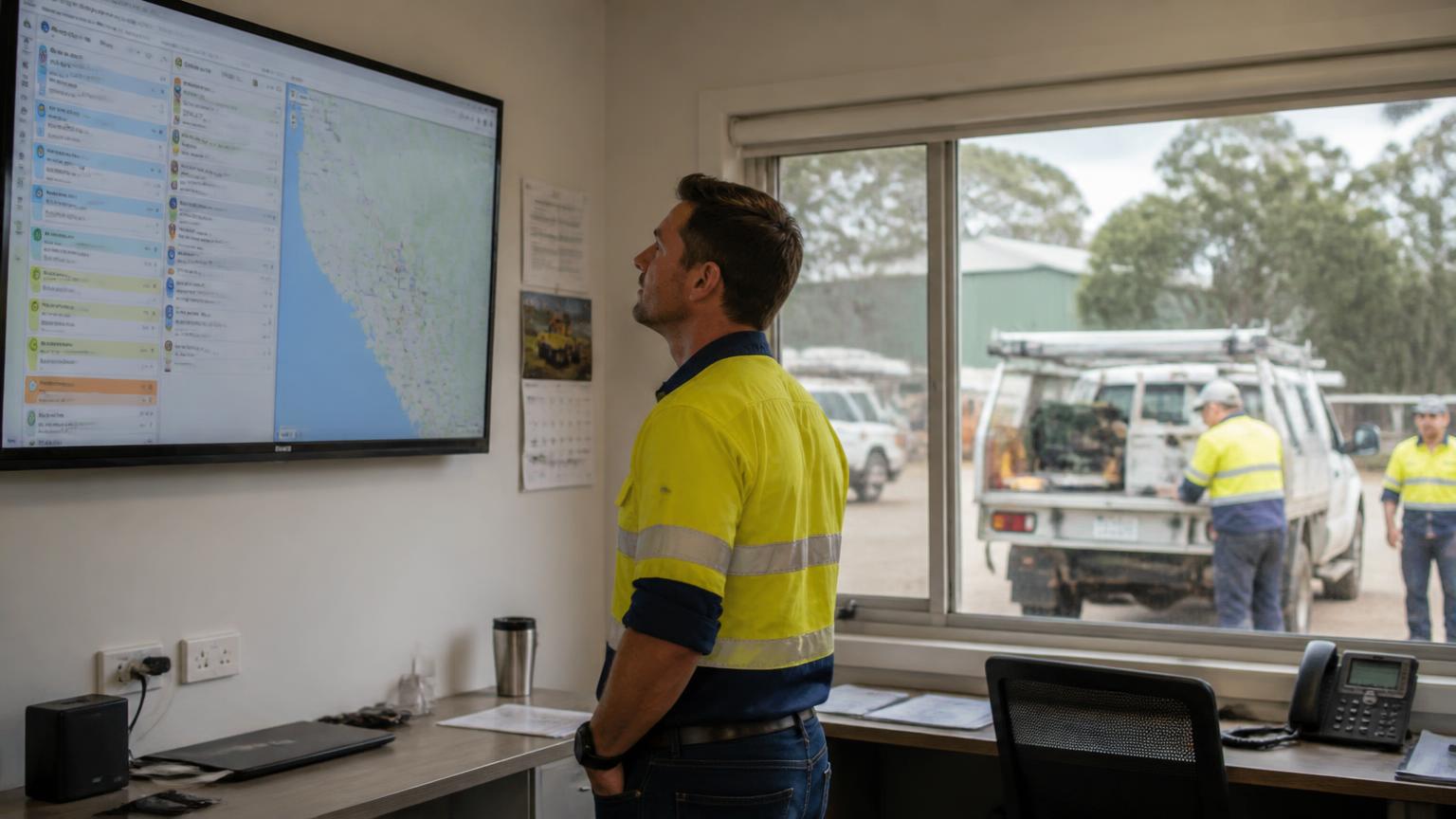
A drag-and-drop board, day view and map so crews are allocated on availability, skills, tickets and travel instead of whoever answers the phone.
Mobile field app
Job packs, asset history, checklists, photos and client sign-off on a phone or tablet, working offline where coverage drops out.
Compliance and competency gating
Licences, tickets, medicals and site inductions checked before dispatch, so nobody is turned around at the gate.
Asset and equipment registers
Service history, meter readings, defects and upcoming maintenance held against the asset — client-owned or yours.
Timesheets and job costing
Hours coded to job and task as they are worked, so labour, plant and materials accumulate against the estimate live.
Parts, stock and procurement
Materials consumed on the job, purchase requests raised from the field, and POs approved before the invoice surprises you.
Invoicing and reporting
Approved work converts to invoices, progress claims and variations, with utilisation, first-time-fix and margin reporting on the same data.
How it works, end to end
Work comes in
A client call, an email, a portal request or a scheduled maintenance routine creates a work order automatically.
The job is planned
The scheduler matches the scope to a qualified crew, a date window, a vehicle and the parts required.
It is dispatched
The crew receives the job on mobile with history, drawings, permits and checklists attached.
The field captures reality
Hours, materials, photos, readings, defects and client signatures are recorded on site — not remembered later.
The office approves
Supervisors approve hours and costs once. That approval feeds payroll, job costing and billing together.
It gets billed and measured
The invoice or progress claim is generated from the same record, and the job cost report shows what the work actually earned.
Examples of field service management in practice
Mining maintenance contractor
Crews rotate across multiple mine sites. FSM software gates dispatch on Standard 11, coal board medicals and site inductions, tracks shutdown scopes against budget, and turns approved hours into both payroll and client invoices.
Mobile plant and HME servicing
Service trucks work to meter-based routines. The asset register triggers the next service, the field app captures readings and defects, and follow-up work orders are raised on the spot.
Industrial electrical and mechanical
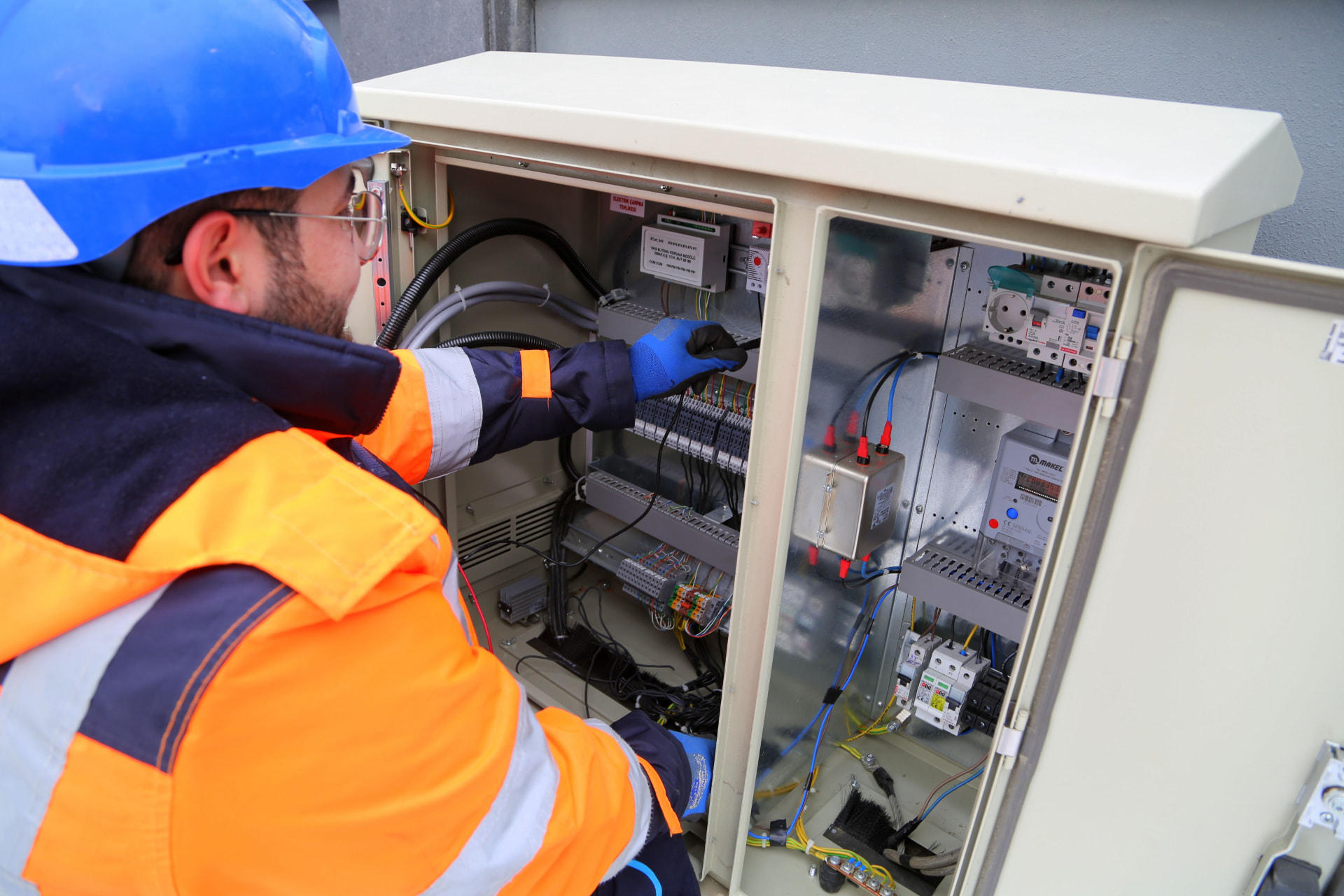
Reactive breakdowns collide with planned works. Dispatch sees the impact of an urgent job on the committed week, re-crews it, and keeps HV authorisations and permits attached to the job.
Workshop plus field hybrid
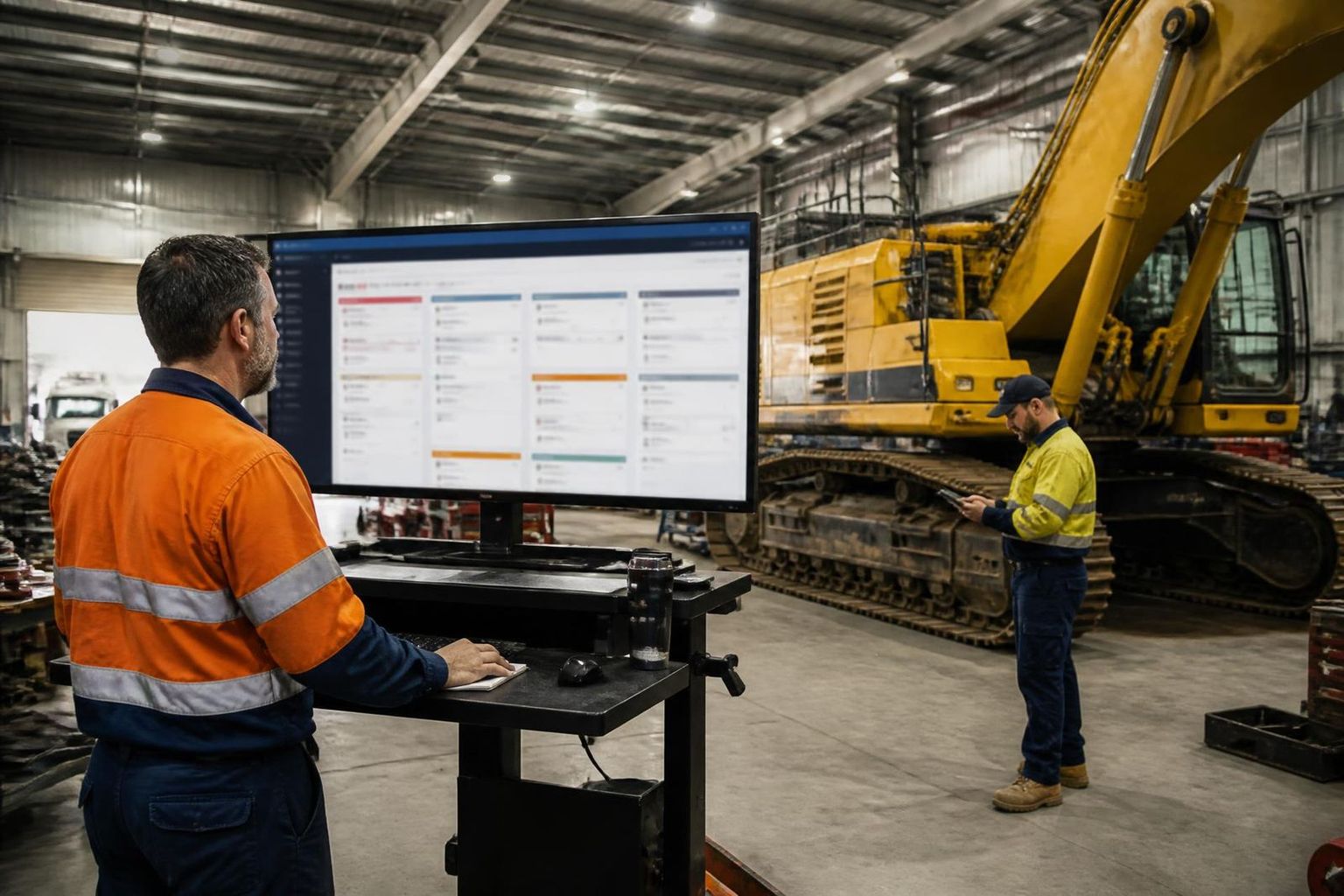
Some work happens in the workshop, some on site. Kiosk clock-on covers the floor, the mobile app covers the field, and both land in one costing and invoicing flow.
The benefits contractors actually feel
What FSM software is not
A shared calendar or spreadsheet
Shows who is booked. Blind to tickets, parts, travel, hours and cost — and no mobile view for the crew.
A rostering or clock-on app
Rosters people to shifts and gets them paid. It does not hold the work order, the asset or the job cost, so hours never reach an invoice.
Accounting software alone
Excellent at ledgers and BAS. It has no schedule, no field app and no compliance gate — it needs the job data fed to it.
What it costs in Australia
Most FSM platforms sold in Australia are priced per user per month, commonly somewhere between about $30 and $150, with cheaper field-only licences and dearer full office licences. Implementation, data migration and training sit on top. The useful comparison is not licence versus licence — it is licence versus the cost of one wasted trip a week, a day of unbilled labour a month, or a payroll correction every pay run.
Australian compliance to plan for
Pay rules and allowances for field crews sit under modern awards published by the Fair Work Ombudsman , time and wage records must meet Fair Work record-keeping duties , and roster, shift and fatigue risks are covered by Safe Work Australia guidance .