Quick Answer
Field service software is a platform that helps businesses with mobile workforces run jobs, schedules, technicians, assets, safety and invoicing from one connected system. It combines:
- An office dashboard for dispatchers, admins and owners.
- A mobile app for technicians in the field (with offline support).
- Integrations to accounting, payroll and safety tools.
It replaces paper job cards, spreadsheets and disconnected apps — so jobs get scheduled faster, invoiced sooner, and compliance is audit-ready by default.
What is field service software?
Field service software (sometimes called field service management software, or FSM) is the operating system for any business that sends people to a job site. Instead of dispatchers running a whiteboard, techs filling out paper dockets, and admins re-keying data into Xero at end of week, everything lives in one connected platform — job, tech, asset, safety, time, parts, photos and invoice.
In Australia it's used heavily by mining contractors, heavy-equipment workshops, electrical, mechanical, HVAC, plumbing, fire, civil, drilling, rope-access and facilities service teams. Anywhere a technician turns up to a site with a phone or tablet, field service software is doing the work behind the scenes.
How does field service software work?
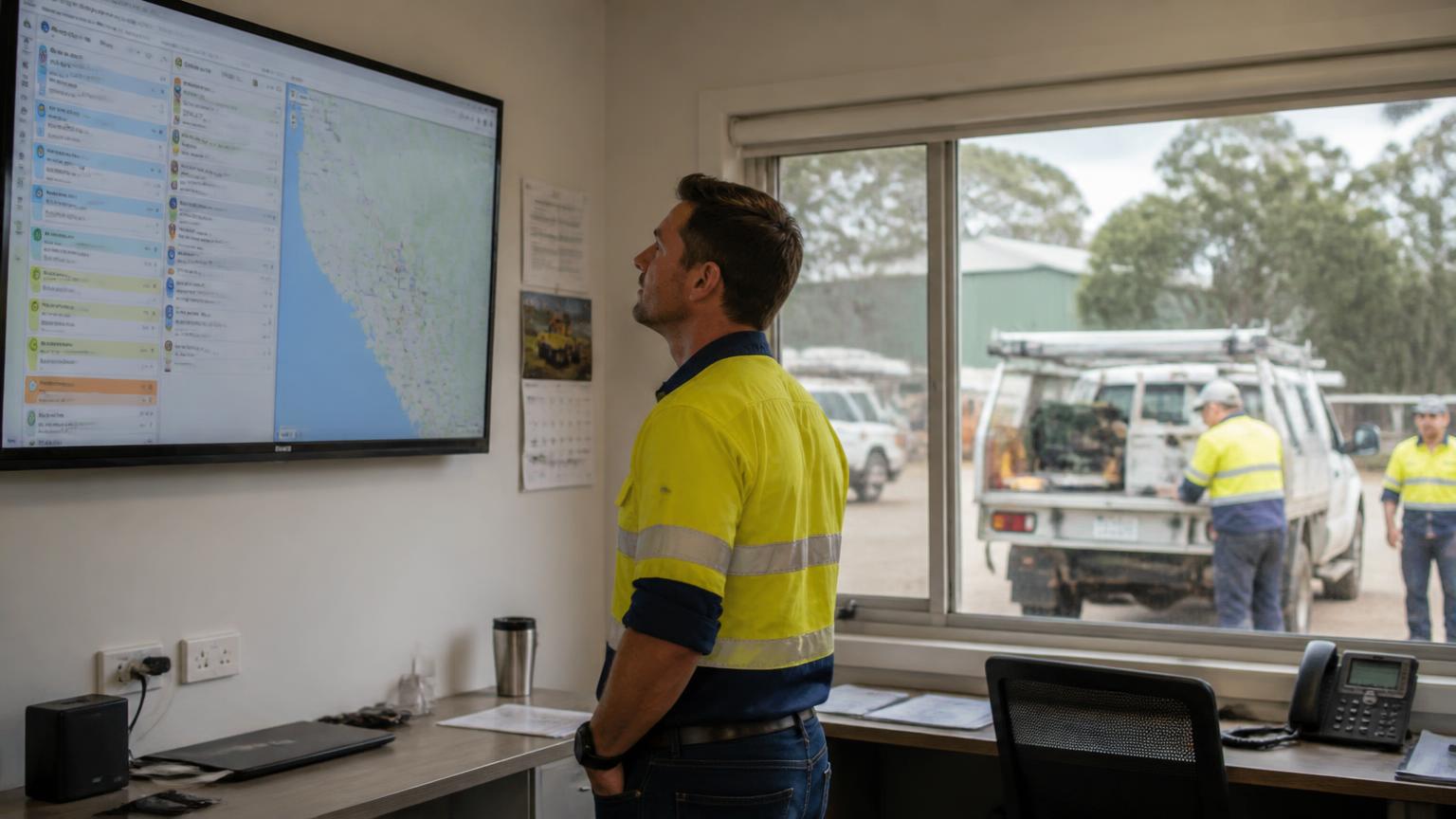
The workflow is deliberately simple, because it has to run in a ute cab at 6am and a Tier-1 mine crib room at 2pm:
Job created
A customer request, planned maintenance trigger or approved quote creates a job in the system.
Scheduled and dispatched
The dispatcher assigns a technician, vehicle and time window; the job lands on the tech's mobile app.
On-site execution
The technician completes pre-starts and safety forms, does the work, captures parts, labour, photos and customer sign-off.
Sync back to office
Data flows in real time (or on next reconnect for remote sites) into the job, ready for review.
Invoice and report
Actuals are pushed to accounting, the job is invoiced, and margin, compliance and utilisation appear on dashboards.
Core features of field service software
Job and work order management
Create, dispatch and track every job from quote to invoice. Field service software replaces paper job cards and spreadsheets with a single digital record — customer, site, scope, parts, labour, photos, sign-off — that stays in sync across the office and the field.
Scheduling and dispatch
Drag-and-drop schedulers, route optimisation and technician availability views let dispatchers assign the right person to the right job. Good field service software also handles crew jobs, shutdowns and multi-day project work — not just one-off callouts.
Mobile app for technicians
A field app on iOS and Android is the heart of any field service platform. Technicians see today's jobs, capture time, materials, photos and safety forms, get customer sign-off, and sync back to the office — with offline support for remote sites without reception.
Safety, WHS and compliance
Digital pre-starts, JSAs, SWMS, take-5s, toolbox talks and hazard reports live inside the same job record. That means audit-ready evidence for Tier-1 clients, WHS regulators and Avetta / Rapid / Cm3 without chasing paperwork after the fact.
Assets, equipment and workshop
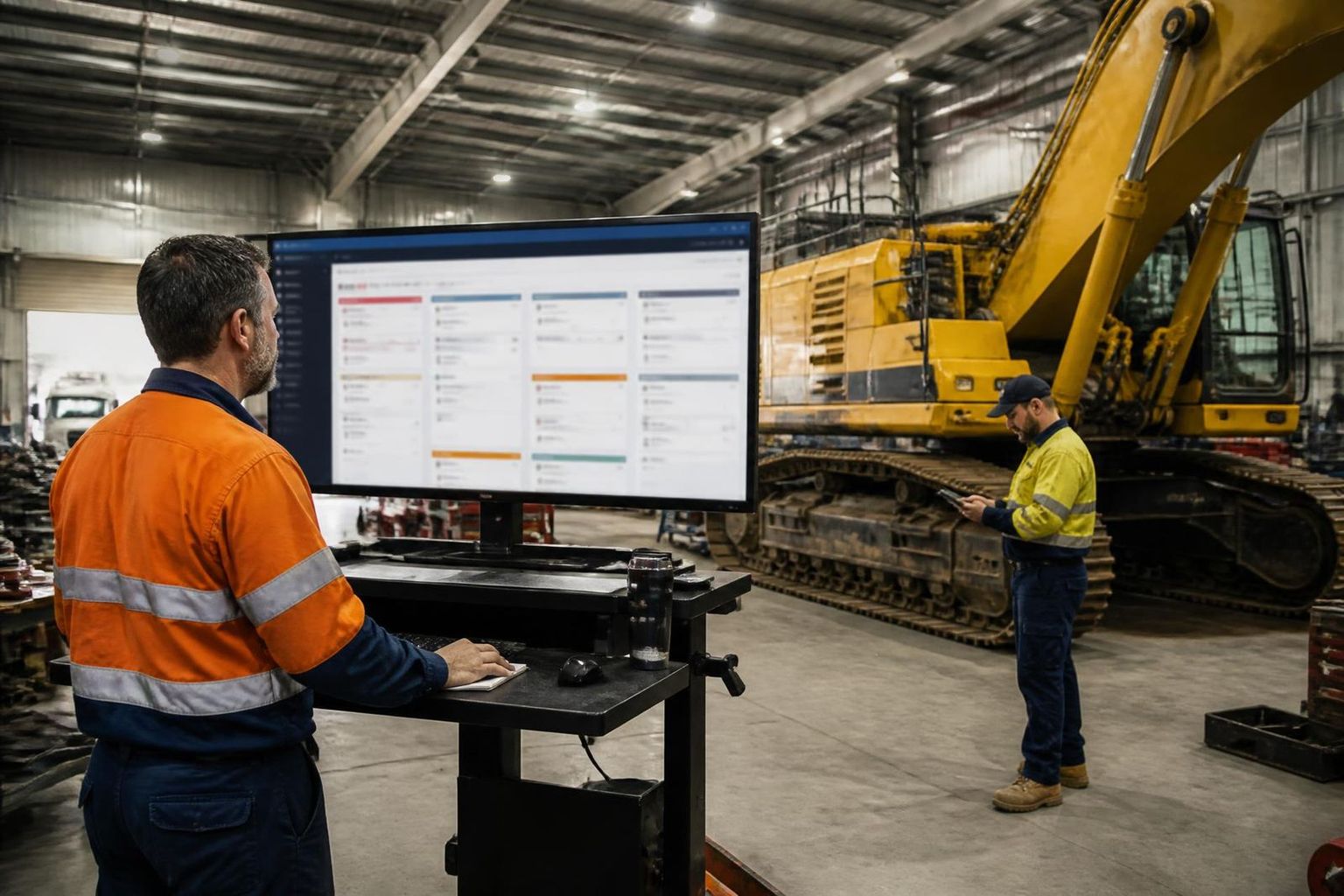
Track plant, vehicles and customer assets with service history, meter readings and planned maintenance. The best field service software connects field jobs to workshop jobs so a defect raised on site becomes a scheduled repair without re-keying.
Quoting, invoicing and reporting
Quote from a price list, convert to a job, capture actuals and push a Xero or MYOB invoice the same day. Real-time dashboards show WIP, gross margin per job, technician utilisation and outstanding compliance — the numbers owners actually run their business on.
Benefits of field service software
- Less admin — one system replaces spreadsheets, paper dockets, WhatsApp threads and email chains.
- Faster invoicing — jobs close and invoice the same day, not weeks later.
- Higher first-time-fix rates — techs arrive with the right info, parts and history.
- Audit-ready compliance — safety, training and WHS evidence attached to every job.
- Better margin visibility — you see profit per job, per crew, per client, in real time.
- Scalable operations — onboard new techs, sites or contracts without hiring more admins.
Who uses field service software?
Mining contractors
Field service software is critical for Tier-1 mining subcontractors — pre-starts, JSAs, VOCs, site inductions and shutdown timesheets all in one auditable stack.
Heavy equipment & workshops
Boilermakers, hose shops, component rebuilders and mobile plant maintainers use it to link field defects to workshop job cards and back.
Trades & building services
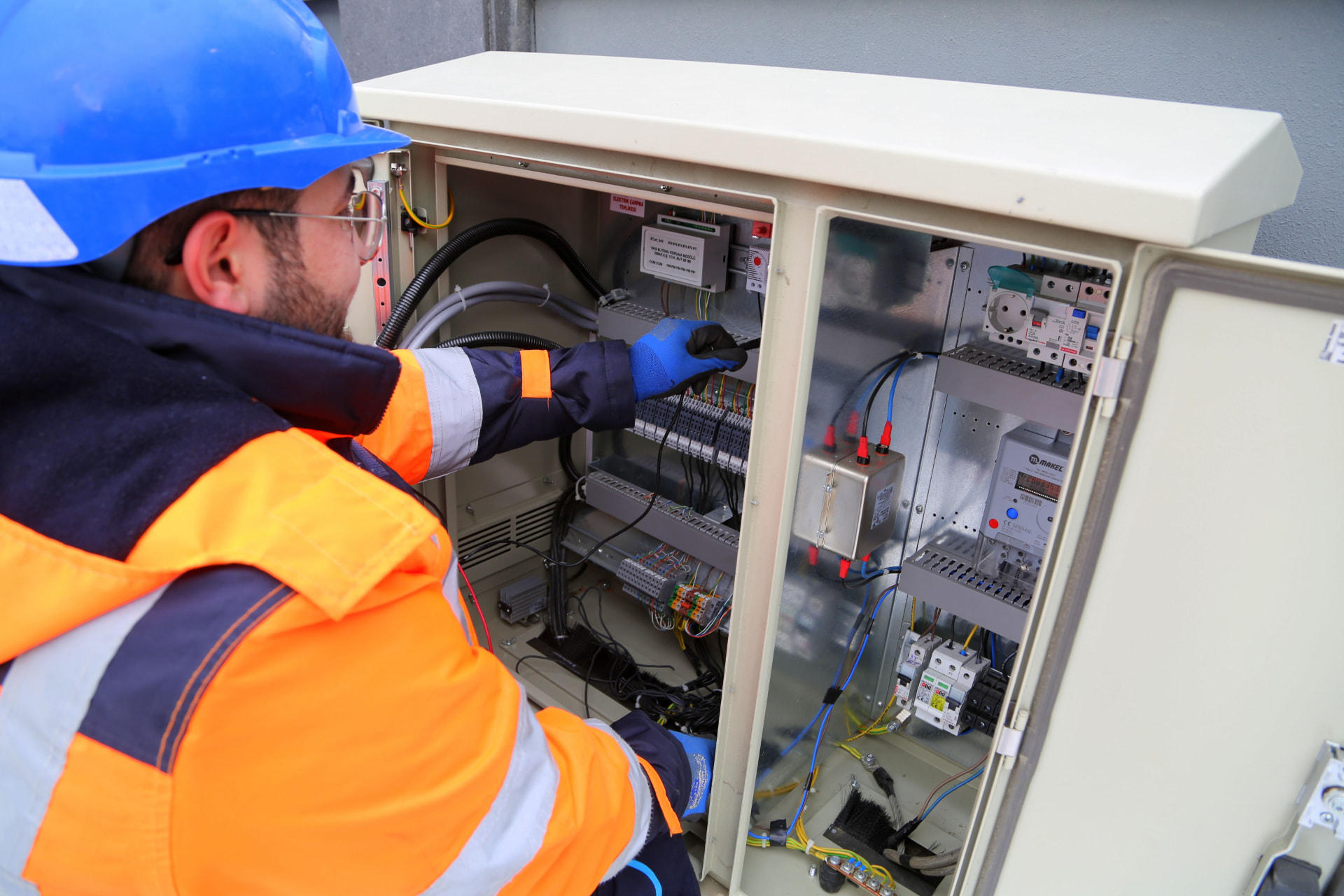
Electricians, plumbers, HVAC, fire and refrigeration teams use it to quote, dispatch, invoice and prove compliance on maintenance contracts.
Civil, drilling & rope access
Crew-based, multi-day and shutdown-style work needs a scheduler that handles teams — not just one-tech callouts.
Facilities & property services
Cleaning, security, grounds and asset services teams use field service software to manage recurring visits and SLAs across many sites.
What to look for in Australian field service software
Not all field service software is built for Australian conditions. A platform that works for a metropolitan HVAC shop in Sydney can fall over fast on a Bowen Basin mine site. When comparing options, check for:
- Offline mobile app — non-negotiable for remote and mine work.
- AUD pricing — avoid USD-only vendors that expose you to FX swings.
- Xero / MYOB / QuickBooks integration — first-class, not a bolted-on connector.
- Tier-1 mining compliance depth — VOCs, inductions, JSAs, SWMS, training matrix.
- Workshop and assets — so field defects flow straight into shop jobs.
- Payroll-ready timesheets — award interpretation, allowances, LSL, RDOs.
- Australian support — real humans on AEST, not just chatbots.
Related reading: Best invoice app for Australian trades · Simpro alternatives for mining and heavy industry · ServiceM8 alternatives for contractors · Connecteam pricing and alternatives.