
What Is Shutdown Management?
Shutdown management is the end-to-end planning, scheduling, execution and reporting of planned downtime on a mine, plant or major asset. It brings scope, resourcing, budget, safety, compliance and reporting into one controlled process — with the goal of returning the asset to production on time, on budget and without incident.
On a Tier-1 site, every hour of production lost during a shut costs the operator tens to hundreds of thousands of dollars. That's why shuts run to the minute — and why contractors that can prove disciplined shutdown management win repeat scope.
What Is Shutdown Maintenance? (Meaning & Examples)
Shutdown maintenance is major maintenance carried out during planned downtime, when equipment or a plant is deliberately taken offline. It's the "shutdown maintenance meaning" most operators use — planned, scoped, resourced and rehearsed work that can't be done live.
It's the opposite of breakdown or reactive maintenance. A breakdown is an unplanned failure; a shutdown is booked in 6–12 months ahead with a locked scope, budget and duration.

Why Shutdown Management Matters in Mining
Production risk
Every hour of overrun is deferred production — often $100k+ per hour on a Tier-1 asset.
Safety exposure
Shuts concentrate high-risk work: lifts, isolations, confined space, working at heights.
Workforce surge
100–1,000+ extra workers on site for 1–4 weeks — inductions, tickets and rosters all have to hold.
Compliance & reporting
Operators want scope-vs-actual, safety and cost reports within weeks of demob.
Typical Mining Shutdown Scopes
Common Bowen Basin, Hunter Valley and Pilbara shutdown scopes:
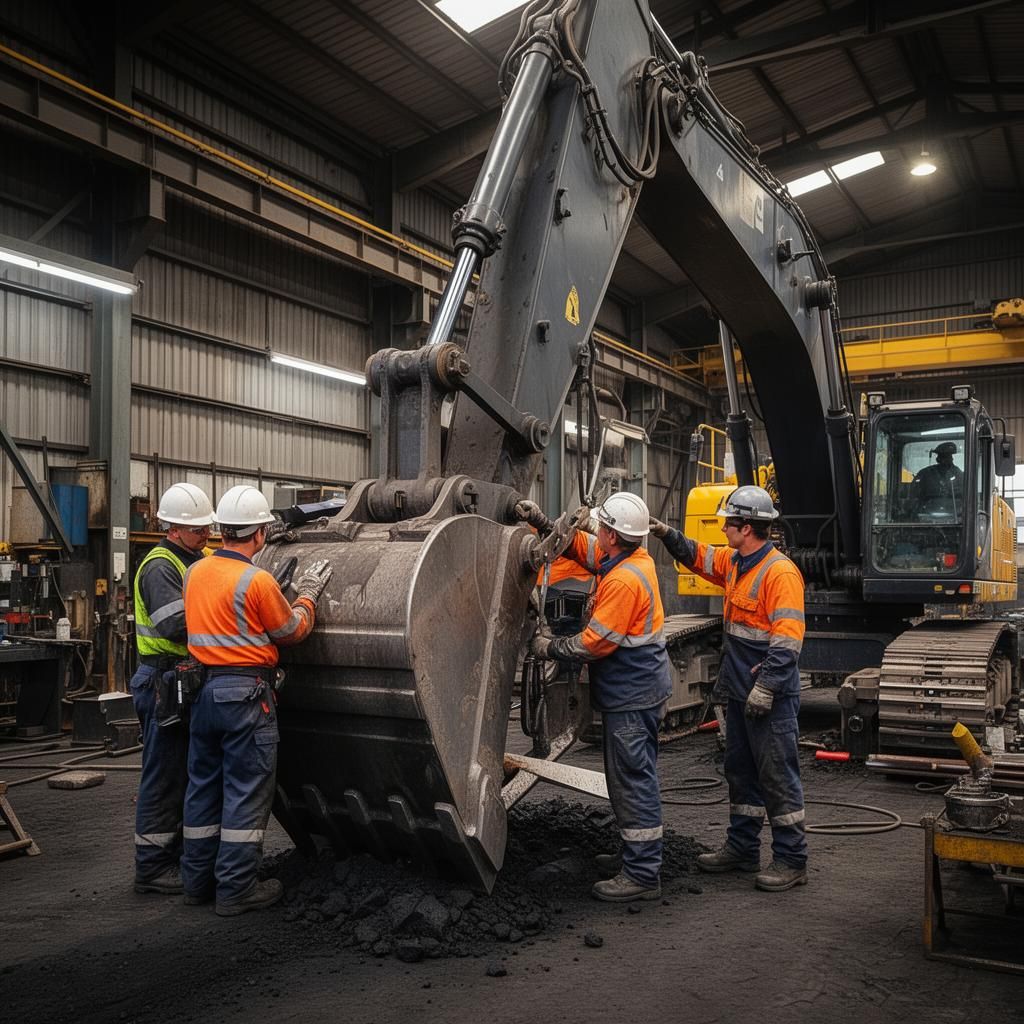
HME major-component change-outs
Engines, transmissions, wheel motors, buckets, trays, differentials.
CHPP & plant maintenance
Structural, mechanical and electrical maintenance on coal handling and processing plants.
Dragline shuts & longwall moves
High-value, high-consequence scopes with strict planning and safety controls.
Conveyor overhauls & belt splices
Rip repairs, splicing, pulley change-outs and structural work.
Truck rebuilds & tyre changes
Full and mid-life rebuilds, wheel motor and tyre change-outs on ultra-class haul trucks.
Statutory inspections & civil work
Pressure vessel inspections, tank cleans, and civil earthworks.
Maintenance Shutdown Planning Checklist
A disciplined planning checklist is the single biggest predictor of a shut that hits its numbers. Use this as a starting point:
12+ months out
- Scope definition and business case sign-off
- Long-lead procurement (major components, cranes)
- Contractor panel prequalification (Avetta, Rapid Global, Cm3, Pegasus)
6 months out
- Detailed WBS and task list
- Resource plan (labour, tooling, accommodation)
- Draft schedule with critical path
- Tender packages issued
3 months out
- Scope freeze and change-control gate
- Isolation and permit plans
- JSAs and risk assessments
- Mobilisation logistics locked in
1 month out
- Workforce inductions, medicals and tickets verified
- Toolbox packs and pre-shut briefings prepared
- Final schedule and roster published
Execution
- Daily earned-value tracking
- Permit-to-work discipline
- Fatigue and hours monitoring
- Change control on every scope add
Post-shutdown
- Demobilisation and reconciliation
- Shutdown report within 2–4 weeks
- Lessons learned and defect close-out
Building the Maintenance Shutdown Schedule
A maintenance shutdown schedule breaks scope into tasks, sequences them against the critical path, loads resources (labour, cranes, tooling) and locks in the duration. Best-practice shutdown schedules include:
Run your next shut in SprintSuite
Plan the scope, mobilise the workforce, track earned value and generate the operator report — in one platform built for Australian mining contractors.
Shutdown Services & Mining Shutdown Companies
Mining shutdown services are delivered by a mix of OEM crews, tier-1 contract maintainers and specialist shutdown providers. Major players in Australia include:
Hastings Deering / WesTrac / Komatsu / Liebherr
OEM change-out crews for HME and plant.
Tier-1 contract maintainers
Full-service maintenance and shutdown delivery on BMA, BHP, Rio Tinto, Anglo, Glencore, Peabody and Whitehaven sites.
Specialist shutdown contractors
Boilermaking, rope access, NDT, scaffolding, cranes and rigging crews mobilised per shut.
Prequal panels
Contractors are qualified through Avetta, Rapid Global, Cm3 and Pegasus before they can bid.
Related reading: What is shutdown work in mining? · BMA shutdown planning.
Maintenance Shutdown Report Format
Operators expect a structured post-shutdown report within 2–4 weeks of demobilisation. A typical format:

Shutdown Maintenance Examples
Haul truck engine change-out
Ultra-class truck (e.g. Cat 793, Komatsu 930E) engine swap during a 3–5 day component change.
CHPP quarterly shut
Coal handling and processing plant taken offline for structural, chute, screen and conveyor work.
Dragline major shut
Multi-week dragline shut covering bucket, rigging, house and rope changes.
Longwall move
Underground longwall relocation — one of the most complex planned events in coal mining.
Conveyor belt splice
Overland or in-pit belt splicing during a scheduled outage window.
Shutdown Management Training
Shutdown management training is aimed at planners, superintendents, supervisors and coordinators who own turnaround delivery. Core content usually covers:
Delivery is typically via RTOs, OEMs and specialist consultancies. Pair training with a system that enforces the process on the ground — see training matrix & compliance.
Shutdown Mining Jobs & Pay
Shutdown mining jobs cover trades (boilermakers, diesel fitters, auto electricians, riggers, dogmen), supervisors, planners, safety advisors and specialist crews. Rates are consistently above base site work.
$65–$95/hr
Base trades rate (2026)
$85–$120+/hr
With penalties
1–4 weeks
Typical shut duration
Plus LAFHA, per-diems and travel allowances. See boilermaker jobs in Mackay and Mackay mining jobs 2026.
How SprintSuite Supports Shutdown Management
SprintSuite is built for Australian mining contractors delivering shutdowns on Tier-1 sites. It joins scope, schedule, workforce, safety and reporting into one system:
Shutdown Scheduling
Build task lists, dependencies and critical path in one place. Publish to crews on mobile.
Workforce Mobilisation
Verify inductions, medicals, tickets and prequalification for every worker before they hit site.
Permits, JSAs & Pre-Starts
Digital permits, JSAs and pre-starts against every task — signed off from the field.
Earned-Value Tracking
Live progress against plan — hours burned, tasks complete, schedule and cost variance.
Cost & Timesheet Capture
Timesheets tied to shutdown tasks flow straight to payroll and invoicing.
Shutdown Reporting
Auto-generate scope-vs-actual, safety, defect and cost reports for the operator.
Explore how this connects with mining management, staff management and WHS compliance.
SprintSuite vs Spreadsheets for Shutdown Management
Frequently Asked Questions
Deliver every shut on time and on budget
See how SprintSuite gives contractors a single system for planning, mobilising, executing and reporting shutdowns.