Looking for an Alternative to MYOB Acumatica?
If your main priority is managing jobs, projects, field crews and workshops, you may not need another all-in-one ERP.
SprintSuite gives mining, engineering and field-service businesses a purpose-built platform for running operations — while finance stays in the accounting system designed to handle it.
Built for Australian mining, engineering and field-service contractors.
Already comparing EXO and Acumatica? Read our MYOB EXO vs MYOB Acumatica guide →
BUILT FOR BUSINESSES DOING THE WORK
 BHP
BHP Rio Tinto
 WesTrac
 Bunnings
 Bennco Group
 DGC Engineering
 KBSS
KBSS AWE
AWE Chauvel
 Level 5
 WorkpacBHPRio TintoWesTracBunningsBennco GroupDGC EngineeringKBSSAWEChauvelLevel 5Workpac
Looking at Acumatica? Start with the problem you're actually trying to solve
ERP evaluations often begin with a list of software features. A better place to start is the problem that triggered the search in the first place.
Most businesses don't go looking for an ERP because the general ledger is failing. They go looking because something operational has become painful — jobs running blind, supervisors rebuilding the schedule every Monday, timesheets arriving late, or nobody knowing what a job cost until well after it finished.
So before shortlisting platforms, it's worth naming what you're actually trying to improve:
- Field visibility
- Job profitability
- Project management
- Workshop control
- Scheduling
- Timesheets
- Purchasing
- Office-to-field communication
- Mobile workflows
- Asset visibility
- Operational reporting
If most of the list above is where the pain sits, your requirement may be operational before it is financial — and that changes what kind of software you should be looking at.
Don't buy an ERP before defining the problem.
What is MYOB Acumatica designed to do?
MYOB Acumatica is MYOB's cloud ERP platform for mid-sized Australian and New Zealand businesses, and it's the ANZ version of the global Acumatica product. MYOB positions it as an all-in-one platform connecting areas including financial management, payroll, inventory, CRM, project accounting and reporting, with industry-specific functionality available on top.
It's a capable, cloud-native environment, and it can make good sense for organisations deliberately seeking a broad ERP where finance and operations sit inside one platform.
But an all-in-one ERP isn't the only way to design a modern software stack.
Want the full breakdown? Compare MYOB EXO vs MYOB Acumatica → You can also read what MYOB publishes about MYOB Acumatica directly.
An alternative to Acumatica doesn't have to be another ERP
There are broadly two ways to structure business software. Both are legitimate. The difference is where operational work lives.
OPTION 1
All-in-one ERP
MYOB Acumatica
- Finance
- Payroll
- CRM
- Projects
- Inventory
- Purchasing
- Operations
- Reporting
A broad platform designed to connect many business functions in one ERP environment.
OPTION 2
Connected specialist platforms
SprintSuite + your accounting platform
OPERATIONS — SPRINTSUITE
- Jobs
- Projects
- Workshop
- Field teams
- Scheduling
- Timesheets
- Purchasing
- Job costing
- Assets
- Safety
- Mobile workflows
FINANCE — ACCOUNTING PLATFORM
- General ledger
- Accounts
- Tax and BAS
- Financial reporting
- Statutory requirements
Use operational software for operational teams and financial software for finance.
Neither structure is automatically right or wrong. The right question is which architecture makes the most sense for your users, your workflows and your business complexity.
Wondering what that could look like in your business?
Bring your current workflow. We'll show you how the operational side could work in SprintSuite.
MYOB Acumatica vs SprintSuite: different software for different jobs
These aren't identical categories of software, so this isn't a scorecard. It's a description of the role each platform is built to play.
| Capability | MYOB Acumatica | SprintSuite |
|---|---|---|
| Primary role | Broad cloud ERP | Operational business platform |
| Financial accounting | Core capability | Designed to work with an accounting or finance platform |
| General ledger | Yes | No — the ledger stays in your finance system |
| Payroll | Available | Timesheet and labour data prepared for your payroll platform |
| Jobs & projects | Available through ERP project functionality | Core operational focus |
| Field workforce | Field-service capabilities available | Core focus for field-based contractor operations |
| Workshop workflows | Depends on configuration and implementation | Purpose-built operational focus |
| Scheduling | Available depending on implementation | Integrated operational scheduling |
| Timesheets | Available | Connected to operational jobs and projects |
| Purchasing | Available | Connected to the job or project generating the spend |
| Inventory | Available | Materials and parts visibility against operational work |
| Mobile | Cloud and mobile capability | Mobile workflows designed around operational users |
| Industry breadth | Broad mid-market industries | Strong contractor and heavy-industry focus |
| Implementation approach | ERP implementation and configuration | Operational implementation focused on contractor workflows |
Primary role
MYOB Acumatica
Broad cloud ERP
SprintSuite
Operational business platform
Financial accounting
MYOB Acumatica
Core capability
SprintSuite
Designed to work with an accounting or finance platform
General ledger
MYOB Acumatica
Yes
SprintSuite
No — the ledger stays in your finance system
Payroll
MYOB Acumatica
Available
SprintSuite
Timesheet and labour data prepared for your payroll platform
Jobs & projects
MYOB Acumatica
Available through ERP project functionality
SprintSuite
Core operational focus
Field workforce
MYOB Acumatica
Field-service capabilities available
SprintSuite
Core focus for field-based contractor operations
Workshop workflows
MYOB Acumatica
Depends on configuration and implementation
SprintSuite
Purpose-built operational focus
Scheduling
MYOB Acumatica
Available depending on implementation
SprintSuite
Integrated operational scheduling
Timesheets
MYOB Acumatica
Available
SprintSuite
Connected to operational jobs and projects
Purchasing
MYOB Acumatica
Available
SprintSuite
Connected to the job or project generating the spend
Inventory
MYOB Acumatica
Available
SprintSuite
Materials and parts visibility against operational work
Mobile
MYOB Acumatica
Cloud and mobile capability
SprintSuite
Mobile workflows designed around operational users
Industry breadth
MYOB Acumatica
Broad mid-market industries
SprintSuite
Strong contractor and heavy-industry focus
Implementation approach
MYOB Acumatica
ERP implementation and configuration
SprintSuite
Operational implementation focused on contractor workflows
MYOB Acumatica implementations vary based on configuration, modules and business requirements. This comparison is intended to explain the different role each platform can play rather than provide a module-by-module technical assessment.
When does a full ERP make sense?
Plenty of businesses genuinely need one. MYOB Acumatica may make sense if:
- You want a broad cloud ERP environment.
- Finance and operational management need to live in one platform.
- Complex financial management is central to the project.
- Multiple departments need broad ERP functionality.
- You require an extensive general-ledger-led system.
- You're prepared for an ERP implementation program.
- Your requirements align strongly with Acumatica's available functionality.
- You deliberately want one broad platform rather than connected systems.
If that's what your organisation genuinely needs, a full ERP may well be the right solution — and no operational platform will change that.
When might SprintSuite make more sense?
SprintSuite becomes particularly relevant when the problem you're solving is happening in operations rather than the general ledger. It may be worth considering if:
- You're a mining, engineering or maintenance contractor.
- You run a workshop or fabrication facility.
- You manage a substantial field workforce.
- Jobs and projects sit at the centre of the business.
- Field usability is a major priority.
- Supervisors need better visibility over work in progress.
- Workshop teams need operational workflows, not office screens.
- Scheduling people, crews and equipment is complex.
- Timesheets create significant weekly administration.
- Purchasing needs to stay connected to jobs.
- Job costs need to be visible operationally, while the job is running.
- You want to reduce spreadsheets and disconnected apps.
- Your operational users don't need a broad ERP interface.
- Your accounting system already handles the financial work adequately.
If the problem lives in operations, start with operations.
Where SprintSuite fits
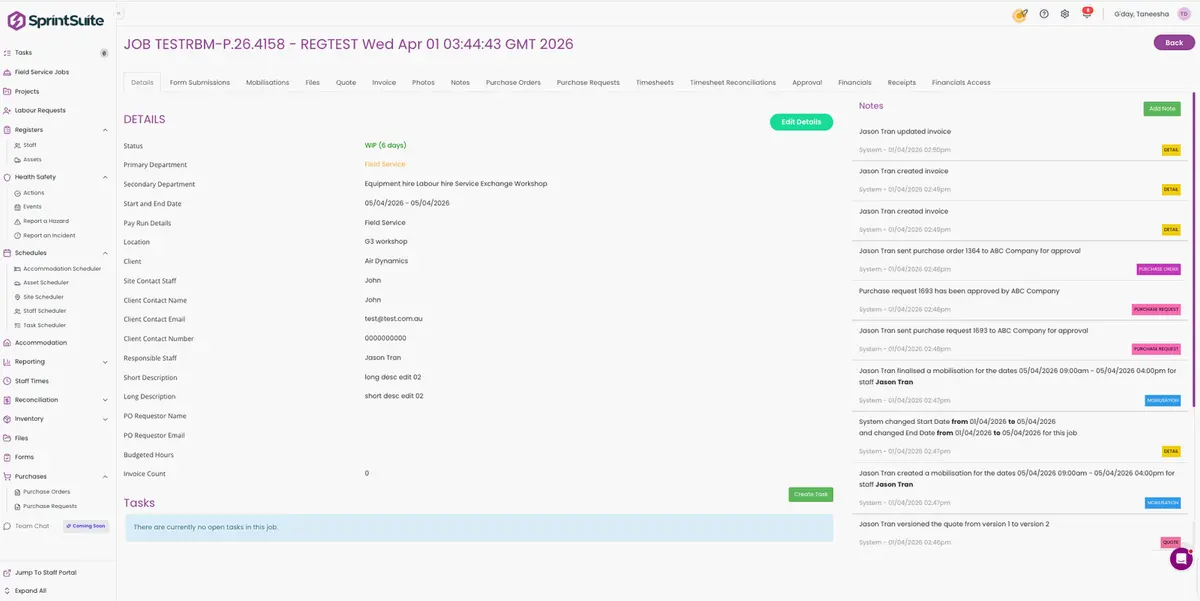
These are the workflows that typically sit half inside an ERP and half in spreadsheets, whiteboards, paper packs and separate apps.
Jobs & projects
Keep work, labour, materials, costs and progress connected from quote through to delivery.
job and project managementWorkshop management
Give workshop teams visibility over jobs, technicians, labour, parts and work status.
workshop management softwareField workforce
Give employees in the field access to the job information they need to complete the work.
field service softwareTimesheets
Capture labour against the right jobs and projects without relying on disconnected processes.
timesheets and payroll preparationJob costing
Keep operational costs close to the work generating them, rather than waiting for month end.
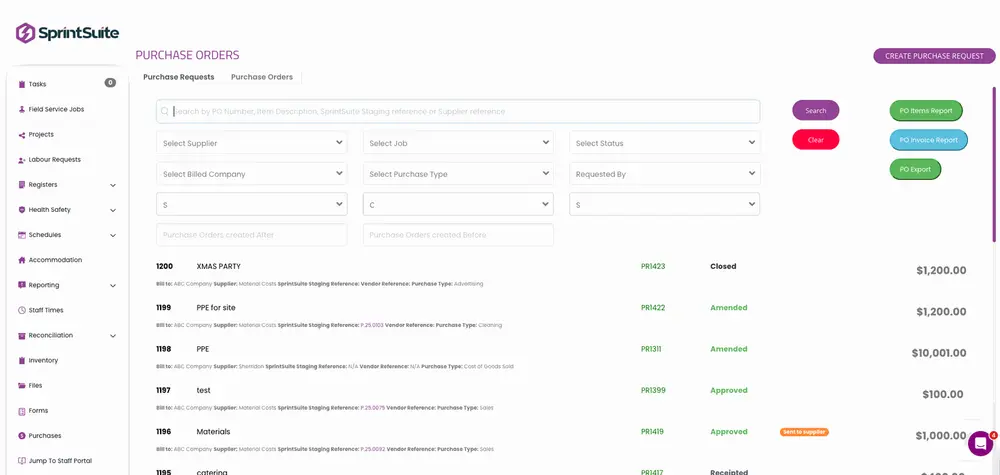
operational job costingPurchasing
Keep purchase orders connected to the jobs and projects creating the spend.
purchase orders and procurementMaterials & parts
Improve visibility over the parts and materials consumed across operational work.
materials visibilityAssets & equipment
Connect asset and equipment information with the operational work being completed.
asset and equipment managementSafety & field forms
Bring pre-starts, hazards, permits and field forms closer to the work being completed.
safety and compliance workflowsMobile
Give field teams an experience designed around the work they're doing away from the office.
the SprintSuite mobile appSprintChat
Keep field and office communication connected within the operational environment.
SprintChat workforce communication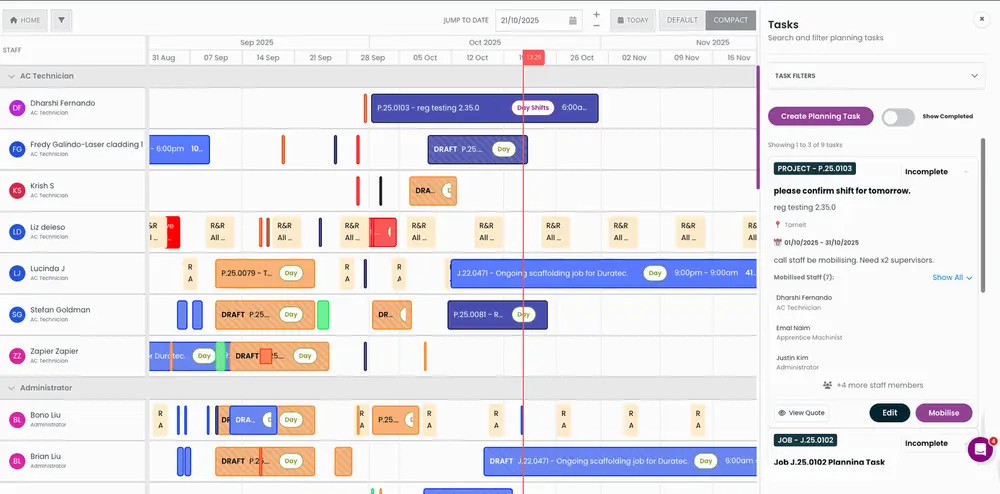

Do your field workers actually need an ERP?
CFOs, finance teams and system administrators may need broad ERP functionality. A fitter standing beside a machine probably doesn't. Different users can need very different software experiences.
FINANCE MAY NEED
- General ledger
- Financial reporting
- Accounts payable and receivable
- Tax and compliance
- Consolidated financial visibility
OPERATIONS MAY NEED
- Today's jobs
- Schedules
- Job information and history
- Timesheets
- Forms and pre-starts
- Workshop status
- Parts and materials
- Purchase requests and orders
- Field communication
Connected platforms can still exchange the information that genuinely needs to move between operations and finance. What each group actually sees on screen, though, doesn't have to be the same system.
What about MYOB Acumatica's field-service functionality?
MYOB Acumatica includes field-service functionality and broader operational capabilities. So the question isn't whether Acumatica can technically do field service — it can.
The more useful question is which platform best fits how your specific workforce actually operates.
That's a fit evaluation, and it's worth running with real workflows rather than a feature list. Compare both products against:
- Worker experience
- Number of clicks to complete a task
- Mobile workflow
- Supervisor workflow
- Offline requirements
- Workshop integration
- Timesheets
- Job information in the field
- Forms
- Scheduling
- Adoption
- Training requirements
A feature existing on a product sheet is different from a workforce actually using it every day.
Test both platforms with a real job, a real crew and a real week of work.
MYOB Acumatica pricing vs the real cost of implementation
MYOB states that Acumatica pricing depends on the organisation's requirements and is provided through a monthly subscription model. We won't publish an estimated figure, because a number pulled from somewhere else isn't your number. What matters more is that the subscription is only one line in the budget.
Software
Subscription and licensing across the users who need access.
Implementation
Requirements definition, configuration and setup.
Data migration
Moving and cleaning historical information.
Integrations
Connecting the other platforms your business relies on.
Customisation
Adapting workflows, forms or reports to your business.
Training
Helping staff actually use the new environment.
Change management
Managing the transition across the business.
Internal resource
The time your own people spend on the project.
Compare total cost of change — not just licence price.
Before choosing Acumatica, audit what happens outside your ERP
The fastest way to understand your real requirement is to look at everything currently happening around your systems rather than inside them.
- Are your supervisors running the week from spreadsheets?
- Is scheduling happening somewhere outside your core system?
- Do field workers still use paper job packs or forms?
- Does the workshop have its own separate system or whiteboard?
- Are timesheets entered more than once?
- Are purchase orders disconnected from the jobs they belong to?
- Are project managers manually building reports each week?
- Does operational information reach finance late?
- Are teams messaging through unrelated consumer apps?
- Are assets and equipment managed somewhere else again?
- How many integrations are already holding the workflow together?
Your workarounds tell you what your software stack is missing.
A migration is one of the few opportunities a business gets to solve those problems rather than move them into a newer environment.
Don't recreate an old ERP architecture in newer software
A cloud migration can modernise the technology without necessarily modernising the workflow. A business can move to modern software and still carry:
- Duplicate data entry
- Overly complex approvals
- Spreadsheet reporting
- Poor field adoption
- Unnecessary customisation
- Disconnected processes
- Workflows built around software rather than employees
Don't just migrate the software. Redesign how the work moves.
Acumatica alternative for mining contractors
Mining contractors work to someone else's site rules, someone else's shutdown window and someone else's reporting expectations. That usually means the operational requirement is heavier than the financial one.
Contractors commonly need strong visibility over projects, crews, jobs, workshops, equipment, labour, purchasing, timesheets, scheduling, safety records and mobile field activity — often across multiple sites at once. Mine owners and mining contractors don't have identical requirements, and SprintSuite is built around the contractor side of that relationship.
Mining contractor management software →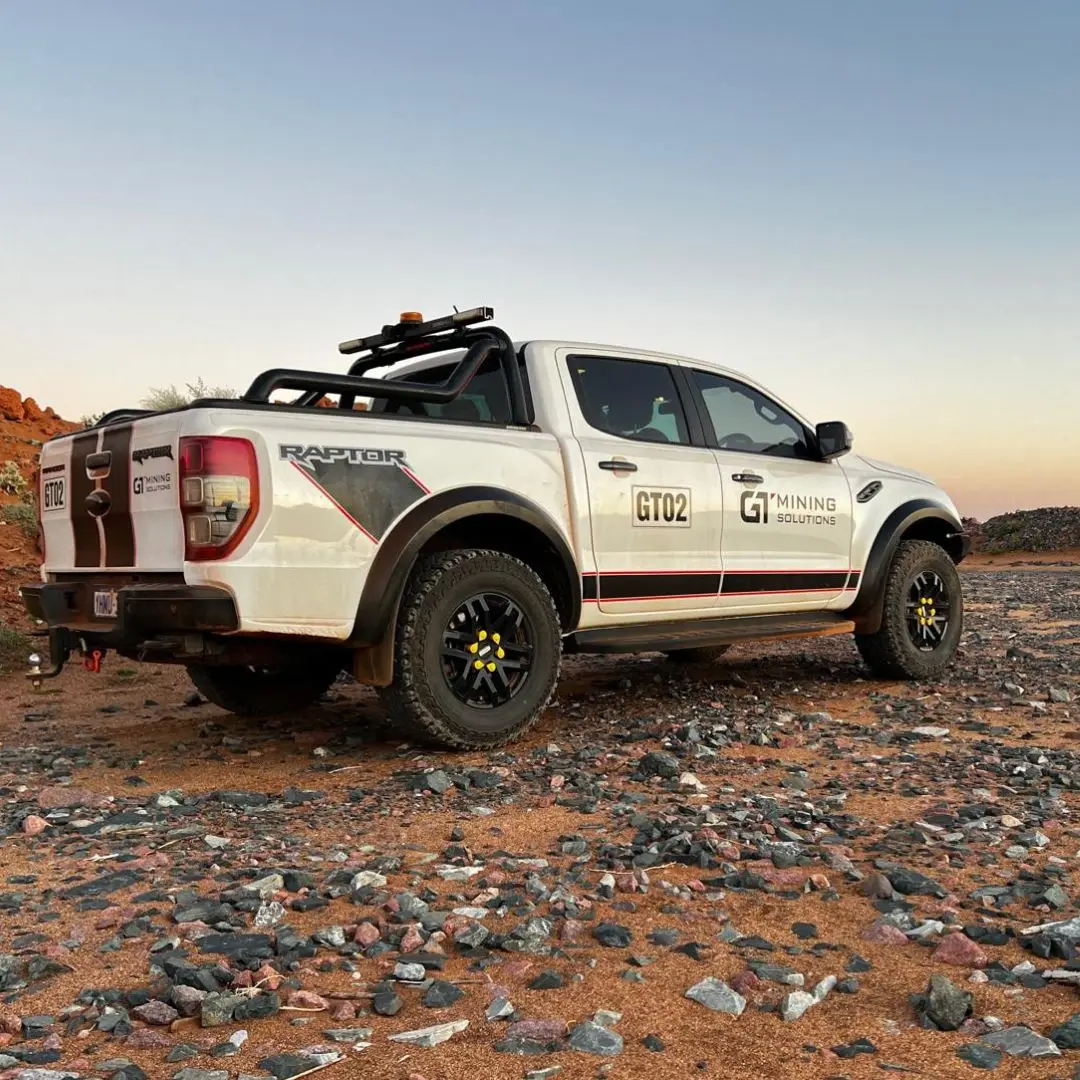
Acumatica alternative for engineering businesses
Engineering businesses tend to run project work and workshop work at the same time: fabrication in the shop, service crews on the road, and a project manager trying to keep labour, materials and purchasing attached to the right job.
SprintSuite is built around that mix — job costing, scheduling, materials, purchasing and maintenance work in one operational platform rather than an ERP module plus three spreadsheets.
See how job and project management works →Acumatica alternative for field-service businesses
For businesses where much of the workforce operates outside the office, the quality of the operational experience matters as much as the feature list.
Compare mobile usability, job information in the field, scheduling, time capture, field forms, communication, parts and materials, and supervisor visibility. This is a fit evaluation, not a question of whether one platform technically supports field service.
Explore field service software →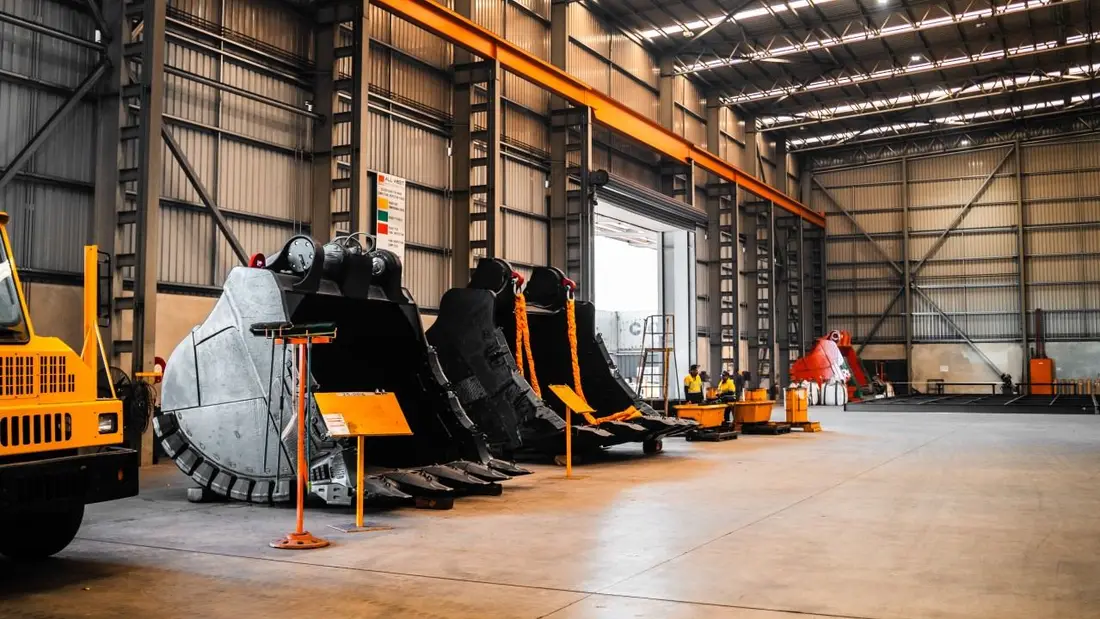
Acumatica alternative for workshop management
Workshops are where operational software either earns its keep or gets ignored. Heavy equipment workshops, maintenance facilities, engineering workshops and fabrication environments all need the same core things: work allocation, live job status, technician and labour capture, parts, purchasing, job costs and scheduling.
If the workshop is currently running on a whiteboard beside the ERP, that's a strong signal the gap is operational.
Workshop management software →MYOB Acumatica vs SprintSuite: which should you choose?
It depends on what you're trying to replace.
Consider MYOB Acumatica if you primarily want…
- A broad cloud ERP
- Comprehensive financial management
- Multiple business functions in one ERP
- A general ledger at the centre of the platform
- Broad enterprise capability across departments
Consider SprintSuite if you primarily want…
- Contractor operations
- Job and project management
- Workshop workflows
- Field workforce management
- Scheduling
- Timesheets
- Purchasing connected to jobs
- Operational visibility while work is running
- A dedicated operational experience for field users
- Finance to stay in another appropriate system
If you need both, the question becomes whether one system should do everything, or whether connected specialist platforms are the better architecture for your business.
12 questions to ask before choosing MYOB Acumatica or an alternative
- 1.What business problem are we actually solving?
- 2.Is that problem primarily financial or operational?
- 3.Which users will interact with the system every day?
- 4.How many of those users work in the field?
- 5.What does our workshop actually need?
- 6.How is scheduling handled today?
- 7.Where do timesheets live?
- 8.How do we currently track job costs?
- 9.Which workflows happen outside the ERP today?
- 10.Which systems genuinely need to integrate?
- 11.Do we need one platform for everything?
- 12.What will employees realistically adopt?
The best software isn't the system with the longest feature list. It's the system that solves the workflows your business actually relies on.
Already using MYOB Acumatica?
Some businesses reading this have already implemented Acumatica. If the finance side is working but operational teams are still relying on spreadsheets, paper, separate scheduling tools, disconnected workshop processes or standalone field apps, the decision isn't automatically to replace Acumatica.
It may be worth investigating whether a dedicated operational platform could take over specific operational workflows — jobs, scheduling, workshop, timesheets, field work — while the ERP keeps doing what it's already doing well.
We'd rather scope that properly than assume it. Bring your current environment to a demo and we'll be straight with you about which parts SprintSuite is suited to, how data would need to move between systems in your specific setup, and where it isn't the right fit.
Need better operations, not another giant ERP?
If your biggest challenges are jobs, projects, workshop visibility, field crews, scheduling or timesheets, see what a purpose-built operational platform looks like before committing everything to a full ERP.
SprintSuite is built for Australian mining, engineering and field-service contractors where work moves between the office, workshop and field.
Bring your current workflow. We'll show you how it could work in SprintSuite.
MYOB Acumatica Alternative FAQs
More detail on how SprintSuite connects with other systems is on the SprintSuite integrations page.
More MYOB & Acumatica Resources
MYOB EXO vs MYOB Acumatica
Compare the two platforms, migration considerations, pricing and architecture.
Is MYOB EXO End of Life?
See what MYOB has publicly confirmed about EXO and what businesses should consider next.
MYOB EXO Alternative
Explore options if your business is reconsidering MYOB EXO.
Is MYOB Greentree End of Life?
What MYOB is currently saying about Greentree and its cloud ERP direction.
MYOB Greentree Alternative
The same architecture question for businesses running MYOB Greentree.
Best MYOB integrations for mining and engineering
How operational data can flow into MYOB without double entry.
Explore SprintSuite operations software
- Job and project managementJobs, labour, materials, costs and progress in one workflow.
- Workshop management softwareTechnicians, parts, labour and work in progress on the floor.
- Field service softwareCrews, job information and forms away from the office.
- Planning and schedulingPeople, equipment and jobs in one operational view.
- Timesheets and payroll preparationLabour captured against the job, ready for payroll.
- Purchase orders and procurementJob-linked purchasing and supplier cost visibility.
- Asset and equipment managementKeep asset records connected to the work being delivered.
- SprintChat workforce communicationKeep office, workshop and field conversations on the job record.