Quick Answer
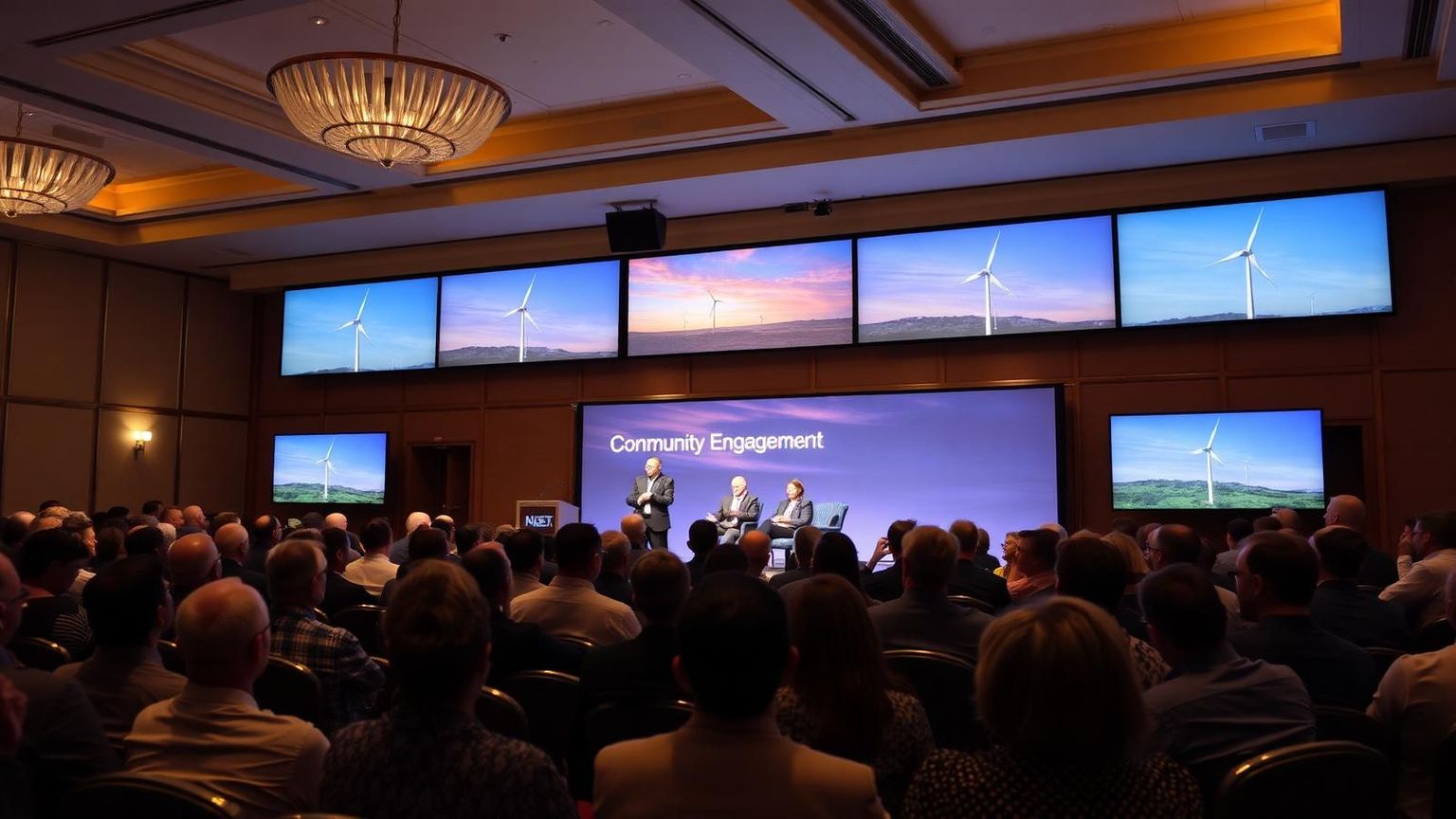
The Community Engagement Conference: Energy & Data Infrastructure 2026 is Informa's social licence conference for Australian energy and data infrastructure. Key facts:
- 13-14 October 2026 at the Swissôtel Sydney, 68 Market Street
- Run by Informa Connect Australia — fourth conference in the series
- Theme: Engaging Communities for a Cleaner Energy Future
- Covers transmission, onshore and offshore wind, solar, storage and data centres
- Speakers from the AEIC, EnergyAustralia, Fortescue, Ausgrid, VicGrid, Acciona Energía and Neoen
- Strong focus on First Nations and Traditional Owner engagement
- Tiered delegate pricing plus sponsor and exhibitor packages
- Relevant to contractors because social licence obligations flow down through contracts
What is the Community Engagement Conference: Energy & Data Infrastructure?
It is an Informa Connect Australia conference bringing together energy developers, network operators, government, consultants and community leaders to work on social licence for new energy and data infrastructure. The 2026 edition is the fourth running, with the tagline Engaging Communities for a Cleaner Energy Future. It covers transmission lines, onshore and offshore wind, solar, battery storage and — newly prominent — data centres.
When and where is the 2026 conference?
The Community Engagement Conference: Energy & Data Infrastructure 2026 runs Tuesday 13 to Wednesday 14 October 2026 at the Swissôtel Sydney, 68 Market Street, Sydney NSW 2000. That is in the heart of the Sydney CBD, a short walk from Town Hall and Wynyard stations, so it is realistic to attend both days without a hire car.
Why social licence is the constraint, not the technology
Australia's grid rebuild is not being slowed by turbines or panels — it is being slowed by communities that were not brought along. As AEMO's Daniel Westerman put it, it is on the energy sector to build the relationships and social licence that let the infrastructure serve all Australians. Landholder opposition on transmission corridors, planning objections and drawn-out approvals all trace back to engagement that started too late. This conference exists because that gap has become the critical path.
The data centre angle is new and it matters
The 2026 program explicitly folds data infrastructure in alongside energy. Hyperscale data centres bring their own community questions: water use, grid draw, land, noise and local employment. Contractors who already work on energy projects are increasingly being pulled into data centre builds and their supporting substations and transmission spurs — so the engagement expectations transfer straight across.
Who speaks and who attends
The 2026 speaker list includes the Australian Energy Infrastructure Commissioner (Tony Mahar), plus community and social performance leads from EnergyAustralia, Fortescue, Ausgrid, VicGrid, Acciona Energía and Neoen. The room is community engagement and stakeholder managers, social performance leads, project directors, planning and approvals teams, government and regulators, and the consultants and contractors who deliver the work on the ground.
Why contractors should care about a community engagement conference
Because your crews are the community's daily experience of the project. Road usage, dust, gate protocols, biosecurity, speed on local roads, how a fitter speaks to a landholder — that is social licence in practice, and developers now write it into contracts. Increasingly, tenders for transmission, wind and solar scopes ask how you manage, evidence and report on community and landholder obligations, not just safety and quality. Being able to answer well is a differentiator.
What to have ready before you go
Bring evidence of how you handle landholder access protocols, inductions covering cultural heritage awareness, complaints and incident logging, and local employment or local spend reporting. If a principal asks how you would prove that every worker on a corridor completed a cultural heritage induction, the answer should be a record you can produce, not a claim. Also bring examples of regional work — developers value contractors who already know the community.
How to work the two days
Two days is small enough that you can meet most of the room. Prioritise the developers and network operators with projects near where you already work — proximity is the strongest pitch you have. Take notes against a short list of your own gaps (complaint handling, local content reporting, induction currency) and give yourself 30 days to close two of them. Case study sessions are the most useful for contractors; policy sessions tell you where obligations are heading next.
Where it sits in the 2026 events calendar
13-14 October in Sydney puts this event days after the AusIMM International Mine Health & Safety Conference (5-7 October, Perth) and a fortnight before IMARC 2026 (27-29 October, ICC Sydney). If you are already travelling to Sydney for IMARC, this is a separate trip — but it targets a different buyer: energy and infrastructure developers rather than mining operators.
2026 program themes
| Theme | What it covers |
|---|---|
| Government role, reforms and initiatives | Where policy and regulator expectations are heading |
| Early and ongoing engagement | Why engagement starts before the first survey peg, not at approval |
| Trust, transparency and open communication | Practical best-practice frameworks |
| Project case studies | What worked, what stalled, and why |
| First Nations and Traditional Owner engagement | Cultural heritage, agreements and long-term relationships |
| Measuring engagement success | Metrics beyond consultation attendance counts |
| Tailoring strategies to different communities | Regional, agricultural and peri-urban differences |
| The future of community engagement | Data centres, storage and the next wave of infrastructure |
Session times and the full speaker line-up are published on Informa Connect's event page closer to October. Confirm the final agenda before booking travel.
Evidence your obligations, don't describe them
SprintSuite tracks inductions, cultural heritage awareness, licences and medicals against every worker, captures field records against the job, and gives you the reports principals ask for at handover. When a developer asks how you prove it, you show the record.
Related reading: IMARC 2026 · AusIMM Mine Health & Safety Conference 2026 · AusIMM Critical Minerals Conference 2026 · NSW Mining HSEC Awards · Shutdown management in mining.