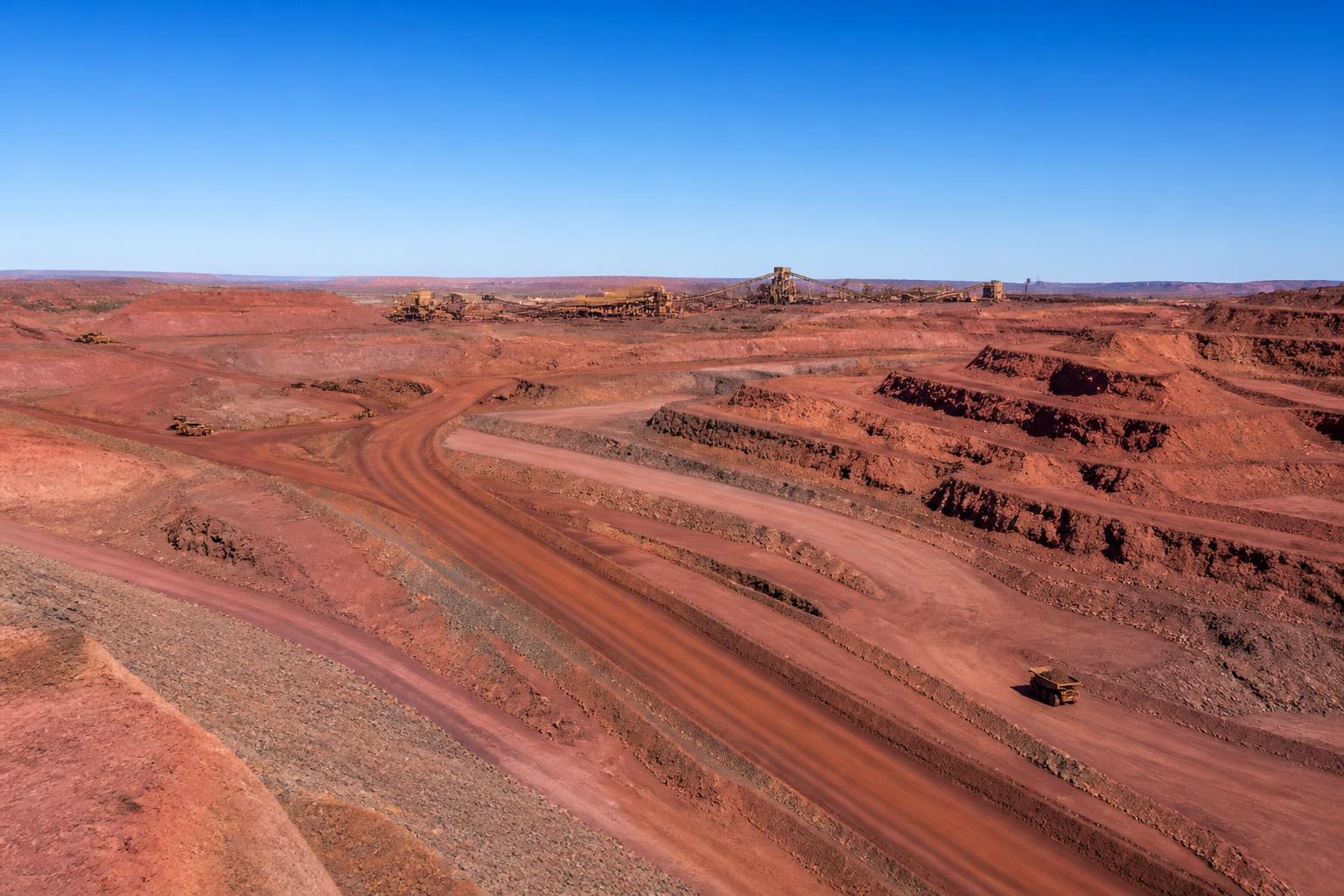
What are the main safety requirements in Australian mining?
Australian mining safety is governed by state and territory legislation, supported by mining regulations, codes of practice, industry standards and site-specific operator requirements. Mine operators and contractors must identify and manage risks, provide appropriate training and supervision, implement and verify effective controls, and protect workers' physical and psychological health, with mine operators carrying additional duties for principal mining hazards.
Legislation
Mining Safety Laws and Regulations in Australia
Australia does not have a single nationwide mining safety Act. Each state and territory makes and enforces its own work health and safety laws, and most add mining-specific regulations on top. Safe Work Australia develops the model WHS laws and national policy, but it is not a regulator — it can't enforce the law or advise on a specific workplace.
That means a contractor running crews in the Pilbara, the Bowen Basin and the Hunter Valley can be working under three different legislative frameworks in the same month. Select a state or territory to see its key mining safety laws and regulator.
Western Australia
Key legislation
- Work Health and Safety Act 2020
- Work Health and Safety (Mines) Regulations 2022
Regulator
Key distinctions
WA moved mining onto harmonised WHS laws in 2022, replacing the former Mines Safety and Inspection Act. The Mines Regulations require mine operators to establish and implement a mine safety management system covering the whole mine lifecycle, including exploration, and address principal mining hazards.
Legislation changes regularly. Verify current requirements with the regulator and the mine operator for your specific mine, commodity and activities before work starts.
What's the difference between an Act, Regulation, Code of Practice and Site Rule?
Not every safety document carries the same legal weight. Knowing which is which helps contractors understand what is mandatory and what is guidance.
| Instrument | What it is | Legal status |
|---|---|---|
| Act | Primary legislation passed by Parliament. Sets core duties, such as the primary duty of care, officer duties and offences. | Legally binding. |
| Regulation | Subordinate legislation made under an Act. Sets detailed requirements, such as mine safety management systems or principal hazard duties. | Legally binding. |
| Approved Code of Practice | Practical guidance approved under the WHS laws for achieving the required standard. | Not law itself, but admissible in proceedings as evidence of what is known about a hazard and its controls. You can comply another way if it achieves an equivalent or higher standard. |
| Recognised standard / guideline | Regulator-issued guidance or a recognised standard published for a specific mining hazard or activity. | Status depends on the jurisdiction. Some are referenced in legislation; many are guidance only. |
| Australian Standard | Technical standards published by Standards Australia (for example, for plant, electrical work or lifting equipment). | Only mandatory where legislation, a code or a contract calls them up. Otherwise they inform what is reasonably practicable. |
| Operator / site procedure | The mine operator's safety management system, standards, permits, inductions and work procedures. | Binding on workers and contractors through site rules, contracts and WHS duties to follow reasonable instructions. |
Industry requirements
What Safety Standards Do Australia's Tier 1 Mining Companies Require?
Large mining operators run their own safety management systems, standards and procedures that work alongside the law. The summaries below are drawn from each company's public material. They describe each operator's overall approach — not the full set of requirements at any particular site.
BHP: publicly documented safety approach
Overview
BHP describes safety as a fundamental element of its Charter value of Sustainability, with an objective of identifying risks and implementing controls. Publicly, BHP says it sets clear requirements with minimum mandatory controls for health, and its published Safety "Our Requirements" document requires risk controls for risks with fatality potential to be selected using the hierarchy of controls across design, change and the planning and execution of work.
Key areas of emphasis
Material and fatal risks, minimum mandatory controls, management of change, occupational exposures such as noise, coal mine dust, silica and diesel particulate matter, periodic health surveillance, and mental wellbeing. BHP has also described a Fatality Elimination Program focused on higher-order controls across its top fatal risks.
What contractors should understand
BHP states its requirements apply to employees and contractors. Expect to work inside BHP's own risk processes, field verification of controls and fit-for-work expectations, and to stop and raise concerns where work isn't safe. The detailed requirements you must meet are set by the specific asset and contract, not the public summary.
Rio Tinto
Rio Tinto describes its fatality management system as Critical Risk Management (CRM). CRM requires everyone to make sure critical controls are implemented and working as designed — and if they are not, the job is stopped until it is safe to continue.
Verification of critical controls before and during work, reporting and investigating potential fatal incidents to learn from them, eliminating fatalities, and wellbeing programs covering mental health and fatigue.
Rio Tinto's public example is starting conveyor maintenance only once all energy sources are identified and verified as shut off. Contractors should expect critical control checks to be part of everyday work, and that missing controls mean work does not start.
Fortescue
Fortescue's FY25 sustainability reporting describes a Major Hazards Control Program and an Identify Then Rectify process, guided by its Health and Safety Policy, group standards and operational procedures, along with a psychosocial safety framework.
Fortescue lists 12 common major hazards: cranes and lifting; electrical; explosives; ground control; hazardous materials; moving and rotating equipment; rail vehicles and systems; severe weather; stored energy; workers and objects at heights; vehicles in non-active mining areas; and vehicles in active mining areas.
Fortescue states its approach covers employees, contractors and communities. Anyone can raise a hazard or Identify Then Rectify report, so contractors should know how to report through Fortescue's processes, as well as their own employer's.
"Working at a Tier 1 mine means understanding both your legal responsibilities and the specific requirements of the operation where you're working."
Are Tier 1 safety rules the same at every site?
No. Even within one company, requirements vary by location, operation and commodity — an underground coal mine in Queensland faces different principal hazards to an open-cut iron ore mine in the Pilbara. Requirements also change with the task (shutdown work versus routine maintenance), the jurisdiction's laws and the authorisations a worker holds. Always confirm the site's specific inductions, permits, competencies and procedures during mobilisation. For more on getting crews ready, see our guide to managing site inductions for mining contractors.
Hazards
What Are the Biggest Safety Risks in Mining?
These six hazards account for many of the most serious incidents in Australian mining. Select a hazard to see what it involves and examples of controls. Controls should follow the hierarchy of control, and the right mix always depends on the site's risk assessment.
Why it matters: Collisions, rollovers and vehicle–pedestrian interactions are among the most serious mining hazards because blind spots and vehicle mass leave little margin for error.
Typical work: Pit and haul road travel, parking at go-lines, refuelling, tyre changes and working near operating plant.
Example controls: Separating people from vehicles through road and site design, traffic management plans, proximity detection and collision avoidance technology, positive communication protocols, and fitness-for-work checks.
Safe Work Australia: MiningWhy it matters: Falls from height and dropped objects can cause fatal injuries even from relatively low heights.
Typical work: Shutdown maintenance, structural repairs, conveyor work and access to large mobile plant.
Example controls: Doing work at ground level where possible, fixed platforms and guardrails, elevating work platforms, then fall-arrest systems with rescue plans, and exclusion zones beneath the work.
Safe Work Australia: FallsWhy it matters: Unexpected release of energy during maintenance can crush, burn, electrocute or strike workers.
Typical work: Conveyor maintenance, crusher and mill work, hydraulic repairs and electrical work.
Example controls: Identifying every energy source, positive isolation and lockout, dissipating stored energy, verifying zero energy before work starts, and permit-to-work systems.
Safe Work Australia: MiningWhy it matters: Atmospheres can be oxygen-deficient, toxic or flammable, and engulfment or entrapment can occur quickly. Rescuers are also at risk.
Typical work: Bin and chute clean-outs, tank inspections and vessel repairs during shutdowns.
Example controls: Avoiding entry by doing work from outside, isolating inputs, atmospheric testing and ventilation, entry permits, standby persons and planned rescue arrangements.
Safe Work Australia: Confined spacesWhy it matters: Ground failures are principal mining hazards with potential for multiple fatalities.
Typical work: Working near highwalls, underground development, scaling and drilling.
Example controls: Geotechnical design and monitoring, ground support, exclusion zones, inspections by competent people, and trigger action response plans.
Safe Work Australia: MiningWhy it matters: Exposures can cause serious long-term disease, often appearing years after exposure, such as silicosis, coal workers' pneumoconiosis and lung cancer.
Typical work: Drilling, crushing, cutting, underground diesel equipment and dry, dusty haul roads.
Example controls: Dust suppression, ventilation, enclosed and filtered cabins, low-emission engines, exposure monitoring, health surveillance and correctly fitted respiratory protection as a final layer.
Safe Work Australia: SilicaNoise and vibration
Crushers, drills, mobile plant and workshop tools expose workers to hazardous noise, which can cause permanent hearing loss and tinnitus. Whole-body vibration from operating mobile plant on rough haul roads and hand-arm vibration from powered tools can contribute to back disorders and vascular and nerve damage. Controls start with quieter and lower-vibration equipment, maintenance, road condition and enclosed cabins, supported by exposure limits on time, audiometric testing and hearing protection. See Safe Work Australia's guidance on noise and vibration.
The hierarchy of control
WHS laws require risks to be eliminated so far as is reasonably practicable, or otherwise minimised by working down the hierarchy. Most risks need a combination of controls, and not every level is practical for every hazard — but PPE should never be the first or only answer.
- 1. Elimination
Remove the hazard entirely — the most effective control.
Limitation: Not always possible once plant, sites and processes exist; easiest at the design stage.
- 2. Substitution
Replace the hazard with something less hazardous, such as a lower-emission engine.
Limitation: The substitute may introduce new risks that need assessing.
- 3. Isolation
Separate people from the hazard by distance or barriers, such as exclusion zones.
Limitation: Relies on the barrier being maintained and respected.
- 4. Engineering controls
Physical changes such as guarding, ventilation, interlocks or collision avoidance.
Limitation: Need maintenance and verification to stay effective.
- 5. Administrative controls
Procedures, permits, training, signage and rostering.
Limitation: Depend on human behaviour, so should support — not replace — higher controls.
- 6. PPE
Personal protective equipment such as respirators, harnesses and hearing protection.
Limitation: The least effective layer: only protects the wearer, and only if correctly selected, fitted and worn.
Most effective at the top, least effective at the bottom.
Worker wellbeing
Mining Safety Beyond Hard Hats: The Risks We Don't Talk About Enough
Fatal-risk programs rightly get attention, but many mining workers are harmed more slowly — by fatigue, heat, manual work, isolation and psychological strain. These six risks deserve the same planning.
Snakes & wildlife
What Should You Do if You See a Snake on a Mine Site?
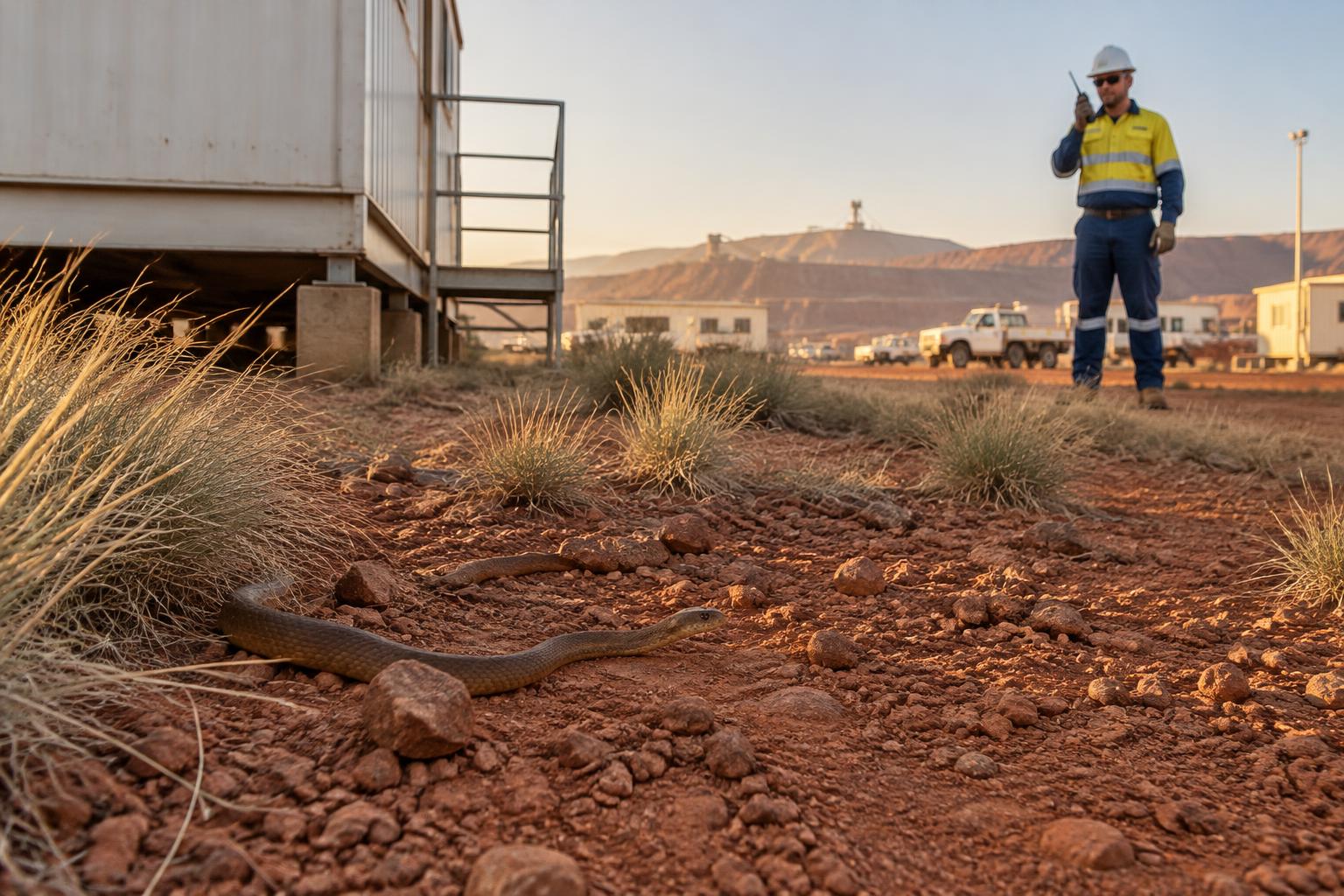
Remote mine sites are snake country. Snakes shelter under laydown materials, pipe stacks, demountables, rock piles and long grass, and are drawn to water and cool spaces around camps. Keep areas tidy, wear appropriate footwear, use a torch at night and look before you reach into gaps.
If you see a snake, stop, keep your distance, warn people nearby and report it through your site's process. Do not try to catch, move or kill it — handling and relocation should only be done by trained and authorised snake catchers using the right equipment. Sites should have a documented snake response procedure and pressure immobilisation bandages available.
Suspected snakebite is a medical emergency. Keep the person still, apply first aid with a pressure immobilisation bandage, activate the site's emergency response and call 000. Don't wash, cut or suck the bite. Follow healthdirect's snakebite guidance.
Fatigue
How Does Fatigue Affect Safety in Mining?
FIFO and DIDO rosters, 12-hour shifts, night work and long drives between sites and camps all erode sleep. Fatigue slows reaction times and impairs judgement and decision-making — the same skills needed to operate plant, verify isolations and notice changing conditions. Overtime during shutdowns and broken sleep in camp make it worse.
Fatigue is a recognised WHS hazard, and the controls sit mainly with the organisation: roster design that allows recovery, limits on consecutive shifts and overtime, planned breaks, managing travel time before and after shifts, avoiding critical tasks at the lowest alertness points, and a reporting culture where workers can say they are too tired without penalty.
Read Safe Work Australia's fatigue guidance, and explore our fatigue management guide for mining and heavy industry.
Mental health
Why Is Mental Health a Mining Safety Issue?
Remote and isolated work, long periods away from family, high workloads, tight deadlines and poor workplace relationships are all psychosocial hazards. Bullying, harassment and conflict can cause serious psychological harm, and psychological strain can also increase the risk of physical incidents.
Under the WHS laws, employers must manage psychosocial hazards in the same way as physical ones: identify them, consult workers, and control them through work design — reasonable workloads, clear roles, supportive supervision, contact for isolated workers and zero tolerance of bullying. Early access to confidential support matters too, before problems escalate.
Read more in our article on mental health support for mining workers with TIACS.
Physiotherapy & musculoskeletal health
How Can Mining Workers Prevent Long-Term Physical Injuries?
Heavy lifting, awkward positions in plant and confined areas, repetitive tasks and sustained vibration wear down backs, shoulders, knees and hands over years. Musculoskeletal disorders are among the most common workplace injuries, and they often build up gradually before a single incident brings them to light.
Employers must manage hazardous manual tasks through work design first: mechanical lifting aids, better access and working heights, purpose-designed tools, team lifts and task rotation. Encourage early reporting of discomfort, and support physiotherapy, rehabilitation and planned return to work — but treatment helps people recover; it doesn't replace controlling the hazard.
Heat stress & hydration
How Can Mines Manage Extreme Heat?
Summer in the Pilbara and central Queensland regularly pushes well past 40°C, and heat builds up inside plant rooms, workshops, underground workings and PPE too. Heat-related illness ranges from dehydration and heat exhaustion to heat stroke, which is life-threatening.
Safe Work Australia notes there is no single "stop work" temperature, because humidity, air flow, workload and acclimatisation all matter. Controls include scheduling heavy work for cooler times, shade and air-conditioned crib areas, mechanical aids to reduce exertion, work/rest cycles, cool water and electrolytes, acclimatising new and returning workers, buddy systems and training people to recognise symptoms. Heat stroke is a medical emergency — start cooling and call 000. See Safe Work Australia's working in heat guidance.
Remote work & severe weather
What Makes Remote Mining Work More Dangerous?
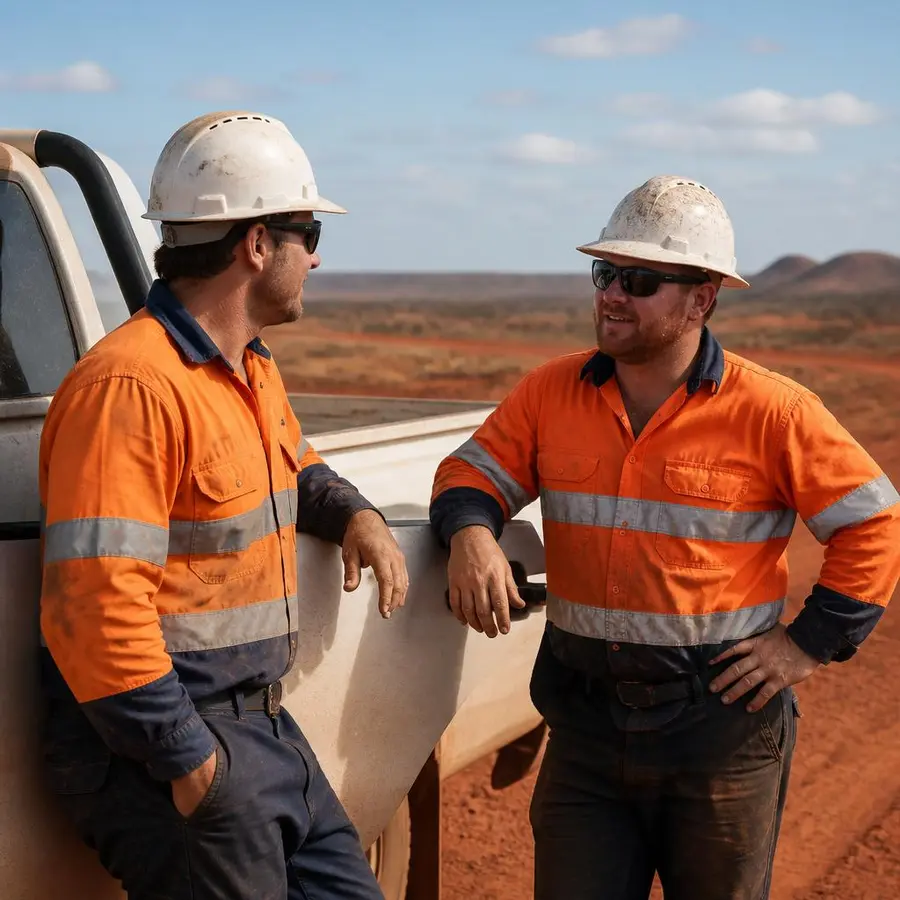
Hundreds of kilometres from a hospital, a routine injury can become serious while waiting for evacuation. Patchy mobile coverage limits communication, and small crews or lone workers may be out of sight for hours. Cyclones, lightning, flash flooding and bushfire can cut access roads and isolate camps.
Emergency planning needs to reflect this: realistic medical response and evacuation times, trained first aiders, satellite or radio communication, check-in procedures for isolated workers, weather monitoring with trigger points to stop work, and evacuation and shelter plans that are tested before they are needed.
These six risks share a theme: their harm is often cumulative and invisible until it's serious. Treating fatigue, heat, manual work, isolation and psychological strain as genuine safety hazards — with planned controls — protects workers' long-term health, not just their safety on today's shift.
Contractor duties
What Safety Responsibilities Do Mining Contractors Have?
A contractor is a PCBU in its own right, with its own primary duty of care for its workers and anyone affected by its work. At a mine, the operator and each contractor can hold overlapping duties for the same work, so the law requires them to consult, cooperate and coordinate. Here is how those responsibilities play out across a typical maintenance or engineering job.
- 1
Before arriving on site
- Confirm the jurisdiction's laws and the operator's site requirements
- Check worker competencies, licences, tickets and medicals are current
- Complete mobilisation steps: inductions, site authorisations and access approvals
- Plan travel, rosters and rest so workers arrive fit for work
- 2
Before starting work
- Review the task risk assessment or JSA/SWMS with the crew
- Hold the pre-start and confirm everyone understands the hazards and controls
- Arrange permits and isolations, and verify critical controls
- Inspect plant, tools and equipment and confirm emergency arrangements
- 3
During the job
- Monitor conditions — weather, heat, fatigue and changes in scope
- Stop work when controls are missing or conditions change
- Report hazards, near misses and incidents through site and company processes
- Consult, cooperate and coordinate with the operator and other contractors
- 4
After the job
- Remove isolations safely and hand plant back formally
- Complete handover, including outstanding hazards and defects
- Keep accurate records of hours, inspections, training and incidents
- Review what worked, and update procedures where needed
Accurate records connect every stage: competencies and authorisations before mobilisation, risk assessments and permits during work, and hours, inspections and handover notes afterwards. Related reading: how to manage subcontractor compliance and what a training matrix is in mining.
Interactive tool
Mining Contractor Safety Checklist
0 of 12 checks reviewed
This general awareness checklist does not replace site-specific risk assessments or mandatory safety procedures. Completing it is not a legal compliance certification and does not mean work is safe or compliant.
Operations
How Can Better Operational Systems Support Safer Work?
Many safety failures start as information failures: the wrong crew allocated to a job, an expired ticket nobody noticed, a handover note that never reached night shift, or job details stuck in a supervisor's notebook. When job allocation, worker records, schedules, task information and documents live in different spreadsheets and inboxes, it's harder for the office and the field to coordinate.
Connecting that information doesn't replace a safety management system, but it does give supervisors and planners a clearer, shared view of who is working where, on what, and with which records. SprintSuite is job management and field service software built for Australian mining contractors, engineering businesses and heavy industry, connecting scheduling, staff records, field jobs and health and safety documentation in one place.
See how SprintSuite connects your people, jobs and operations
FAQs
Frequently Asked Questions About Mining Safety in Australia
References
Mining Safety Legislation, Guidance & Resources
Government & regulators
Tier 1 mining operators
Occupational health
Worker wellbeing
Emergency & first aid
This article provides general educational information only and is not legal, medical or safety advice. Laws, regulations and operator requirements change; always check current legislation with the relevant regulator and follow your site's procedures. Content reviewed October 2026.
Safe Work Month 2026